Full article about Olmos: Woodsmoke & Schist at 623 m
Stone cottages, cork-oak shadows and Bisaro-pig feasts on Portugal’s starlit plateau.
Hide article Read full article
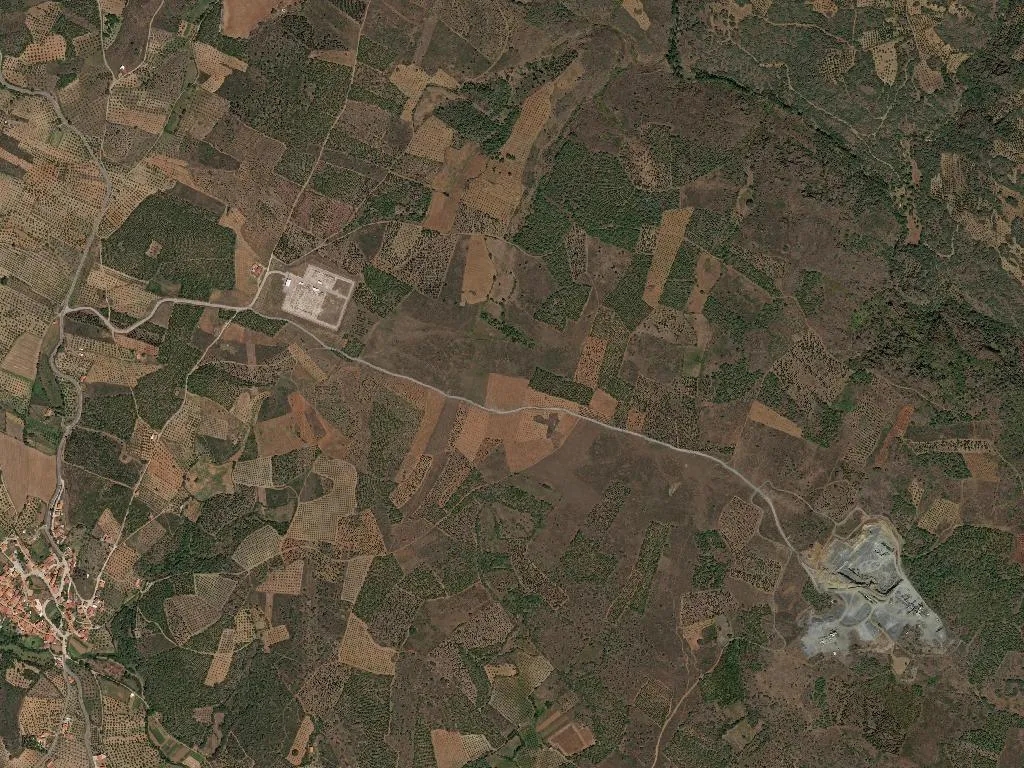
The tang of woodsmoke drifts from chimneys before the sun has cleared the Serra de Bornes, braiding with the chill that slides downhill at 623 m. In Olmos, morning is announced by sound, not light: the iron bell of the sixteenth-century Igreja de Santo Ambrósio tolling the hour, a dog barking somewhere beyond the olive terraces, the diesel cough of a tractor on the ochre lane. One hundred and forty-nine residents are scattered across eighteen square kilometres of high Trás-os-Montes plateau—so few that midday shadows of isolated cork oaks outnumber people.
Stone & Silence
Houses are built from the same two skins as the hills: rose-grey schist and sugar-cube granite. Walls are thigh-thick, doorways stooped, windows letter-box narrow to keep out the nortada that can whistle up from the Douro valley. Sixty of the villagers are over sixty-five; they remember when these lanes echoed with children. Today only nine are under fourteen, their football shouts splintering the quiet like flint on steel.
Olmos sits inside the Terras de Cavaleiros Geopark, whose bedrock is half a billion years old. Five kilometres away the Azibo reservoir gives the plateau a mirage—turquoise water lapping schist bluffs, Europe’s first Dark Sky reserve overhead.
What the day tastes like
Cooking here is still utilitarian, not theatrical. In larders the November pig hangs in aerial formation—smoked chouriça, salpicão, and presunto from the dark-haired Bisaro pig fattened on chestnut and acorn. The same animal becomes cabrito leitão, kid roasted in a wood-fired oven until the skin crackles like thin ice.
Boiled potatoes keep their jackets; the local yellow-fleshed variety drinks olive oil and crushed garlic better than any Maris Piper. On feast days—St Ambrose (7 December) and St Peter (29 June)—tables lengthen across the lane. Meals end with Terrincho DOP ewe’s-milk cheese and chestnuts charred in the embers of the same oven.
Plateau pace
To walk here is to accept a contract with gravity and geology. Distances are measured in hair-pin earth tracks that force knees to remember elevation. Light is forensic even at noon, sketching kilometre-long shadows from a single boulder. The wind carries resinous pine, turned soil, and somewhere, always, woodsmoke. Schist walls absorb the day’s heat and give it back after dusk while the cold regathers, ready for tomorrow’s cycle: bell, smoke, silence.