Full article about Salselas: where church bells scold granite silence
Moorland village in Bragança where goat crackles and oak-smoke flavours winter
Hide article Read full article
The bell that wakes the stones
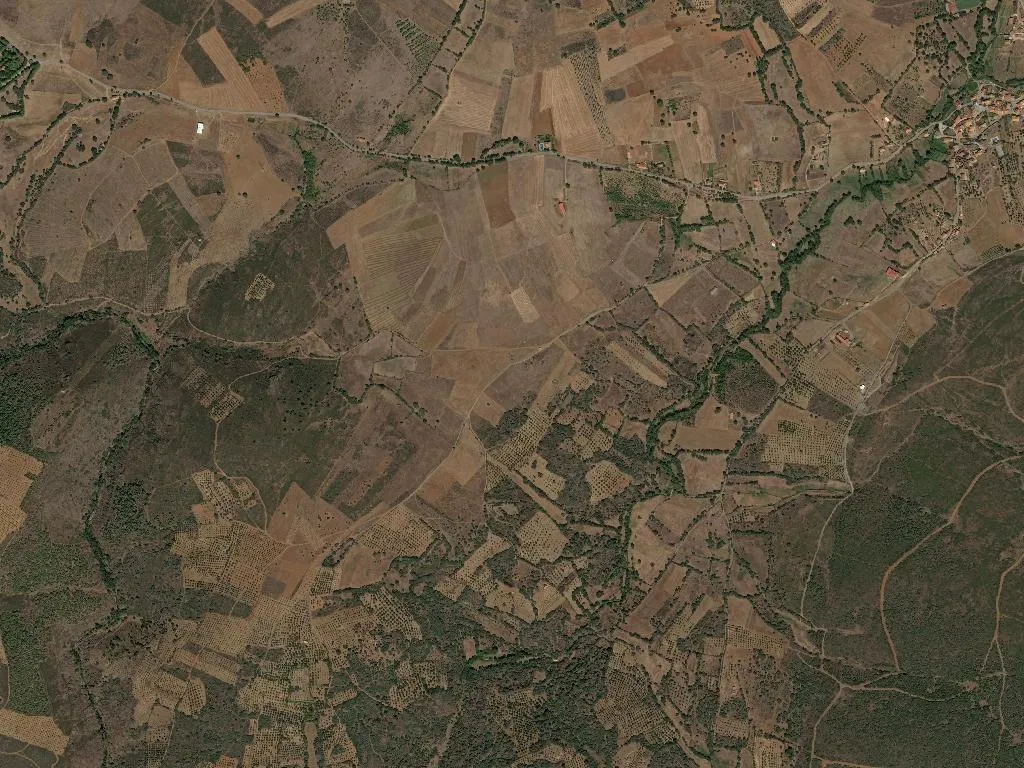
The day begins with a reprimand. At eight o’clock sharp the bell of Igreja de Santo Ambrósio swings out over slate roofs and granite walls, a metallic alarm clock for 284 people who already know the time. Spread across 36 km² of heather-coloured moorland, Salselas gives each resident the luxury of 13 hectares; elbow-room unheard of in Europe’s most thinly-populated corner.
A name seasoned by gossip
Local etymologists insist the village descends from Latin salsus – salted – hinting at vanished salt pans. Academics counter that no brine has ever been analysed here; more likely some 13th-century landowner, drunk on his own parchment, wanted a word that sounded Roman. What is documented is a 1273 charter from Dom Afonso III parceling out these borderlands like playing cards. The parish church keeps the score: Baroque façade from 1724, bell tower patched after the 1755 earthquake, interior smelling of beeswax and burnt thyme. Around it, the tiny chapels of São Pedro and São Sebastião stand like sentries on a granite ridge.
December smoke signals
On the first weekend of Advent the feast of Santo Ambrósio hijacks the calendar. Processions, brass bands and a makeshift fair turn the single square into a petri dish of Trás-os-Montes DNA. Inside the houses, wood-fired ovens work double shifts. Kid goat rotates for six hours until the skin lacquers into crackling; chanfana – goat stew cured in red wine, garlic and bay – reduces to an obsidian sauce that stains the porcelain. Up in the attics, hams, salpicão and chouriça inhale slow smoke from oak and heather; these are not Instagram props but winter calories, sliced thinly over coarse bread and unfiltered olive oil pressed from the village’s 400-year-old press.
Reservoir that collects wings
Three kilometres south the Azibo reservoir interrupts the high plain. Created in 1982 to irrigate downstream maize, it accidentally became one of northern Portugal’s premier wetlands. GREPOM, the Portuguese bird society, records 180 species: purple herons in April, ospreys in October, black-winged stilts that balance on match-stick legs all summer. The water stays alpine even in August; swimmers emerge the colour of chilled Burgundy, insisting it is “revigorating” – local code for “get out before your heart stops”.
Granite and horizon
Accommodation is limited to two options: a three-room guest flat inside the old primary school, and a four-bed hostel run by the parish council. Both overlook the same view – heather, gorse and the distant silhouette of Spain. The programmed day is mercifully simple: leave at dawn with a thermos of bica (the village café unlocks at 08:00), walk the PR5 “Trilho do Azibo” before the sun clears the juniper, lunch on cozido transmontano – a clay-pot avalanche of pork, black pudding, cabbage and kidney beans that anaesthetises appetite until tomorrow – then retreat to the churchyard bench for a 360-degree sunset. Wi-Fi is rumours; phone signal, folklore.
When the bell tolls again at dusk it is not a call to prayer but a polite eviction notice. Salselas asks for nothing except the preservation of its acoustic vacuum; silence is the village’s only protected species.