Full article about Talhas: Dawn light on Portugal’s quietest granite ridge
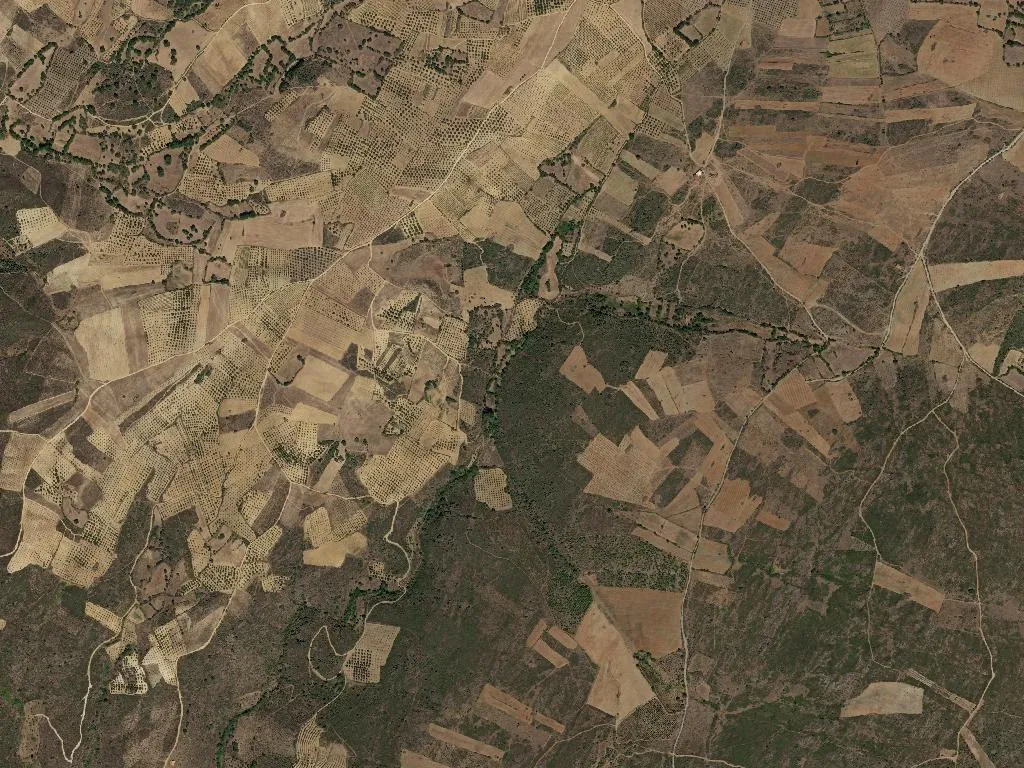
Talhas, Macedo de Cavaleiros, is a high-plateau village where century-old olives, oak-smoked hams and silence stretch across 4,380 ha.
Hide article Read full article
First light on schist
Dawn strikes the slate walls of Rua do Castelo and picks out every uneven granite sett that climbs towards the parish church. In Talhas, silence has weight: not absence but a low textile of sound – water slipping towards the Azibo reservoir, the soft clap of Zezé’s café door as the first coffee is poured. Even when the sun has warmed the stones of Largo Dr José Macedo, the air still carries a trace of cork-oak firewood. This is how the day begins in a village of 256 souls parked at 493 m on the edge of Portugal’s north-east plateau, where olive groves tilt gently towards Spain.
The mathematics of absence
Three children. One hundred and forty-nine pensioners. The 2021 census reads like a slow-motion ledger of rural Portugal, yet in Talhas’ 4,380 ha the numbers become spatial. Density is below six people per square kilometre, which translates as the pause between gateposts on the dirt track that wriggles off the EM593 towards Quinta do Oliveiral, the half-minute wait before a voice answers across the valley, the decision to leave the engine running or switch it off while you decide whether anyone is home.
Olive groves and smokehouses
The land is honest: it gives only what the granite soils and continental climate allow, and it does so with the stubbornness that earned Trás-os-Montes a dozen protected foods. Trás-os-Montes DOP olive oil is pressed from century-old trees at Herdade do Azibo and Quinta das Cavadas, trunks corkscrewed by January frosts. Inside village smokehouses on Rua da Igreja and Rua do Picoto, oak logs exhale over Chouriça de Carne de Vinhais PGI, Salpicão de Vinhais PGI and Presunto Bísaro DOP, the hams darkening like vintage brass.
On 29 June, the feast of Santo Ambrósio, Carne Mirandesa PGI and Cabrito Transmontano PGI appear on long tables beside jacketed potatoes – the Trás-os-Montes PGI variety that mashes like butter. Queijo Terrincho DOP, made at the Macedo co-op, is sliced thickly enough to bend. Come autumn, Castanha da Terra Fria PGI roasts on the embers of the monthly fair while Terra Quente PGI honey is drizzled over Dona Amélia’s wood-oven bread.
Saints’ days and exiles
The village refills only twice a year: the last weekend of June for São Pedro, the last Sunday of August for Santo Ambrósio. Emigrés return from Paris, Luxembourg and Olhão; London-registered hatchbacks nose past the 1867 parish church whose oak doors have been reopened for the occasion. For forty-eight hours the population density multiplies, the adro brims with nephews god-parented by Skype, then the tide recedes. The rhythm reverts to hoeing the vegetable plots along Ribeira do Teixeira and to conversations conducted from plastic chairs outside Tia Lúcia’s mini-market.
Protected horizons
Three and a half kilometres away, the Azibo reservoir – classified as a protected landscape in 1999 – mirrors a sky big enough for eagles. Talhas sits inside the Terras de Cavaleiros Geopark, ratified by UNESCO in 2015, where 480-million-year-old Ordovician quartzite predates every olive root. The geology explains the silence: even sound feels temporary against rock that once lined the floor of an ancient ocean.
Vespers
At 19:30 the church bell sends a single, almost apologetic note down the valley. Long shadows slide across the odd-numbered houses of Rua Direita; chimney smoke lifts the scent of smouldering oak back into the cooling air. Then the dense hush re-settles, as if the plateau itself were drawing breath before tomorrow’s light again strikes the slate.