Full article about Wind-Carved Silence of Talhinhas e Bagueixe
Where two plateau villages share a bell, a feast and rye-scented air above Macedo de Cavaleiros
Hide article Read full article
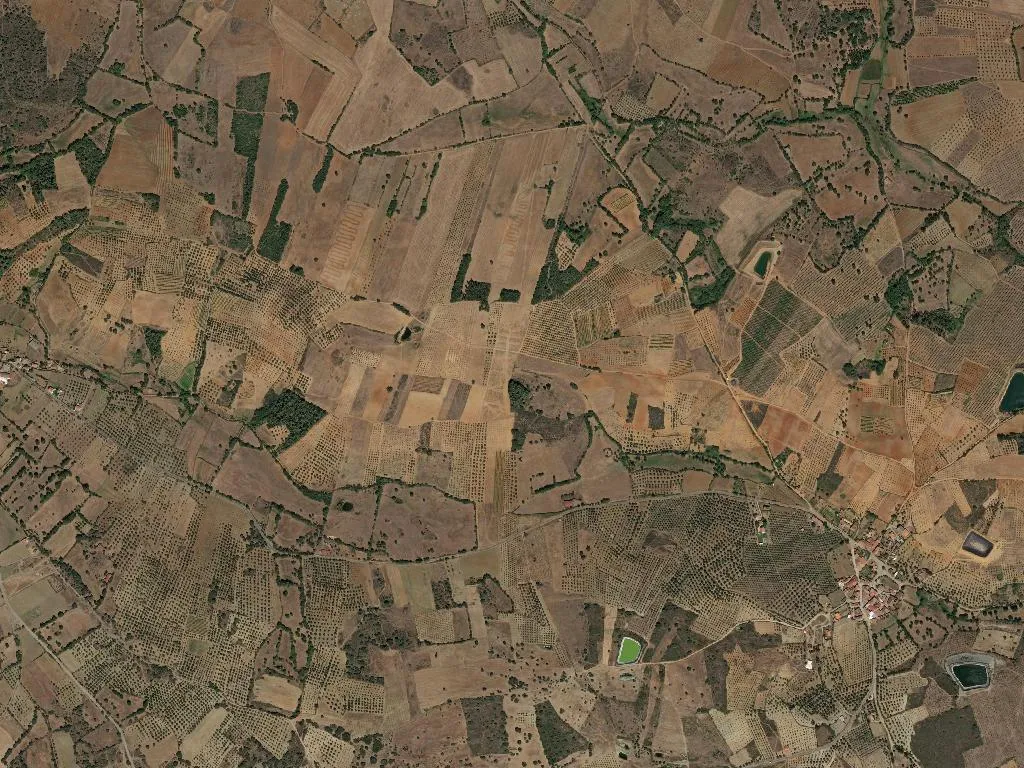
The wind combs the plateau at 586 m, lifting the scent of sun-baked earth and rye grass that clings to shoe leather. In the merged parish of Talhinhas and Bagueixe, silence is a physical substance: the single bell in Bagueixe’s campanile carries three kilometres down the valley and still manages to tug Talhinhas’ afternoon sleepers upright. Schist lanes, their mortar-free walls hand-stacked in the 1870s, shrug off the winter shakes without dropping a stone.
Two villages, one parish on paper
The 2013 administrative merger never reached the tongue. Locals still introduce themselves as “from Talhinhas” or “from Bagueixe,” never from the hybrid. They remember the weekly choreography: the doctor parked in Bagueixe’s square, the priest in Talhinhas’. On the August procession, the two congregations meet on the dirt track between settlements; the platforms of St Ambrose and St Peter graze shoulders, and those who’ve skipped Mass still turn up for the street feast that follows. Carlos’ accordion wheezes until the sky pales, but it is his daughters—who have never set foot in Lisbon—teaching the next generation how to dance the vira without looking at their feet.
The taste of Terra Fria
Lamb stew here is a three-hour meditation: a cast-iron pot murmurs over a wood fire until the meat slumps from the bone. Maria nips to the vegetable patch for bay; her shrub is a cutting of a cutting of her grandmother’s. By six the loaf from Zé Mário’s wood oven is cooling on the café terrace—he began kneading at four. In Horácio’s cellar, wheels of Terrincho DOP age where his grandfather once hid wine from the revenue guard; the certificate is new, the flavour is pre-revolution.
Between plateaux and seasonal streams
From June to September the Bagueixe stream is a white scar of limestone; after the first Atlantic front it swells until the stepping-stones disappear. Twenty minutes away by car lies the Azibo reservoir, yet no one here talks of “going to the beach.” They say “I’m off to the dam,” as though the water still exists only to irrigate maize. Inside the Geopark, granite outcrops carry private names—Carriscal, Pego do Gato—shouted across the heather when sheepdogs stray beyond whistle range.
A name you won’t find twice
Talhinhas is unique on every map; elderly residents used to laugh at postal workers who circled the district in bewilderment. Bagueixe has a doppelgänger near Vinhais, so this one is clarified as “Bagueixe de Macedo.” The roll-call is brief: 262 on the books, minus the generation that left for France in the seventies, plus the grandchildren who have returned “because living nowhere is still nowhere.” At 89, Lucinda spits sunflower husks onto the stone bench and predicts the village will die with her; last August’s festa drew 400 cars. “Always sardines,” she grumbles, “but at least they come.”
Dusk settles like flour through a sieve. In Horácio’s smoke-house, sausages have been dangling since Advent; he will keep them there until St John’s Eve, insisting anything shorter tastes of hurry. Outside, the wind rises again, carrying the tang of burnt stubble and the six o’clock bell. No one checks a watch: it is simply time to shut the hens in, to ladle the stew, to let the day finish the way it has for a century and a half.