Full article about Vale da Porca
Wake with the baker’s pão misto, walk Moorish thyme-scented tracks above nameless stream
Hide article Read full article
The bell doesn’t ring; it lands. Eight slow iron punches that settle in the ribcage more than in the ear. By the seventh, the baker at the bottom of the lane has the first trays of pão misto sliding into the wood oven; by the eighth, the chickens have begun their irritable shuffle towards the sty. Vale da Porca never startles into life—it opens one eye, then the other, like a cat that knows exactly how long the sun will take to climb the slate roofs.
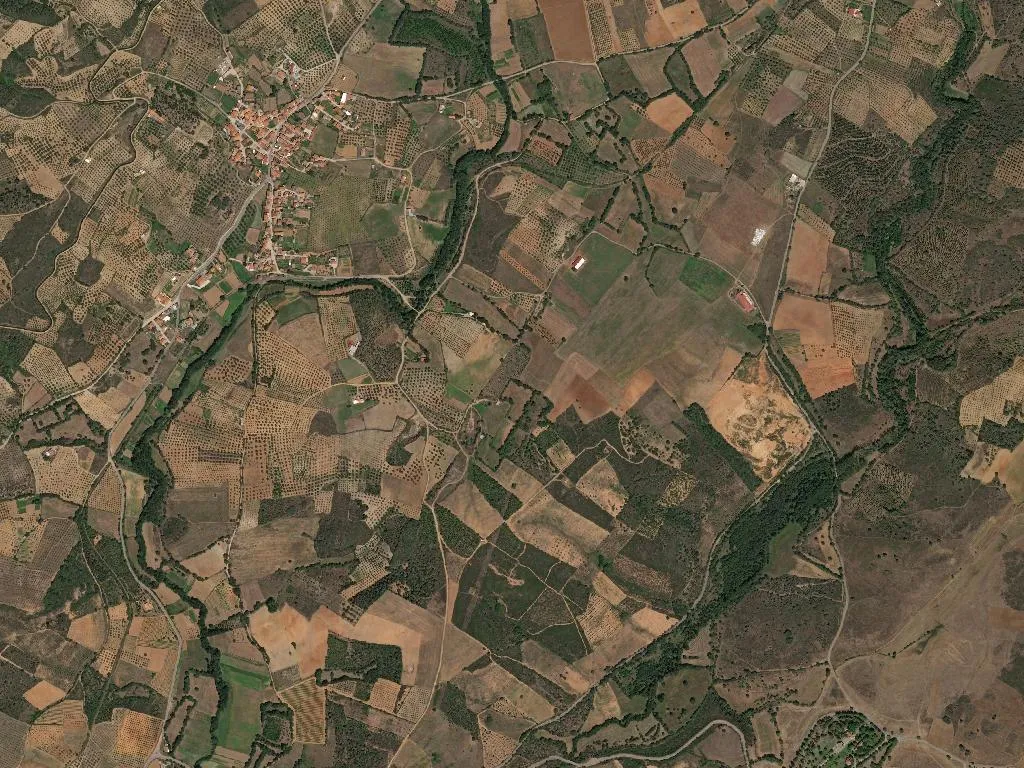
No one here calls the hamlet by its official name. Ask for directions and you’ll be met with a tilt of the head towards the stream: “Down past the water.” The stream itself is nameless, simply “the brook,” a silver thread that dries to a stony shrug every August. Roman coins still surface when the plough turns at the edge of the maize field, and on the slope the elders insist you can feel the camber of a Moorish road beneath the thyme. Academics shrug; the soil keeps its own archive.
Stones that remember
The parish church is barely a chapel, but its cedar ceiling breathes beeswax and the ghost of every Sunday thurible. In the sacristy the cracked font is left unfixed—“so the water remembers it can tire.” On the north wall two baroque wooden saints, known locally as the “invited lads,” stand with eyes so wide they seem exhausted. Above the village, the hermitage of São Sebastião is built on a sheet of granite; when the wind swings northerly the door slaps the rock like a whip-crack, echoing down the valley like someone urging on a mule.
Sunday’s procession to Santo Ambrósio begins where Dona Ana’s last olive tree throws its shadow. From there it’s thirty minutes up a sheep track slippery with gorse and loose quartz. In tweed shoulder-capes the women carry wicker baskets: dark Terras Altas wine in glass flagons, cornmeal loaves the colour of sunrise, cheese wrapped in paper napkins that once belonged to christening parties. The Mass is brisk, the sermon less so, but what lingers is the scent of singed rosemary from clay censors and the shriek of children sledding down the hillside on eucalyptus bark.
Banrezes, a kilometre west, isn’t abandoned so much as paused. A blue-washed house still displays a 1987 calendar above a treadle sewing machine; a black-and-white dog appears whenever a tractor rattles past, hopeful for a sandwich. Typhoid drove the first families away, emigration took the rest. Now the settlement belongs to nightshade and blackbirds, and to the low whistle of the wind that starts just after dusk.
Geology you can feel
Talc here lies so close to the surface the footpath turns pale and treacherous. Elderly villagers once scraped it to remove wine stains from linen; today only geology students come to photograph the paper-thin sedimentary pages—each centimetre a million-year chapter. Young Tomás keeps a perfect fossilised scallop on his mother’s dressing table between her hairbrush and a bottle of 4711.
Fifteen minutes by car, the Azibo reservoir is the nearest thing Vale da Porca has to a coastline. Locals arrive after siesta with aluminium-foil parcels of sardines, towels over one shoulder, flip-flops slapping asphalt. The water is cold even in August; the first plunge bites every capillary, then numbness flips to weightless calm and no one wants to leave.
A palate without ornament
Olive oil arrives at table the colour of burnt barley and thick enough to catch in the throat; only a swallow of house red clears the scratch. Broa—dense cornmeal bread—cools on window sills, its scent curling under doors until even the dogs fall silent. Negrinha olives, small as beads, stain teeth midnight-purple for the rest of the afternoon. Kid goat is slid into the bread oven at dawn; by ten the square is haunted by the smell of rendered fat and rosemary, by noon it is a low chorus of stomachs. Crackling is fought over—brittle, salt-slick, dripping onto shirt cuffs that double as napkins.
Terrincho DOP cheese is never sliced; it is broken, barnyard-aromatic yet almost sweet on the tongue, paired with a spoonful of quince jam that still contains flecks of peel and, if legend is to be believed, one grey hair from Great-aunt Albertina.
The square is named after Roberto Leal, the Portuguese-Brazilian singer whose 1978 hit “Chiquita” still drifts from the chemist’s upstairs window at dusk—played on original vinyl by his nephew Carlos, the pharmacist. The bronze bust of Leal has lost the tip of one ear; gossip says a nostalgic emigrant tried to take it home but found the head heavier than memory. When the sky turns the colour of roof-tiles, the record crackles, the voice remains unmistakably of this land, and no one moves to switch it off.