Full article about Vale de Prados
Granite scarps, 472 souls, UNESCO schist and a reservoir the locals call “the beach”
Hide article Read full article
The Geography of Days
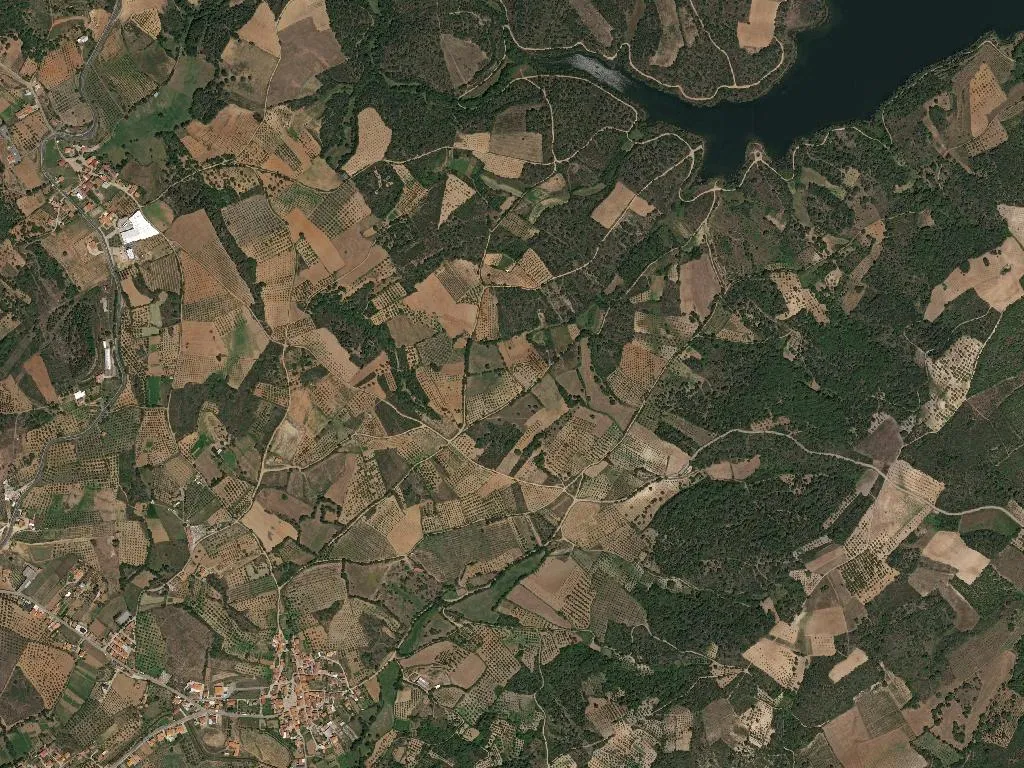
Morning light strikes the slope and the valley answers with the dark green of olive groves. At 639 metres above sea level, Vale de Prados lies folded into the scarps of Trás-os-Montes, where granite ribs break through thin soil and the only soundtrack is the distant cough of a diesel tractor or the off-duty bark of a dog. Time is not measured in hours here but in prunings, prunings, and the slow swing of the year.
The parish covers barely ten square miles and holds 472 souls—172 of them over the age of seventy, 44 under eighteen. Population density: 45 people per km², which translates into real distance between neighbours, between thoughts, between what is and what is no longer.
Ten minutes down the road is the Azibo reservoir. Guidebooks call it a protected landscape; locals call it “the beach”. Children learn to swim off the basalt steps, families park their Citroëns under the stone pines, and old men still pick ammonites out of the schist when they gather firewood. The Geopark Terras de Cavaleiros has UNESCO status; to the people who hoe its terraces it is simply the place where the olives grow.
Calendar of Feasts
Two dates once ruled the year: Santo Ambrósio (7 December) and São Pedro (29 June). Now they are excuses for the diaspora—Porto electricians, Lisbon nurses—to A4 it home. Mothers simmer cozido in the early dark, fathers fetch vinho tinto from the adega, and long tables appear in the churchyard. Between courses someone always remembers the dead, the same anecdotes are recycled, and everyone pretends the valley is not emptier than the year before.
What the Land Puts on the Table
The menu is the geography. Olive oil from trees planted when the Salazar regime still censored the radio; olives trucked in from Freixo de Espada-à-Cinta because the local lagar closed in ’98; kid goat for baptisms; Mirandesa steak when the EU subsidy lands. In the smokehouse hang chouriça looped like amber necklaces, hams that have seen two winters, and a salpicão your father-in-law swears he will take the recipe for to the grave.
Cheese is either Terrincho DOP—raw milk from Churra da Terra Quente ewes—or whatever the neighbour’s goats felt like producing. Bread emerges from the wood oven at 6 a.m.; by noon it is gone. Potatoes are the high-altitude sort that stay firm and sweet, the ones chefs in London would menu as “heritage” and charge a fiver for. Honey comes from Zé do Telhado, a man who cannot tell wild lavender from broom yet keeps French apiarists on the phone.
Where to Sleep
Three, maybe four, shale houses have been rescued from ruin. Walls a metre thick keep July heat and January frost outside; chestnut beams smell of woodsmoke and decades. Breakfast is whatever appeared at the back door: still-warm bread, butter hand-churned the night before, pumpkin jam swapped for a favour, coffee thick enough to hold a spoon upright. Check-in is by first name; Wi-Fi is theoretical.
Afternoon wind pushes clouds eastward. On the slope my grandfather’s olive tree still leans, trunk corkscrewed by Atlantic gales yet roots locked into schist like a fist. Vale de Prados offers no spectacle, no gift-shop epiphanies. It is a place to arrive, switch the engine off, and realise that silence, too, can be eloquent—sometimes louder than any city you left behind.