Full article about Constantim e Cicouro: Portugal’s sky-high border parish
Wind-scoured rye terraces, candle-white chapel and a two-nation April pilgrimage
Hide article Read full article
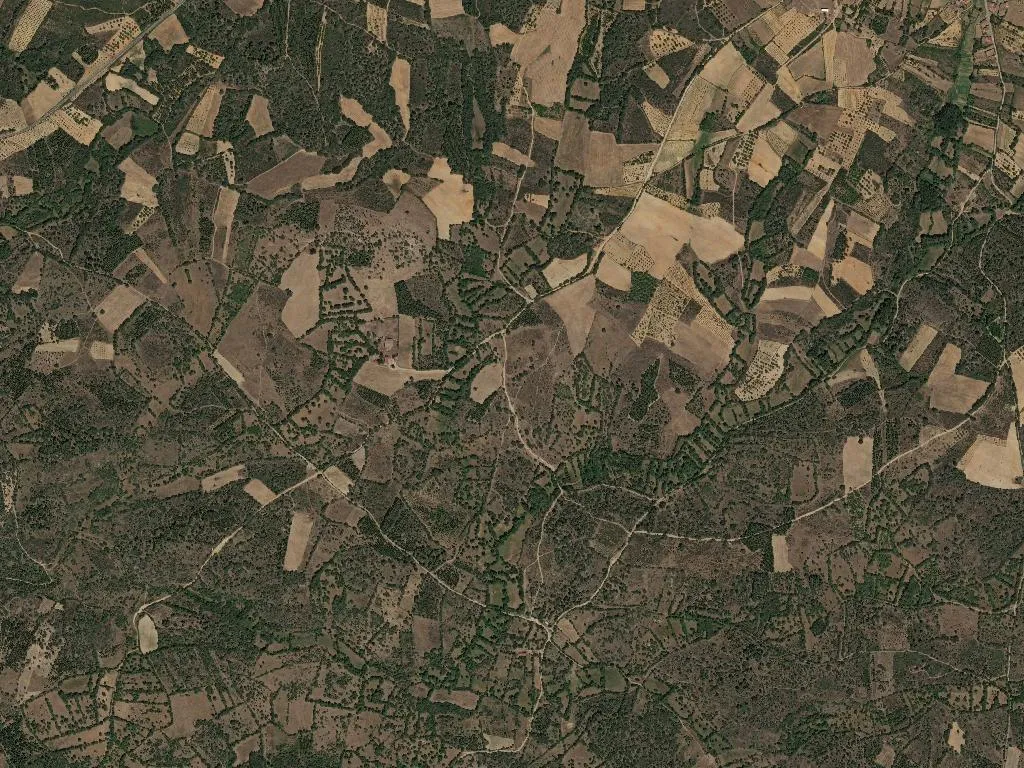
The wind arrives first. At 776 m it scuds across the high, treeless plateau of Portugal’s Terra Fria, slips through chinks in schist walls and sets the oaks on the escarpment quivering. Somewhere below, the Fresno river glints like gun-metal. This is the merged parish of Constantim e Cicouro, hard against the Spanish frontier: 153 souls spread over 36 km² of rye terraces, resinous forest and granite ravines. The border itself is nothing more than a shift in accent and the sudden jingle of euro-coins in your pocket.
Stone, Faith and a Binational Pilgrimage
Crowning the Cabeço da Luz, the candle-white chapel of Nossa Senhora da Luz functions as a landlocked lighthouse. On the last weekend of April the track up to it becomes a two-nation thoroughfare. Spanish pilgrims stream in from the province of Zamora; Portuguese families climb from Miranda do Douro. Half-way up, the path mutates into an open-air market: stalls hawk almond nougat, hand-forged pruning knives, lace edged with the cross of Christ and the five arrows of Spain. Mirandese, Castilian and northern Portuguese braid into a single bargaining tongue. By dusk the chapel terrace is a patchwork of Zamoran felt berets and Trás-os-Montes tweed caps, all tilting toward the same priest.
A short walk north-east of the village, the bracken-covered banks of a small Castro mark the spot where Iron-Age miners once followed seams of tin. The Romans later terraced these slopes for rye; the Moors, heading home from Galicia, paused at the spring they renamed Fonte da Senhora. Even today the two village fountains run icy and constant, feeding stone troughs where shepherd dogs drink before trotting back across invisible frontiers.
Masks, Blood-Sausage and Midwinter Fire
From 27 to 30 December Constantim stages the Festa do Carocho e da Velha, a pre-Christian survival thinly varnished with Catholic timing. Masked figures—straw-man Carocho, hunch-backed Velha, the stick-clacking Pauliteiros—parade to the metallic rasp of concertinas. Bonfires of holly and oak flare in the square, and the air fills with the resinous tang of smoked-morcela de arroz, the local blood-and-rice sausage. Platters of roast Carne Mirandesa DOP arrive from wood-fired ovens, its fat still crackling, chased by Trás-os-Montes red: a high-altitude wine whose brisk acidity can strip rust.
Walking the Quiet Border
The parish lies inside the Douro International Natural Park, a ravine-cut sanctuary for Egyptian vultures and Iberian wolves. Waymarked trails follow the Ribeiro de Matáncia as it tumbles through moss-cushioned gullies to the Douro, 8 km distant. From the Serro do Naso, an outcrop shaped like a broken nose, you can watch griffons ride thermals above the 500-metre canyon. At dusk the granite of wayside shrines glows like embers, and wolf prints—unhurried, passport-free—cross the dust road that doubles as the frontier.
National Geographic Portugal named Constantim “Village of the Month” in April 2022, saluting a place where 77 pensioners outnumber children under sixteen by eleven to one. Yet the fireplaces still crackle with oak logs, and stories—spoken in Mirandese, that officially recognised regional tongue—still refuse to burn out.