Full article about Miranda do Douro: Dawn on Granite, Mirandese on the Tongue
Where Iberian wolves patrol canyon rims and Mirandese echoes off 13th-century stone.
Hide article Read full article
The granite that drinks the dawn
Morning light ricochets off granite walls and slips down the alleyways like coffee slopped from a window. Four hundred metres below, the Douro lies folded into the valley, a slack green ribbon. The plateau air is brittle with thyme that seeds itself between the stones – the scent that tells you you are nowhere near home. In Praça D. João III the pillory still stands, now used as a leaning-post for gossip; arrive before the cafés open and the first tongue you hear is Mirandese, not Portuguese. It was never a dialect, simply the local way of saying “good afternoon” without lisping like a Castilian, and in 1999 Brussels made it official. Miranda do Douro is border country – land that belongs to both sides and neither, kept in place by its own weight.
A castle that lost the war but kept its tower
All that remains of the fortress is a single square keep and a scatter of blocks warm enough to serve as benches for the builders who climb up here for a last cigarette before work. Dinis strengthened the walls around 1280, but the final blow came during the Spanish invasion of 1762 when the guns finally punched through. The adjoining cathedral, however, refused to surrender. Step inside: painted wooden ceiling, gilt that would make a banker blush, and slanted light that throws bowling-lane rectangles across the floor. Between 1545 and 1780 this was a bishopric in its own right; when the diocese was moved to Bragança the building stayed, stubborn as the townspeople.
The canyon where silence has weight
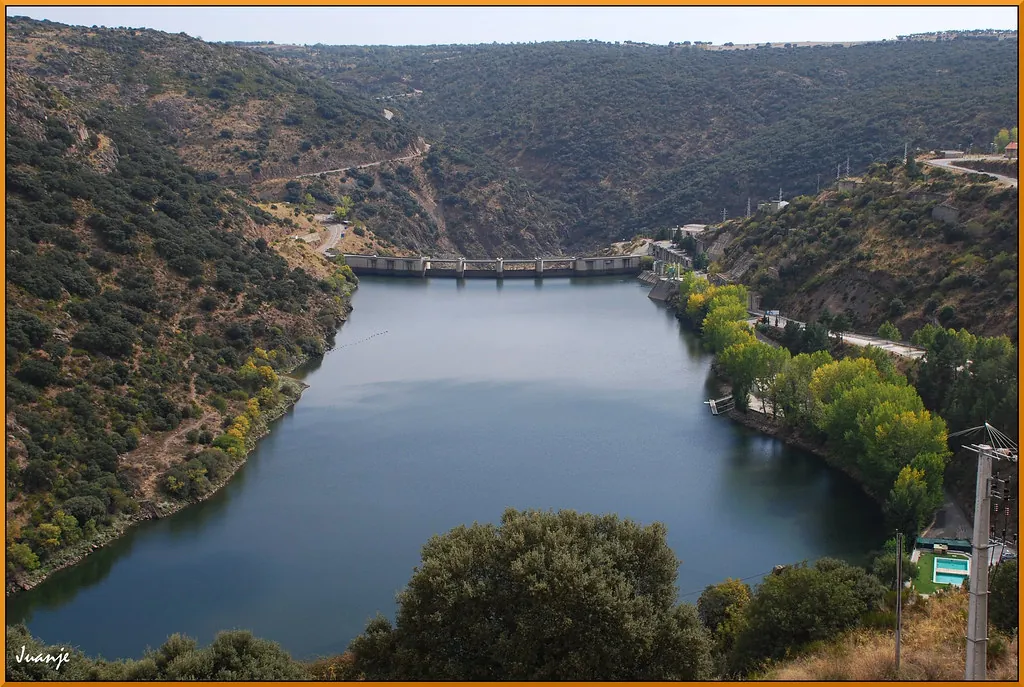
From São João das Arribas the river looks like a biro line scored at the bottom of a sketchbook. The cliffs drop sheer, as though drawn by someone who never learned perspective. Griffins wheel, waiting for a careless rabbit; golden eagles do exactly the same, only with better posture. The International Douro Natural Park protects every stone and feather – walk your dog by all means, but keep it on the lead: the Iberian wolf has not yet read the conservation charter. Two trails deserve diary space: the PR3 to Duas Igrejas (eleven km, carry water and reserve a lager for the return) and the Ladeira da Velha loop (three km, flat enough for gossip). Take a small boat and the world flips: the cliffs become prison walls, the sky a blue ribbon overhead – perfect for anyone who enjoys feeling negligibly small.
Steak, smokehouses and the politics of coarse salt
Ordering Posta Mirandesa is not asking for a big steak; it is asking for the steak that grazed the same meadow your grandfather rented for his sheep. The meat is thick, marbled, grilled over cork-oak charcoal and seasoned only with coarse salt – anything else is treated as criminal damage. It arrives at the table still spitting, with either chips or baked rice, and the smell lingers on your shirt like a passport stamp. Around it you’ll find Vinhais smoked ham, alheira sausage that technically doesn’t need frying (fry it anyway), and bola doce – a bread-shaped dessert of cinnamon, sugar and whatever the baker’s grandmother refuses to divulge. Wednesday and Saturday markets let you taste before you commit: the sample is free, the wrapping is brown paper, the advice is complimentary and usually unsolicited.
Stick-dancers, cowbells and a cloak that is more than black
The Pauliteiros de Miranda dance with ash sticks to the drone of a gaita-de-foles – the local, pre-WhatsApp method of announcing “I’m here”. They appear during the Festa da Santíssima Trindade and at Santa Bárbara in December; come in May and you will probably collide with them. Before Lent the Entrudo Chocalheiro fills the streets with masked caretos whose copper cowbells clank like lost cattle, plus a wooden donkey older than most city taxis. The Capa de Honra is cut from heavy black wool, but the scarlet and gold embroidery is bright enough to pass for neon; classified as national heritage in 2022, it still works for the weekly shop. Inside the Museu da Terra de Miranda – the old town hall – cloaks, bagpipes and agricultural irons smell of lavender and cupboard wood; the exhibition explains why none of this is considered optional.
Upstream, the chapel of Nossa Senhora da Luz perches just above the water. On the first Sunday of August the town walks there with picnic baskets and the mass is said outdoors. Across the river, legend claims a yellow stain on the Spanish rock looks like the number two: spot it and you will be lucky in love – or you need new glasses. Either way, the eye lingers on the waterline that separates countries but not stone, wind or the low August light that turns the frontier into an afterthought.