Full article about Dawn, shale and Mirandese cattle in Póvoa
Carne Mirandesa sizzles while griffons soar above shale cliffs in Miranda do Douro’s silent village
Hide article Read full article
Dawn on the shale
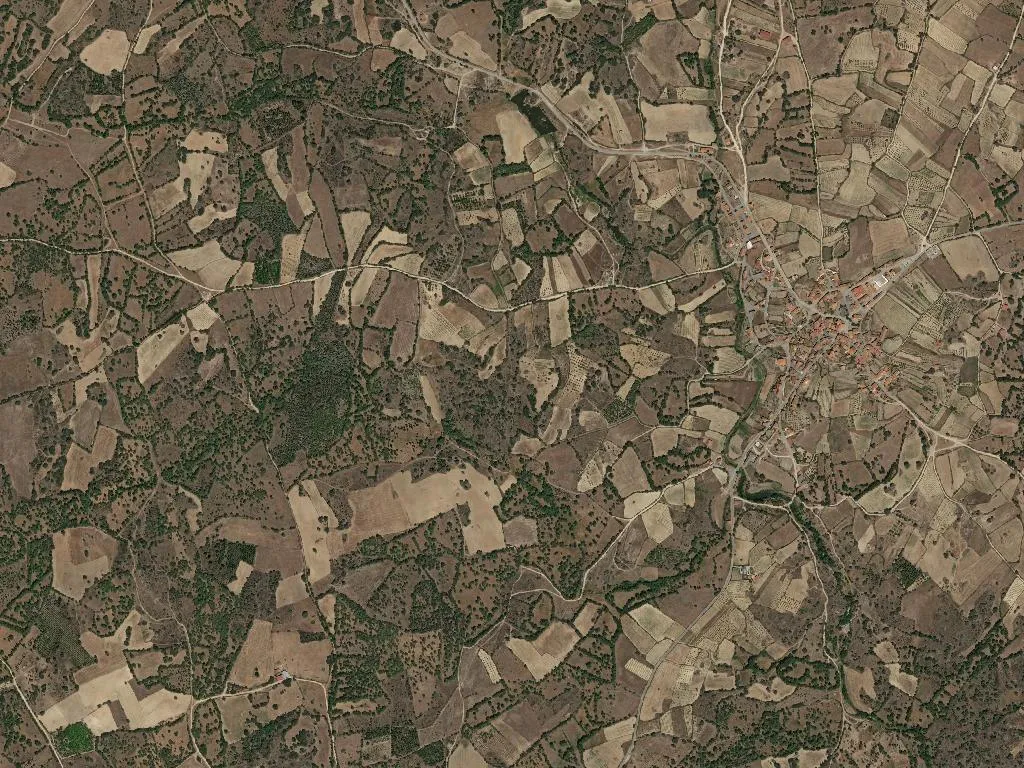
Sunlight strikes the single street of Póvoa before seven, stretching shadows from walls built of ochre shale. Cowbells announce the morning before the animals appear: Mirandese cattle, seal-brown coats and scimitar horns, climbing the compacted-earth lane to open pasture. A dog barks once, then nothing – only the plateau wind at 758 m that carries the scent of broom and cold stone. With 164 souls scattered across 22 km², silence here is measurable, like altitude.
Meat, rye and a communal oven
The parish table is a ledger of what the land gives. Carne Mirandesa DOP – sirloin or salt-marsh lamb – is seared over olive-root embers, served with potato and rapini, finished with a thread of Valverde estate oil. Cast-iron casseroles, thick as bibles, hold lamb shoulder that collapses at the nudge of a fork. In larders hang alheira and chouriça smoked over oak in the stone oven António has fired every Friday since 1973. His rye loaf, the colour of wet earth, is breakfast when toasted and rubbed with pork fat. Celebration meals end with Bola Doce Mirandesa, puff pastry rolled around almond paste, taken with tar-black coffee and a glass of frontier red that tastes of graphite and wild thyme.
Griffon country
Póvoa sits inside Douro International Natural Park, and the terrain obeys river, not man. Golden shale cliffs drop 300 m to the Douro; holm oaks twist like charcoal sketches on the ridge. The Senhora da Luz footpath, way-marked in 2004, climbs to Fradinho lookout where griffon vultures ride thermals, their 2.5 m wingspan motionless. In winter the olive and almond terraces become a filigree of silver against pewter sky; after dark the Milky Way is a bright scar overhead – the parish records zero light pollution on official charts.
Calendar of return
Dispersed hamlets reconvene for three dates: Trinity Sunday, 15 August (Nossa Senhora da Luz) and Santa Bárbara’s day in December. The cultural association “Renascer das Tradições” – founded by four locals in 1997 – revives challenge-singing, stick dances and the winter mascarados, rag-and-bell figures who rattle windows after solstice. During processions 87-year-old Amadeu still greets the Virgin in Mirandese: “Bendita sêas, Nossa Sennora” – vowels rough as limestone, a linguistic hinge between Latin and modern Portuguese.
When the final herd crosses the stone threshold at dusk and the church bell counts out the Ave Maria, Póvoa folds into itself. Wood smoke lingers; cold air drains off the cliffs; the after-sound of cowbells moves through the walls like a second, slower heartbeat.