Full article about Cabanelas saws the Old Year in half at midnight
Straw doll, chestnut smoke and clanging cowbells usher in January in Trás-os-Montes
Hide article Read full article
The saw that ends the year
At 11.30 p.m. on 31 December the loudest noise in Cabanelas is not fireworks. It is the judder of a two-man saw biting through a life-size straw doll – the Velha – slung from a balcony on Rua da Igreja. When she splits, the crowd roars, the straw is tossed on a bonfire and the new year is declared open. The ritual, Serrar a Belha, has been performed in this parish of 344 souls since at least the 1890s, longer than anyone can remember and far longer than the parish council’s minutes stretch.
Winter festivals
The following morning the single men of the village take over. Dressed in woollen fringed jackets, cowbells strapped to their shins, they lead the Festa dos Rapazes in honour of St Stephen – a roving, slightly unruly house-to-house carol that keeps the old agricultural calendar alive. Similar processions thread through the Terra Fria on the same day, but here the choreography is tighter: three steps forward, two back, a sudden stamp that sets every bell clanging. Winter is not the off-season; it is when the village reassembles itself.
What the table remembers
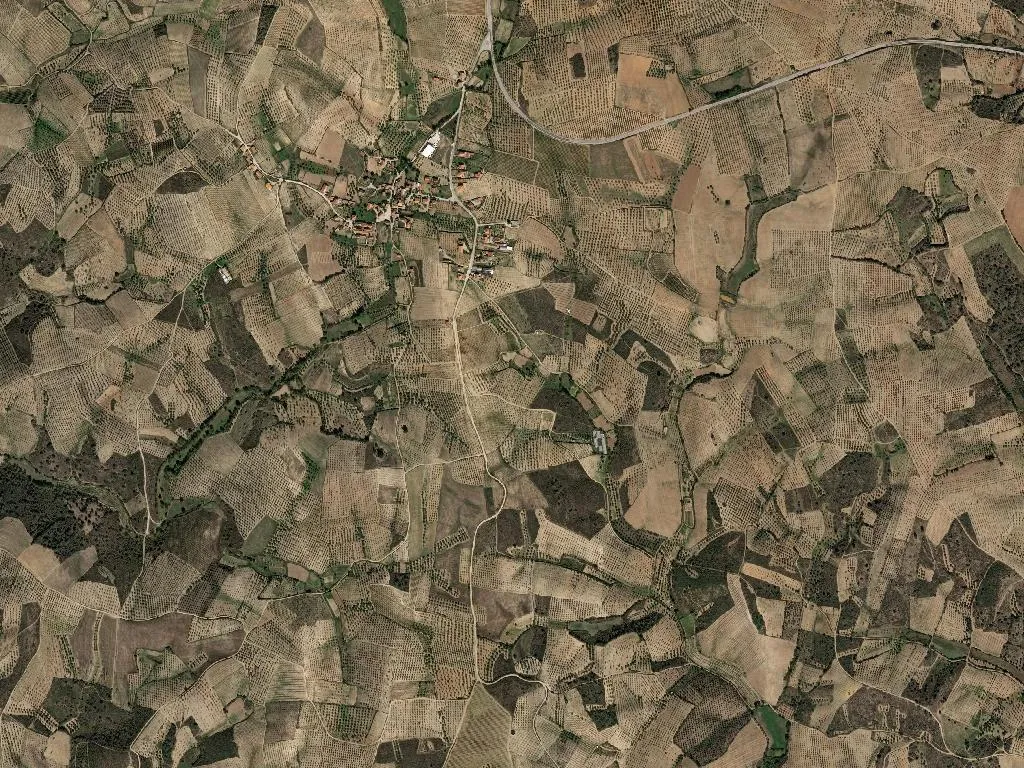
Cabanelas sits on the southern lip of Trás-os-Montes’ wine zone, where schist terraces hold vineyards first planted by Cistercian monks. The flavours that matter, though, are smoked, not fermented. Alheira sausages from Mirandela dangle for four days over chestnut-wood embers until the skins bronze and the interior birds-meat loaf stays just moist. The same smokehouse yields olive-oil-yellow chouriço de carne de Vinhais and the ham-coloured salpicão, sliced so thin you can read the Tua valley through it.
At communal lunches in the single whitewashed café, these arrive alongside Terrincho DOP lamb baked in a wood oven the size of a sentry box, followed by goat’s-milk cheese the colour of parchment and dark honey from the Terra Quente. In autumn the coals are cleared for chestnuts – Terra Fria DOP – scored with a cross and roasted in the embers until the skins peel back like parchment.
Negative space
With 18 inhabitants per square kilometre, absence is part of the topography. Granite houses stand shoulder-to-shoulder, yet only 25 residents are under fourteen. The one place to stay is a former schoolhouse let by the parish – no website, no breakfast buffet, just a key hanging on a nail and the instruction to leave the gate as you found it.
On January afternoons smoke rises in perfect verticals from chimneys and the village is so quiet you hear the river Tua turning over stones two kilometres away. Silence here is not lack but residue: the echo of a saw finishing its cut, a bell marking the hour, the aftertaste of woodsmoke that still carries the memory of last year’s Velha burning in the square.