Full article about Cobro’s Winter Smoke & Sausage Rituals
Festas, alheira smoke and 17th-century slate in tiny Trás-os-Montes Cobro
Hide article Read full article
The scent of woodsmoke rising over slate
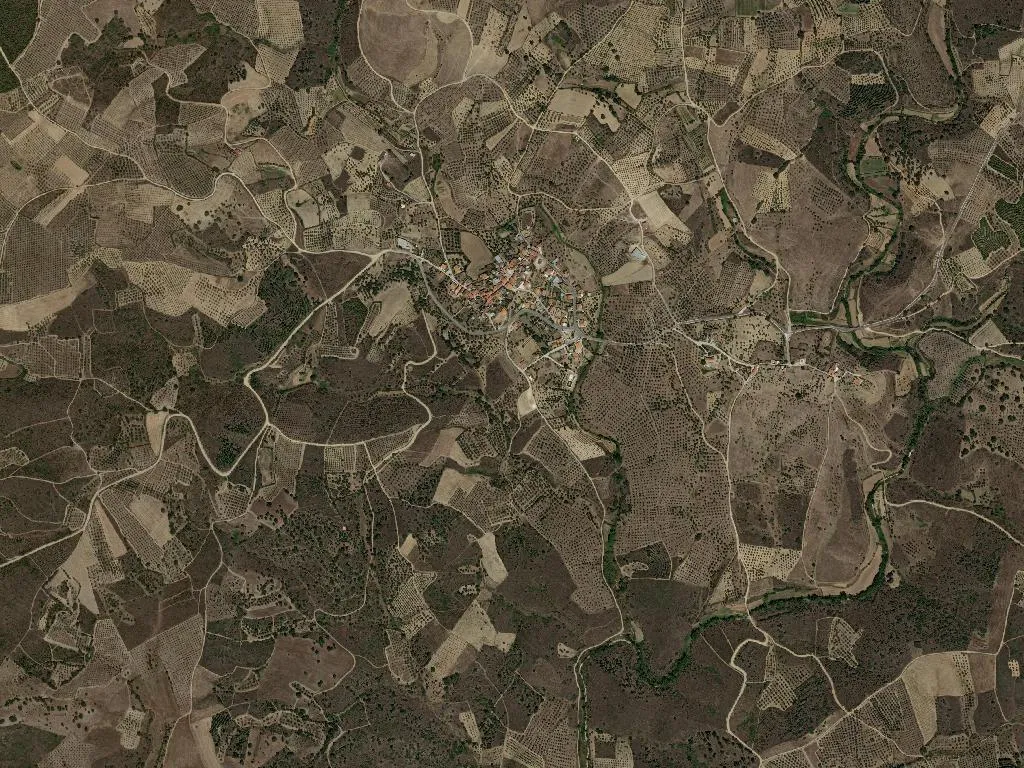
December arrives in Cobro on a ribbon of smoke. It slips between the slate roofs of this northeastern corner of Portugal, carrying with it the metallic clatter of cowbells as village boys rehearse for the Festa de Santo Estêvão, a mid-winter ritual older than any guidebook. Barely 150 souls occupy twelve square kilometres of terraced schist that tilt toward the Tua River at just under 300 metres above sea level; the vineyards and olive groves they tend dictate the tempo of the day far more reliably than any clock.
Olive oil and smokehouse craft
Here gastronomy is not performance. In low stone cellars, strings of Mirandela’s PGI alheira sausages sway beside goat cheeses that grow a natural rind while the Trás-os-Montes winter stiffens the landscape. November’s Negrinha de Freixo olives are crushed within hours of picking, yielding an oil so green it seems almost black in the lamplight. Order the cozido à transmontana at the only tasca still serving lunch and you receive a clay pot of smoked pork shoulder, local potato and couve galega kale that tastes of the garden it was cut from that morning.
Working the earth, still
Before seeding starts—while the soil is still iron-hard at dawn—villagers observe the Serrar a Belha, a pre-ploughing custom that feels closer to liturgy than agriculture. No visitors, no cameras: just the scrape of hoe on schist and the low mutter of neighbours who have known one another since baptism. Demography is brutally honest: nine children under fourteen, fifty-five residents over sixty-five. Yet the parish safeguards a 17th-century granite church, its bell cast in 1694, its porch worn smooth by three centuries of Sunday processions.
Oak, cork and secret water
Soft ridges roll away in every direction, alternating cork-oak shadow with vineyard rows that supply the muscular reds of the hot, high-altitude Trás-os-Montes wine zone. Seasonal streams thread the valleys, feeding orchards where centenarian olive trunks twist like Henry Moore bronzes. Summer scorches the grasses to biscuit; winter lays down frost that feathers the inside of single-glazed windows. A Bonelli’s eagle circles overhead; wild-boar prints puddle in the mud of abandoned mule tracks.
Life, unstyled
Walk the dirt lanes and you confront rural Portugal without a filter: dry-stone walls built to shoulder-height against the north wind; stone threshing floors no longer needed since combine harvesters arrived; granite doorframes opening onto empty courtyards where vines have swallowed the well. Population density sits at twelve people per square kilometre—silence so complete the church bell feels like an interruption. Only during the Santo Estêvão dancers’ midnight circle does the village contract, the air thick with sweat, wine and chestnut smoke.
At dusk the first kitchen light clicks on, then another. Woodsmoke rises straight into a windless sky—promising a sharp night, and tomorrow, clarity.