Full article about Franco e Vila Boa: Where Smoke, Sausage and Silence Reign
Medieval villages fused in 2013 share olive presses, diabolical masks and Trás-os-Montes flavours.
Hide article Read full article
When Villages Become One
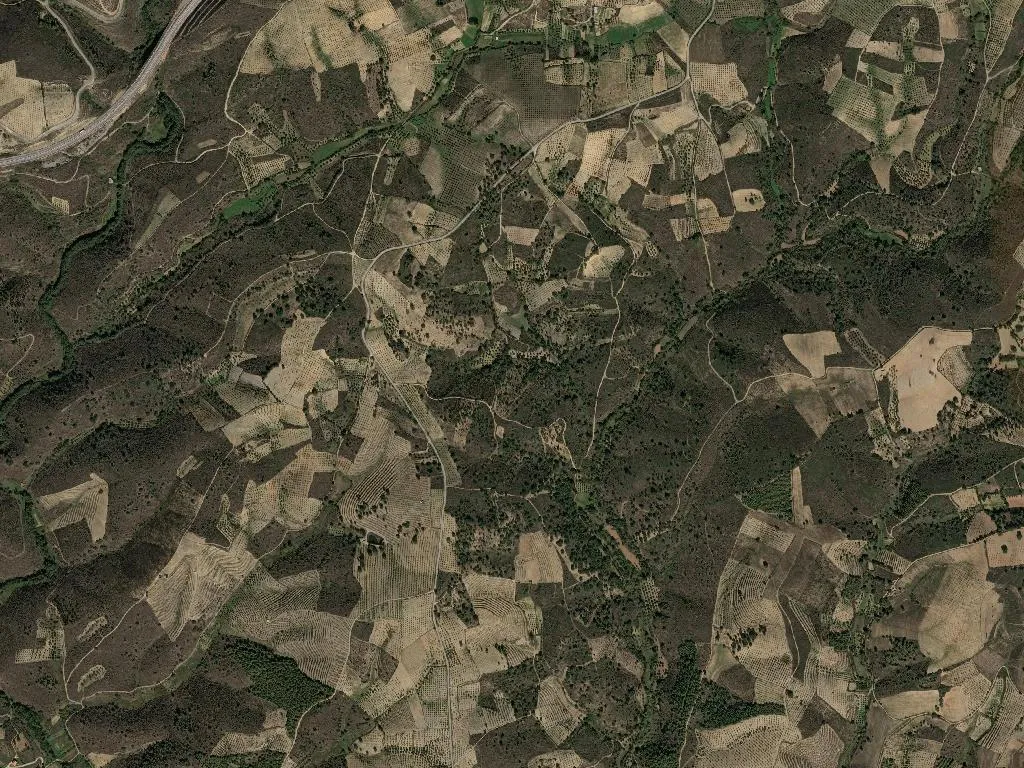
A slate chimney releases a single, steady plume of smoke into the low December sky. In Franco’s alley-wide lanes, teenage boys lash together the 4-metre poles that will carry Santo Estêvão’s diabolical masks, oak logs crackle in doorways, and the air is split by the tang of newly picked olives. At only 415 m above sea level, the civil parish created in 2013 by merging Franco and Vila Boa covers 26 km² of schist, olive groves and improbably steep vineyards, yet registers a population density of barely ten people per square kilometre. Head-counts are less useful than listening: silence is the common currency here.
Administrative maps now label the combined territory União das Freguesias de Franco e Vila Boa, but the union predates paperwork. Families have long trodden the same footpaths to communal presses, drawn water from the same streams, obeyed the same agricultural calendar. Vila Boa keeps its medieval honorific; Franco houses the parish council. The coat-of-arms granted in 2016 makes the equation explicit: two silver spouts of water and a pair of rye ears announce the enduring marriage of irrigation and dry-crop farming. Granite-and-schist cottages still present their wooden balconies to whatever winter sun can prise open the morning cold.
The Taste of Schist and Olive
Forget farm-to-table slogans; here the land is the menu. Mirandela’s bulbous alheira sausage arrives blistered from the grill, its paprika- and garlic-laden juices soaking into warm maize bread. Above the hearth, links of Vinhais chouriço and peppery salpicão swing beside haunches of wild boar ham, slow-cured by the dry Trás-os-Montes wind. Emerald DOP olive oil, coaxed from century-old trees in the village press, pools over chestnut soup, a speciality imported from the nearby Terra Fria plateau. Cheese is the raw-milk Terrincho, made from Churra da Mirandesa ewes and paired with rough-cut red from family terraces that survive only because generations rebuilt every collapsed schist wall by hand. Dessert is a spoonful of amber Mel da Terra Quente, the scented honey of flowering rosemary and heather that clothes the surrounding hills.
Calendar of Fire and Bells
On 26–27 December the Boys’ Festival (Festa dos Rapazes) hijacks Franco. Masks carved from arbutus wood are daubed scarlet, bronze cowbells clang from 4 a.m., and dances re-enact pre-Christian rites of fertility and renewal. The eldest boy, the Mestre, leads his costumed troop from the house of the annually chosen godfather, collecting offerings of wine, sausage and coins. A month later comes Serrar a Belha: a straw crone is tried, sawn in half and burned on the threshing floor behind the chapel of São Sebastião, signalling winter’s symbolic end. Both events still depend on collective labour-swaps that the 2013 municipal re-drawing could not erase.
Walking Where Maps Fall Silent
There are no way-marked loops, no interpretation panels—just powder-dry earth lanes that snake between olives older than the United States. Halfway up the slope above Fonte da Pipa, a 300-year-old grove commands a natural balcony over the Tua valley; women still fill earthen crocks there at dawn. Wild boar plough terraces at dusk, red-legged partridge burst from flowering broom, and chamomile releases a honeyed scent when tyres or boots bruise the road-side plants. The parish’s two main streams create pockets of cool air where stock doves and Iberian hares vanish among poplar and ash. Walk quietly: the echo you hear is part cowbell, part memory, entirely Franco e Vila Boa.