Full article about Freixeda e Vila Verde: Dawn Smoke over Tua Terraces
Medieval charters, cow-bell masks and alheira smoke still rule this 137-soul Mirandela parish.
Hide article Read full article
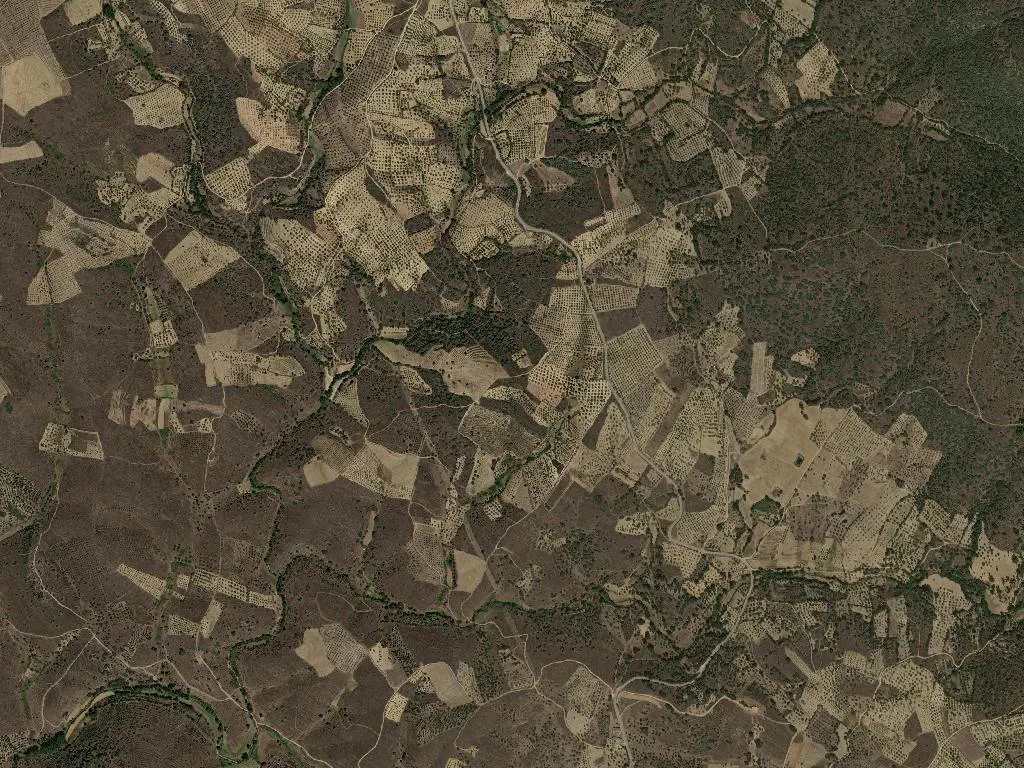
Smoke drifts from the chimney of a slate-roofed house at first light, slow as a sigh. Below, dew-heavy meadows slide downhill towards the Tua valley, their green almost metallic against the gun-metal schist of the stone terraces. My great-uncle used to tap his walking-stick on one of those walls and mutter, “That one was ancient before I drew breath.” At 393 m above sea-level, in the merged parish of Freixeda e Vila Verde, 137 residents still order their days by the tilt of the sun and the smell of wood-smoke — not out of rustic nostalgia, but because no alternative calendar has ever been proposed.
Thirteenth-century bones
Both hamlets were already inked onto royal charters by the 1200s, when the Knights Templar and minor nobles carved up the Transmontano borderland. Freixeda’s foral (medieval town charter) granted market rights; fragments of Roman ashlar still turn up in cottage walls the way old coins surface in vegetable beds. Vila Verde, mentioned in the same parchment, grew as its agricultural twin. When the two parishes were officially fused in 2013, the council merely ratified what centuries of shared threshing floors and marriage alliances had long since decided.
Winter masquerade
On 26 December the Festa dos Rapazes erupts through the single cobbled lane. Young men strap cowbells to their waists, pull on carved wooden masks and bang home-made drums, a sonic exorcism that predates any written ordinance. Until the 1980s neighbours also practised serrar a belha — communal log-cutting parties that stacked every household’s firewood before the first frost. Today only 10 children under 14 remain, but the masks are still repainted each year and the bells re-corded, just in case someone is listening.
A smokehouse archive
The pantry here is a living document. Alheira de Mirandela IGP, the garlic-rich game sausage created by crypto-Jews to fake pork, hangs beside amber strips of Vinhais presunto and fat-veined salpicão. Terrincho DOP cheese — made from the milk of Churra da Terra Quente sheep — carries the tannic bite of wild rosemary and thyme the animals graze on. Olive oil from centenarian Trás-os-Montes trees splashes onto corn broa; Negrinha de Freixo olives rest in hand-thrown clay jars; chestnuts roast in the embers of the same hearth that cures the lamb. Every mouthful is a topographical map you can taste.
The logistics of silence
There is one registered guest-house, no traffic lights, 6.45 inhabitants per km². Ask for orange juice in the café and the barman will walk across the road to his own tree. What you get instead of itineraries is 2,123 hectares of granite ridges, oak scrub and the audible absence of human noise. Stay until dusk, when the low sun sets the schist glowing like forged iron and fresh smoke climbs again. The beauty of Freixeda e Vila Verde is not what has been added, but what no one has yet found a reason to take away.