Full article about Lamas de Orelhão: where bells echo across olive-lit schist
Romanesque bridges, alheira smoke and masked Caretos animate Mirandela’s hidden village
Hide article Read full article
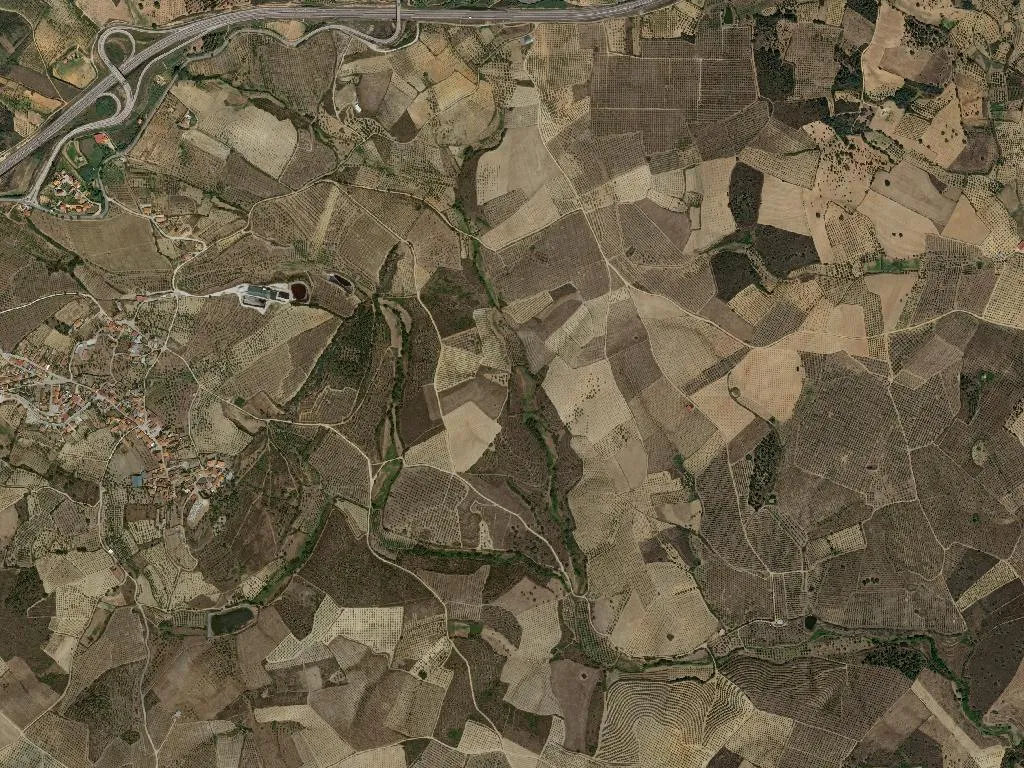
The church bell counts hours no one checks. In Lamas de Orelhão, time is gauged by light: low across the olive terraces at dawn, white-hot on the schist at noon, molten on the walled vegetable plots at dusk. Three hundred souls are scattered over two thousand hectares of rock-rose and cork oak where medieval irrigation channels still deliver water to the orchards.
Stone that speaks
The parish church of Santo Estêvão rises on a 12th-century footprint; inside, a gilded baroque altarpiece faces 18th-century tiles depicting the martyrdom of St Stephen. Outside, a Manueline stone cross and a tapered bell-tower keep watch. Downstream, the single-arched Ponte de Pé de Moulha still carries local traffic over the Vale de Moinhos stream. Romanesque capitals are recycled into garden walls, and the sixteenth-century Fonte da Urze splashes from a granite spout carved with the date 1593.
Smokehouse, olive oil, chestnut
In the tavern, alheira sausage is grilled until the skin blisters, then served with mountain kale stewed in its own juices. Chouriço is braised with turnip tops; salpicão is sliced by hand. Terrincho lamb roasts slowly in a wood-fired oven. October brings chestnuts—folded into soup, stuffed into kid, candied with honey. Finish with damp sponge cake or pumpkin jam, washed down with a thimble of medronho firewater.
Caretos, carols and sawn-through logs
On 26 December, village boys tour the lanes singing janeiras, rewarded with sausage and rough red. Epiphany sees log-splitters saw the belha, stacking firewood for the coming blaze. Caretos—youths masked in crimson, yellow and bottle-green—chase girls to the drone of a gaita bagpipe. In May, the pilgrimage to Nossa Senhora do Viso climbs the hill in silence, boots scuffing shale.
Trails of water and stone
The Caminho do Tua threads past restored watermills and olive groves planted before the Napoleonic Wars. Medieval levadas still spill into stone troughs where wild cats drink. Within the Tua Valley protection zone, black kites wheel above Bonelli’s eagles. At first light, blackbirds and robins rehearse their scales along the irrigation ditches.
Evening finds the communal press: salpicão is chopped on a granite counter, the wine bottle circulates, bread comes out of the oven. No one glances at a watch.