Full article about Múrias: where the Tua valley swallows time
Dawn bells, chorizo smoke and frost-bitten olive terraces in a 244-soul Mirandela village
Hide article Read full article
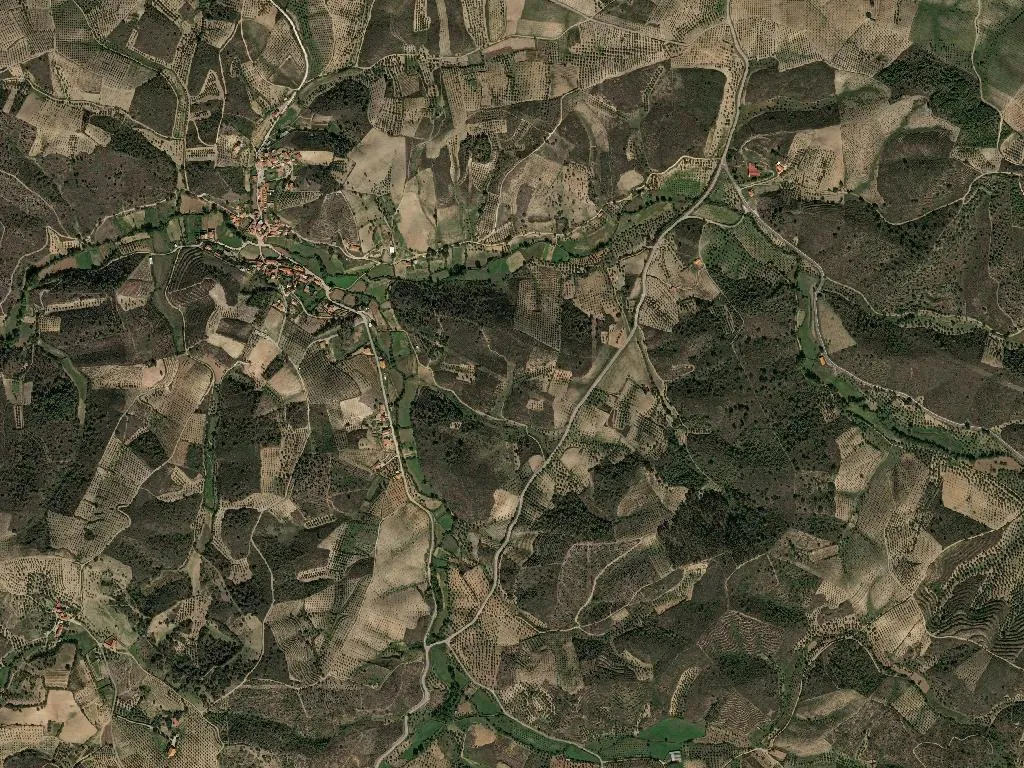
The sound arrives before the sight: a single bell note sliding down the valley of the Tua, then a hush so complete you can hear the olive-oil can drip in the sacristy. Dawn in Múrias carries the perfume of chimneys waking up – chorizo and salpicão still weeping fat, river-mist from the Ribeira de Múrias, and the horsy tang Sr Zé leaves outside the bar when he hitches his garrano. Winter light rakes the olive terraces, stretching their shadows like long fingers over schist walls; cold insinuates itself under wool socks and bites the ankle. Officially we are only 302 m above sea level, but the thermometer feels like a different currency – one where the body slows and the clock quietly abdicates.
Between stone and a soft erasure
Population 244, of whom 128 have already turned 65. The numbers explain what your eyes tell you: the village is a cork oak shedding its bark in slow motion. Twenty-two square kilometres of rolling country are sliced into handkerchief plots; ancient chestnut groves are still worked on foot. Inside the parish church of São Tiago a 13th-century granite font has been recycled as a planter for a London-plane sapling. The chapel of Santo António lost its roof in the 2018 storm; bell-ringers nonetheless keep the baptism ledgers safe, entries written in royal-blue Bic. Heritage here does not shout – it simply waits, like the stone bench where Dr Américo used to sit and watch the hours walk past.
When winter lets the boys loose
December’s Festa dos Rapazes hauls the village out of hibernation. Young men strap on red-and-black pinewood masks, tie olive-oil-tin rattles to their belts with fence-wire and growl, “Uncle, spare a coin for little St Stephen.” Half sacred, half rowdy, the custom belongs to the old solar calendar: make enough noise and perhaps winter will retreat. Six weeks later, at Carnival, comes Serrar a Belha: a straw man wearing the latest Portugal football shirt is sawn in half in the square while his mock-will consigns rising diesel prices and the absent GP to the “corral of sorrows”. Laughter ricochets between whitewashed walls, bright and brief, before silence reclaims its mortgage.
A kitchen without show
There are no restaurants. Dona Alda’s café, however, fries alheira until the skin blisters, sets it on water bread and crowns it with a softly poached egg – go on Tuesday, bake day. Sr Anselmo in the grocery keeps a salpicão that hung three months over his hearth; sliced thick, the fat dissolves on the tongue like hot butter. Lamb appears only at Christmas, disappearing into Zé Mário’s wood-fired oven with baby potatoes and garden parsley. Terrincho DOP cheese is served rind-on – “that’s where the flavour earns its keep,” insists Dona Alda. Trás-os-Montes DOP olive oil is from Sr António’s grove; he still hauls the crates downhill on his mule. Honey from Terra Quente is so dense Celestino cuts it with an old guitar string. Every product has a protected name, but what lingers is the taste of smoke, pork fat, earth that sneaks in through the soles of your shoes.
Paths that refuse to arrive
Múrias’ footpaths are not on the internet. They start at Sr Joaquim’s gate where the dog barks in baritone but has forgotten how to bite, climb the levada that once fed the Pintado watermill – now only stones and a giant thistle. They cross Dona Emília’s chestnut plot where fruit drops round and splits under a bare foot. No waymarks, just hoofprints in ochre mud. Twenty people per square kilometre – the lowest density you can record without vanishing altogether. Walking here is the sound of your own tread on packed earth, your breathing amplified by absence, the light warming from pewter to honey as the sun slips behind the chestnuts and the air begins to smell of rock-rose.
At dusk the smoke from curing sheds rises straight into the still air, thin as a basting thread, drawing an invisible map of the houses still occupied. Dona Alda pulls the café shutters, Sr Zé lowers the grocery grille, the church bell offers nine strokes that roll away down the valley. The village shrinks into the hillside, a cat curling tail to nose for the night.