Full article about Passos: masked boys, chestnut smoke and sawn-year rites
Experience Passos, Bragança: watch Serrar a Belha, taste alheira, Negrinha olive oil & Terrincho cheese under oak smoke
Hide article Read full article
Wood strikes wood in the churchyard. It’s Santo Estêvão, 26 December, and the village boys of Passos pivot in tight, clockwise circles, masked in hand-carved alder, sheep-bells clattering like iron hail against the freeze. At 468 m the air is surgical; oak smoke, split chestnuts and fat dripping from chouriço onto embers hang in a column so straight you could set your watch by it.
The weight of cycles
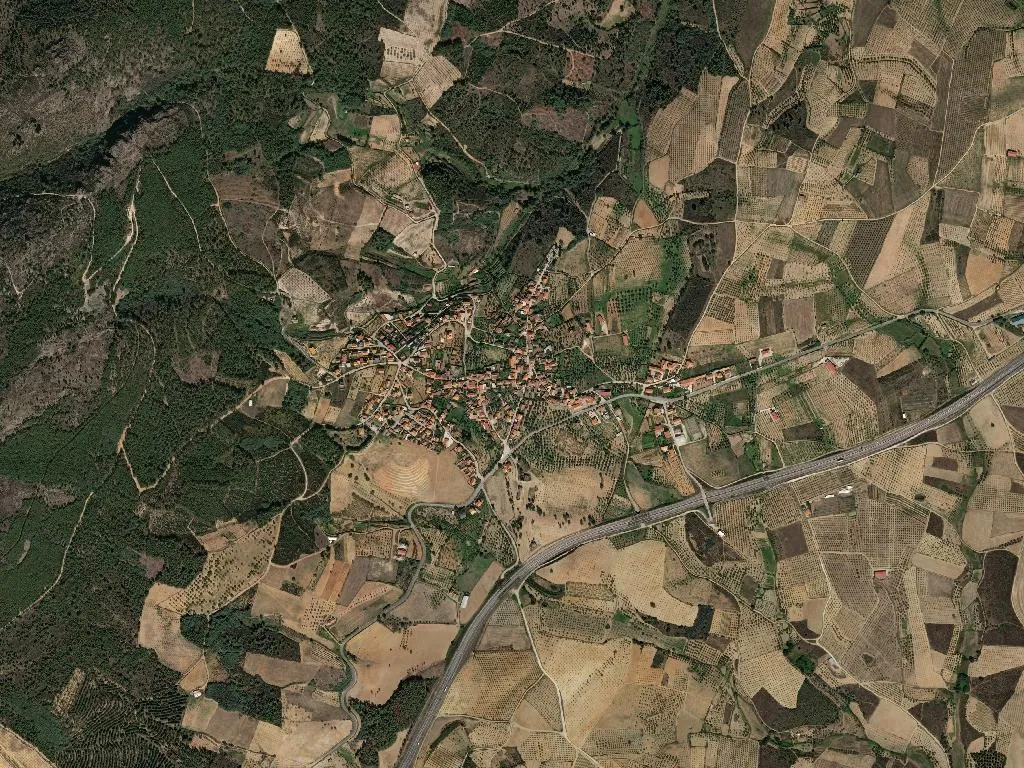
333 souls, 138 of them past pension age. No adjectives are required: the parish keeps time by the orchard and the moon, not the calendar. Between Christmas and Epiphany the village performs the Serrar a Belha, a threshold rite older than the First Republic. An effigy of the Old Year – a three-metre log called Belha – is sawn in half by every able-bodied man, the two halves tossed onto a bonfire that roars through the night. When the embers cool, the cycle restarts.
Smokehouses and certifications
Under the eaves of low granite houses, scarlet salpicões and bone-white hams inhale the mountain air. The plateau’s 30 % average humidity and 2 000-hour sun count do the curing; human patience does the rest. Alheira sausages, invented during the Inquisition to disguise pork-less diets, still contain the ghost of that subterfuge: game, poultry, bread, garlic and smoke. Further down the slope, the Negrinha de Freixo olive – a DOP variety no larger than a thumbprint – ripens until midwinter. Its oil is grass-green, throat-catching, the flavour equivalent of walking into an electrical storm.
At table, kid goat is roasted over vine prunings until the skin blisters like parchment; the local Terrincho DOP ewe’s-milk cheese breaks into granular, butter-coloured rubble; chestnuts from the surviving soutos are folded into maize bread or simply slit and buried in ash. Dark heather honey finishes the meal with the scent of moorland thyme.
Practical note: don’t ask for “ham” in the café. Ask who still has a leg hanging from last Christmas; someone will produce a knife and a loaf faster than you can say presunto.
Monuments and silence
Only one building bears the state’s brass plate – the 16th-century parish church whose Romanesque doorway survived the 1755 earthquake. Everything else is schist, slate and silence. Population density clocks in at 18 people per km², meaning the gap between gateposts is measured in birdsong, not metres. On 26 December the Boys’ Festival (Festa dos Rapazes) survives because there are still men who know which alder tree to cut for masks, which steps fit the drum’s 7/8 beat, and who accept frostbitten fingers as rent for keeping the village’s memory alive. It is not folklore; it is maintenance.
Insider tip: arrive by 08:30, park at the top of the lane and walk downhill. After the final dance you’ll climb back up carrying woodsmoke in your coat and the taste of ash-roasted chestnuts on your tongue – proof that some places celebrate because forgetting is not an option.