Full article about São Pedro Velho: Where Smoked Ham & Silence Outnumber People
Mirandela’s hill village keeps 281 souls, oak-smoked hams, olive terraces and wild winter masquerade
Hide article Read full article
A bead of pork fat still trembles on the iron hook above yesterday’s embers. Inside the granite kitchen, someone draws a blade through scarlet Mirandela ham; the slice lifts like silk, releasing a gust of salt and beech smoke that clings to the oak beams. Through the doorway, the morning sun ignites each olive leaf on its terrace, the valley stepping down in disciplined rows until the Tua River glints silver.
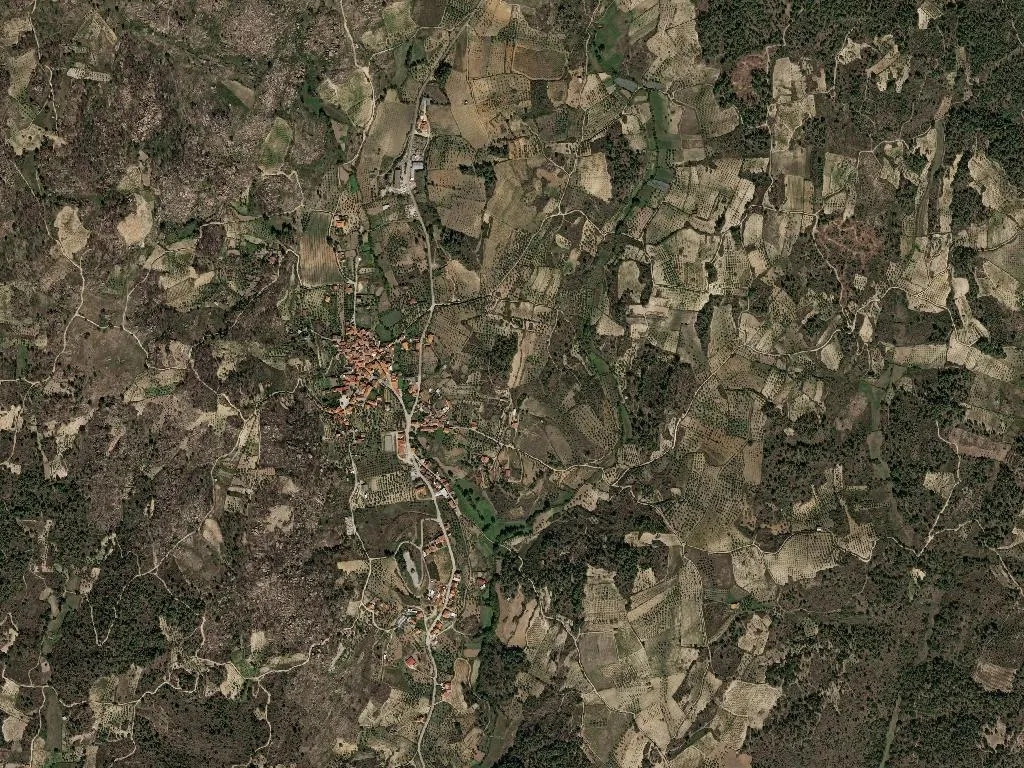
São Pedro Velho wakes without haste. Two-hundred-and-eighty-one souls occupy 23 square kilometres of schist and sky, a ratio that converts distance into hush. One-hundred-and-fifty-six residents have already crossed the 65-year threshold; only nine are under fourteen. The arithmetic is audible: no school bell, only a chain on a gate, the dry cough of a moped returning from the olive press.
When the boys take over
On St Stephen’s Day the village surrenders to its own children. The Festa dos Rapazes sends brass cow-bells clanking up the lanes; leather masks, bristling with boar bristle, turn neighbours into momentary beasts. Later, between pruned vines and frost-burned vegetable plots, the January ritual of Serrar a Velha stages the symbolic felling of the old woman – winter itself – in a pantomime half harvest, half exorcism.
What is eaten, what is stored
The pantry here is altitude-hardened. Alheira sausages, smoked over holm-oak, split open in the pan with winter greens and last summer’s potatoes. Golden azeite de Trás-os-Montes – DOP-certified, pressed from cobrançosa olives – pools on crusted bread still warm from the communal oven. Terrincho DOP, a raw-milk ewe’s cheese, presents a rind the colour of wheat stubble; alongside, presunto from Vinhais dissolves into porcine perfume. Kid goat, rubbed with garlic and sweet paprika, roasts slowly while chestnuts from the Terra Fria plateau steam in a perforated pan.
Nothing is rushed. Honey from the Terra Quente crystallises into cloudy white, potatoes are hessian-bagged in the cellar, and small black conserva olives wait in brine for the evening when snow seals the road. In the stone adega, someone tilts a glass of Tinta Roriz against candlelight, nosing the vintage as dusk pools between the terraces and the first cold slides up from the Tua gorge.