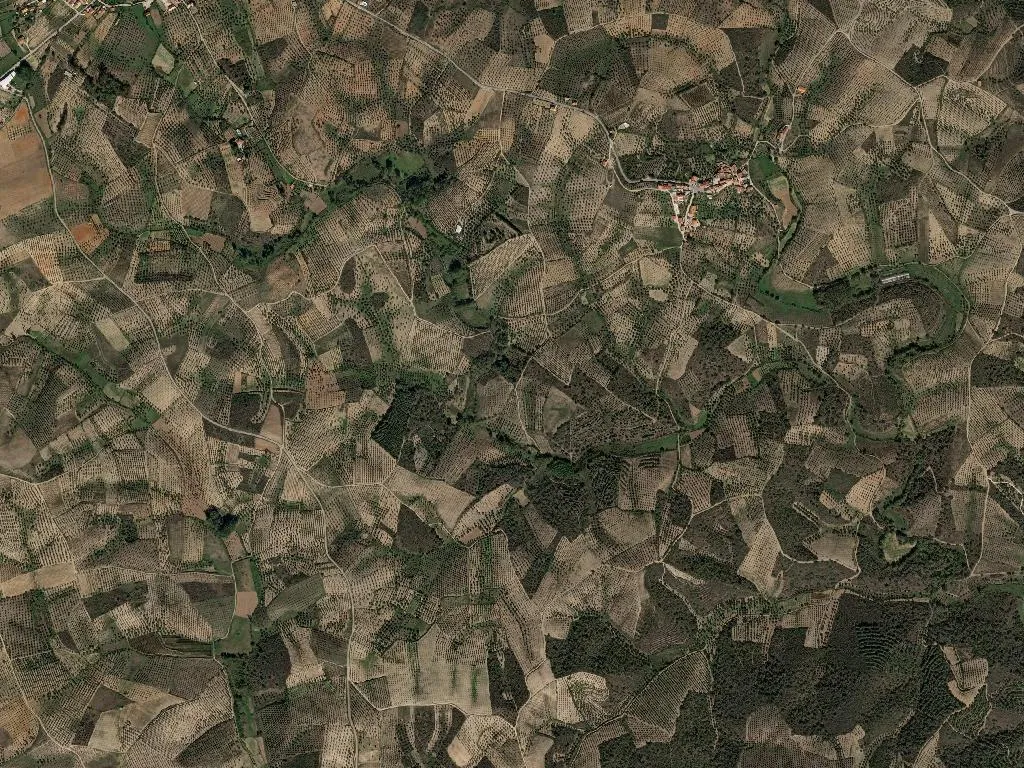
Full article about Vale de Gouvinhas: where ham ages with washing machines
October chestnuts, winter fires and António’s pig—234 souls keep time the old way
Hide article Read full article
The smoke drifts from the smoke-house as though it has all the time in the world. It smells of my grandfather’s coat: scorched oak and bacon that still has a pulse. Vale de Gouvinhas keeps 234 names on the parish roll, yet I’d swear there are 234 distinct ways to say “morning” without sounding like you bought the phrase in a gift shop.
What you eat (and when)
Come in October. Chestnuts blister on the hearth and the neighbour’s vat of rapa—aguardiente laced with cinnamon and lemon peel—steams louder than the kettle. The sausage is a proper Mirandela alheira, but here it never sees a white plate. It is shoved into a roasting tray with hand-spiralled potatoes, everything slicked with olive oil that Zé Manel decants from a five-litre jug. “Only if you’re taking some home,” he shrugs. “Otherwise it’s not worth the pour.”
Ham dries in the cellar, strung between the washing machine and last year’s medronho. The papers call it IGP, yet to us it’s simply “António’s pig”—killed in January, first slice in August. Ask to buy one and you’ll be told to wait. António sells when the ham is ready, not when you are.
Days that still happen
On St Stephen’s Day the boys troop down from Vilar de Nantes wearing carved-wood masks whittled by the village charcoal burner. Same faces since 1978, only now the pockets vibrate with mobile phones. They rattle cow-bells hard enough to shake the frost off the roofs, and they succeed—Cidália has the coffee pot on before the echo fades.
Towards March they cut a Velha: a straw woman set alight in the square while smartphones hover like drones. Nobody uploads the video; the fire is simply an eviction notice served on winter. It usually works.
How to arrive, what not to expect
Take the N312 out of Mirandela. When you spot Sr Silva’s scarlet gate, turn left—there’s nothing there, but my father used the gate as his compass. Beds are available at Joaquim’s house: three rooms, one cat called Piloto, no television, and a balcony where you may smoke without apology.
There is no gift shop. Instead, Barriga will press a thimbleful of bagaço on you “just to open the stomach,” even on a Monday. If someone claims the restaurant shuts at ten, ignore them—it closes when the last person stands up.
At noon the bell tolls once; it is only Avelino checking the mechanism still functions. Far off, smoke rises from a chimney I can no longer assign to a name. Vale de Gouvinhas remains exactly where it was—unsold, unadvertised, simply lived in. And, if you’re lucky, lived through.