Full article about Vale de Salgueiro: Splitting Winter at Dawn in Trás-os-Monte
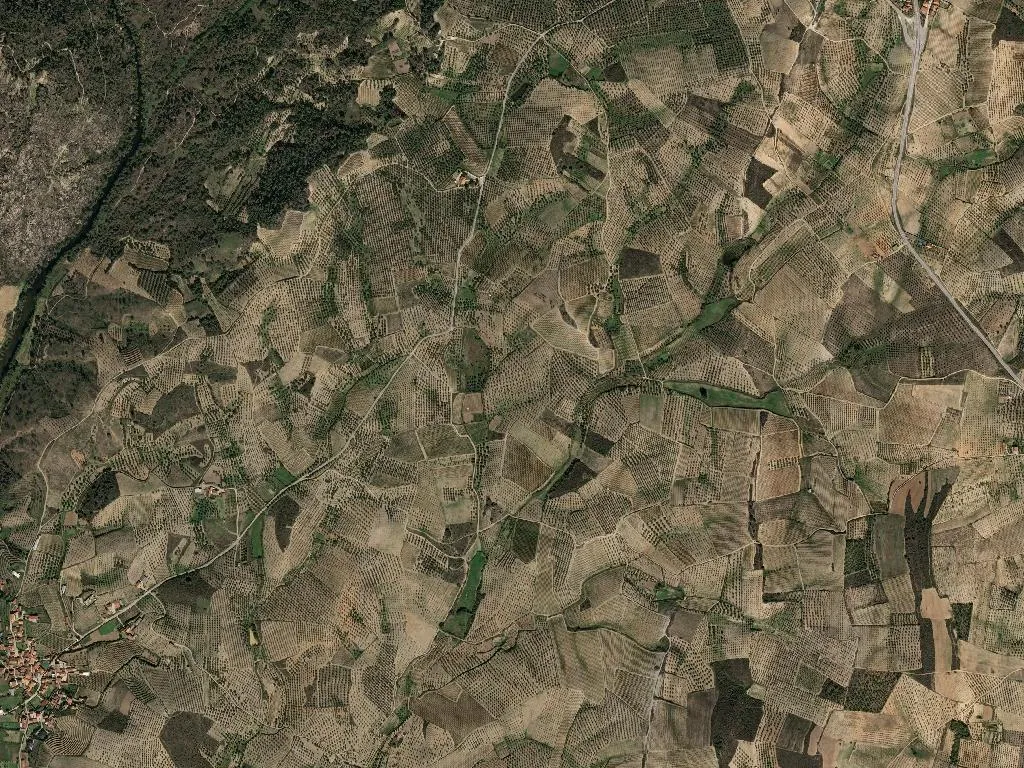
Oak smoke and cowbells echo through 1,500 ha of terraces, river Tua and willow-lined rye strips.
Hide article Read full article
The axe at dawn
Steel bites into seasoned oak, the crack ricocheting between slate roofs. In Vale de Salgueiro the sound is the village clock: one man splitting logs before the sun clears the ridge, his neat stacks declaring how many cold nights lie ahead. Three-hundred-and-forty-four souls are scattered across 1,500 hectares of folds and terraces; density is measured here in minutes of walking between front doors and in how loudly your neighbour can hear the wood splinter.
Roots that drink first
Willows still fringe every stream that slides down to the river Tua, justifying the place-name and the centuries-old irrigation channels that turn a drought-prone slope into narrow ribbons of green. Alluvial strips once grew rye and wheat; olives climbed the drier gradients; winter meadows fattened sheep whose wool supplied the looms of Bragança. No feudal drama, simply an unbroken ledger of small plantings and careful grazing that still dictates the calendar.
Festivals that close the year
On St Stephen’s Day the Festa dos Rapazes (Boys’ Festival) sends masked figures jogging through the lanes, cowbells clanking against sheepskins – an agricultural New Year in miniature. Weeks later, Serrar a Belha (“Sawing the Log”) sees the oldest beam in each household ceremonially cut, sealing the winter contract between hearth and forest. Neither spectacle is staged for visitors; turning up means you will be handed a glass of bagaço and expected to dance.
What the valley tastes like
Breakfast might be a slice of broa corn bread soaked in Azeite de Trás-os-Montes DOP, lunch a grilled Alheira de Mirandela whose garlic and gamey bird-meat escapes its casing in smoky spirals. In wood-fired ovens, Cabrito Transmontano IGP roasts until the skin lacquers like mahogany; afterwards, Queijo Terrincho DOP, aged six months and the colour of pale straw, is broken onto plates with quince marmalade. From every smokehouse ceiling hang chouriça, salpicão and linguiça, taking on winter’s cold perfume until Easter.
Walking without way-marks
Paths to neighbouring hamlets cross open country the Romans would recognise: olives with trunks the circumference of a cartwheel, loose-stone walls patched after each frost. Mist pools in the valley at first light, lifting to reveal the geometry of terraces and the silent choreography of grazing cows. Kingfishers ratchet along the streams; dippers bob on granite boulders. No viewpoints, no mileage posts – just the logic of a landscape still negotiated on foot, as it has always been.
By late afternoon the smell of chestnuts and oak smoke drifts across the roofs, mingling with the thin December air. It is the valley’s signature scent, and it lingers longer than any itinerary.