Full article about Brunhoso: granite silence, oak smoke, sheep bells
In Mogadouro’s high slate ridge, ham bronzes, ewes rule lanes, July brings Madonna home
Hide article Read full article
Granite that still burns
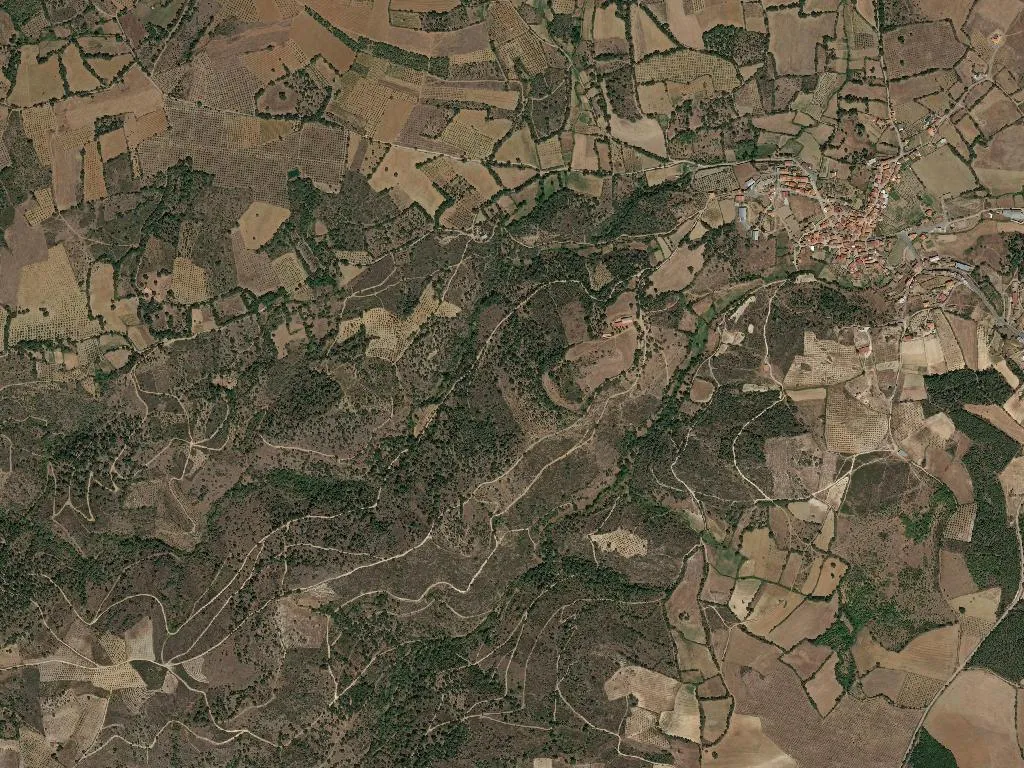
Granite doorsteps radiate the day’s heat long after the sun slips behind the Serra de Mogadouro. At 659 m, the air in Brunhoso is thick with oak smoke and the sort of silence that makes a visitor lower their voice. Of the 52 dwellings scattered along the ridge, only a handful show a light at any one moment; electricity arrived late here, and habits die harder than the power cuts.
When sheep still own the streets
At six o’clock sharp, Rui unlatches the stone corral and thirty-odd Terrincho ewes clatter downhill between slate thresholds. Their copper bells answer a distant dog whose bark rolls across the valley like a thrown stone. In Albertina’s smoke-house—an oak-beamed cupboard tacked onto the cottage—January’s ham has shed its first moisture and is beginning to bronze. She opens the hatch, sniffs the draught that slips under the roof tile, decides the pork is ready for another rub of sweet paprika. Inside, a DOP Terrincho cheese, smuggled back from Vila Flor by her student grandson, waits wrapped in a linen cloth embroidered with initials no one in the house can still read.
The day the church overflows
Only once does the village swell beyond its own echo: 26 July, the feast of Nossa Senhora do Caminho. Grandchildren who normally text from Lyon or Liverpool are marched up the municipal road clutching bilingual missals. The café—really a front room with an espresso machine—opens at dawn; the owner’s daughters serve bifanas (pork in paprika-spiked gravy) and caldo verde ladled from a cauldron that once fuelled railway navvies. By late afternoon, university tunas from Bragança tune mandolins while Miranda’s folk group shake their gaita pipes. Then Father Fernando, trembling on the altar steps, gives the nod: the painted Madonna is carried outside. Women who still remember the route fall in behind, lace antependiums held like heirlooms, pacing to a cadence their mothers learned during the wheat shortages of the 1940s.
A gorge you feel before you see
Behind the last cottage, a dirt track elbows through broom and kermes oak to a lip of rock above the Douro Internacional. From here the river is a dark ribbon hemmed by 300 m granite walls. Jorge, retired early from a foundry in Porto, spent childhood summers flipping terrapins into a canvas bag with his father. He insists the turtles vanished the year freight trains began rattling along the Spanish bank, scattering the Bonelli’s eagles that nested in Pedra do Abutre. Stay until the thermals rise and you might sight a griffon vulture tilting overhead; stay longer and you’ll understand the gorge’s real wildlife is silence—compressed, polished, then released between stone.
Almond blossom against the odds
The parish register lists 212 inhabitants; only 17 are under 25. Laura, 19, is the youngest permanent resident. She studies nursing in Porto, catches the 2 a.m. Rede Expresso that rumbles up the IP2, sleeps until the driver flashes full beam on the bend before Cancela gate. Weekends are for hoeing her mother’s vegetable terraces and updating Instagram with blossom shots. Foreign guests—there are perhaps a dozen a year—sleep in the old forestry-guard house at Outeira, bought by a designer from Fundão and repainted wedding-cake white. The listing promises hot water and Wi-Fi; the visitors’ book raves about the quiet. It is the same quiet Laura hears at dawn, the same Albertina locks inside her smoke-house, the same Rui disturbs only with hooves as he climbs toward the machocas where almond trees flower two weeks ahead of everywhere else, as if trying to keep the village alive by sheer force of petals.