Full article about Castro Vicente: Silence at 558 m
Granite village where olive groves pre-date Portugal and goat stew simmers in clay
Hide article Read full article
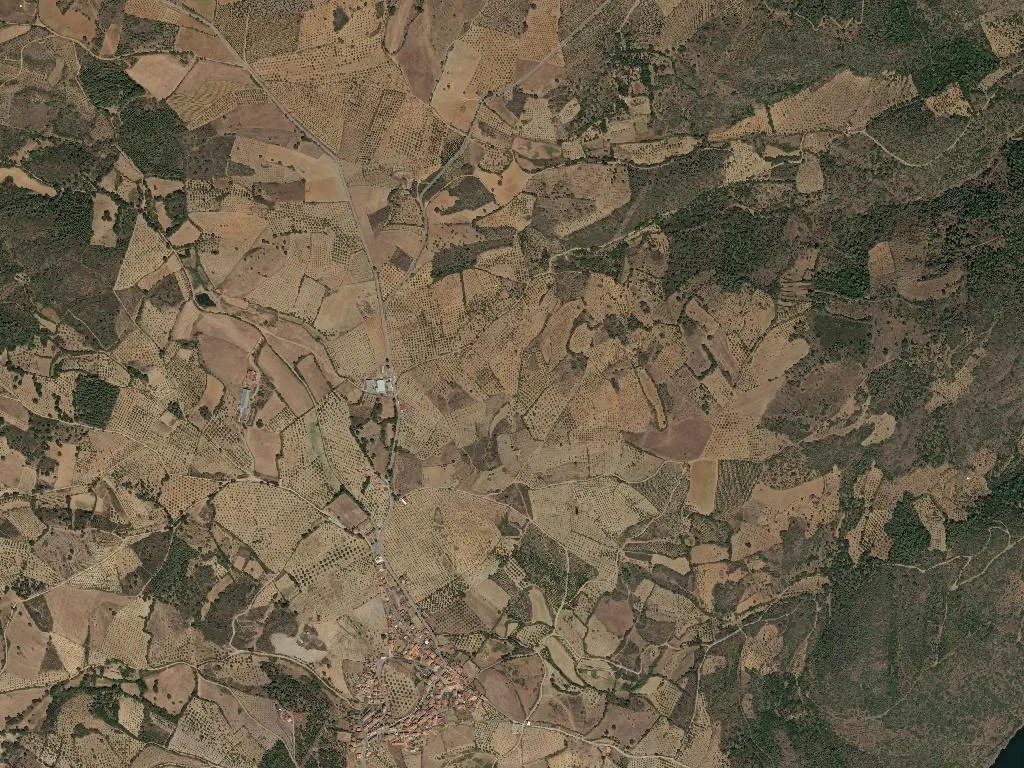
The silence in Castro Vicente has body. You feel it the moment the tarmac thins to a single-track lane coiling through olive groves older than the kingdom itself, their trunks warped like survivors of some undocumented siege. At 558 m the village simply stops – no signpost, no viewpoint, just a granite lip and the sense that the rest of the world has been asked, politely but firmly, to wait outside. Two hundred and sixty-five people live here; they have already taken the message.
Stone plateau, wind licence
The place-name promises a castro – an Iron-Age hillfort – yet no-one will swear a castle ever stood. Perhaps a wandering Vicente once passed through, scratched his name on a schist boulder and left the village with a surname it never earned. The landscape rolls like a sleeping reptile, dark plates of shale breaking the surface. You come here to look, not to be looked at; the horizon is a defensive wall built of distance and weather.
Protected flavours, eight at a time
Within the parish’s 34 km², eight foods carry EU seals: Terrincho lamb, chestnuts, olive oil sharp enough to make a Ligurian wince, three cheeses, two hams. Michelin would need a constellation; Castro Vicente makes do with Tasquinha do Zezé, open Monday-to-Saturday, closed when the owner’s sciatica flares. The clay pot that arrives at your table has cooked chanfana (goat stewed in red wine) for three generations; the spoon stands upright. “Cook as if tomorrow won’t come,” she shrugs, “but slowly.” Honey over queijo da serra looks like stage gold; it isn’t.
Saints who keep the calendar honest
July belongs to Saint Anne, September to Nossa Senhora do Caminho – Our Lady of the Road – the same dates every year, repeated until they feel like heartbeat. Eighteen teenagers share the churchyard with a hundred elders; for one evening the village swells to twice its size. Locals call the local red “Bastardo” without blushing; corn bread is torn, never sliced, and every story begins “You’ve heard this, but…” Someone must remember, or it ceases to have happened.
Where the Douro International begins
Walk five minutes and the cobbles give way to heather and granite. The park boundary is a shrug, not a gate; shepherd paths follow topography, not cartography. Below, the River Sabor funnels griffon vultures upwards on thermals that smell of rosemary and hot stone. Sunset is a long goodbye; when the last light snags on the pylons, the birds close their wings like folding umbrellas. Day done, death where it should be, life where it can be.
Places to stay, excuses to leave
Three granite houses take paying guests – family homes that surrendered to the calendar, not to commerce. Expect no television, no Wi-Fi, no apology. Night is properly black; the Milky Way feels intrusive. What you took for silence is simply the absence of other people’s noise.
Pack a jumper, even in August. And bring time – the sort you can’t buy, only accumulate.