Full article about Granite Echoes at 728 m: Mogadouro’s Friday Bell
Feel Mogadouro Castle’s 13th-century stone exhale sunset warmth while Caretos’ cow-bells rattle through Valverde, Vale de Porco and Vilar de Rei.
Hide article Read full article
The granite of Mogadouro Castle radiates heat long after the sun begins its descent, exhaling the day’s warmth while woodsmoke from kitchen chimneys drifts downhill — a scent that settles in your coat collar and refuses to leave. Below the keep, the village moves to a Friday cadence that would unsettle any Londoner: the Café Regional half-open, two women swapping gossip outside the stationer’s, the parish bell tolling the hour as though calling on a neighbour. At 728 m on the scarred plateaux of Trás-os-Montes, this four-village parish union — Mogadouro, Valverde, Vale de Porco, Vilar de Rei — still plots its days by echoes caught in stone walls, even when the houses themselves are emptying.
Between keep and ridge
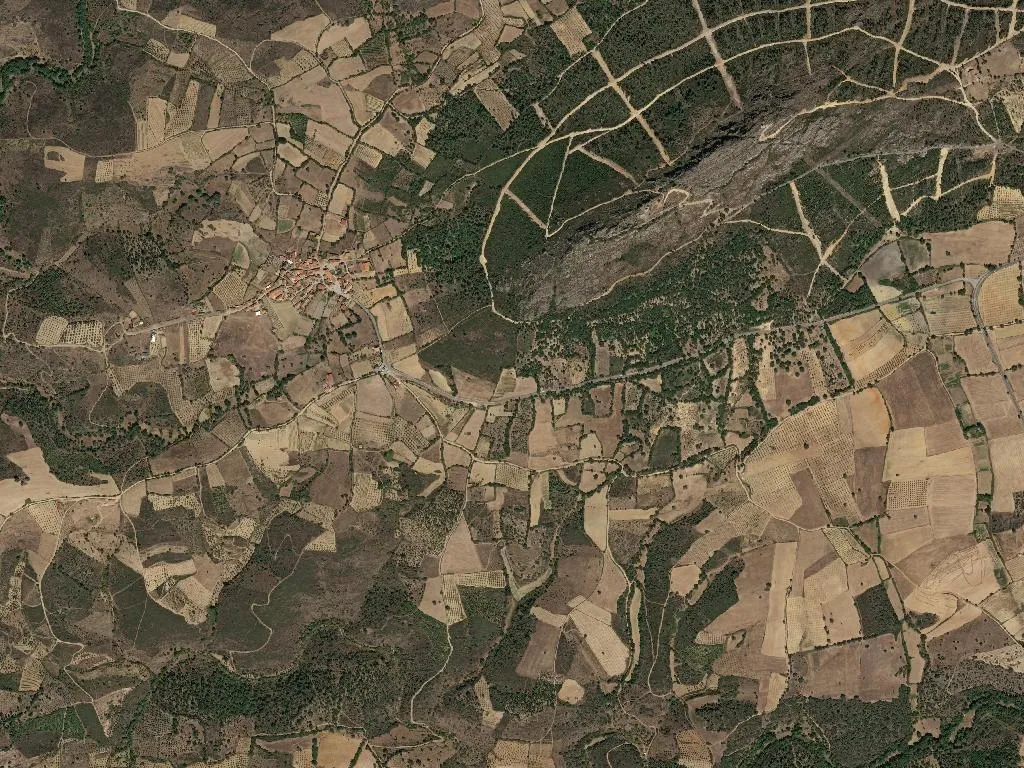
The castle’s square keep, started in 1165, knifes into the sky like a charred bone. Afonso III signed the town’s first charter here in 1272, but the authority you feel today is not documentary; it is mineral — flakes of granite coming loose in your palm, cold rising from spiral stairs, the view that slips away to the Picos de Mogadouro, a saw-edge of quartzite that looks capable of tearing the heavens. From nearby São Cristóvão belvedere the land unrolls in geological pages: schist, red loam, almond trees clinging like afterthoughts, olives terracing downward until the Douro Internacional appears — a dark incision on the Spanish horizon.
Four hamlets, one lung
Valverde keeps its tiny Manueline church and a silence broken only when Zé Manel’s tractor coughs past at seven. Vale de Porco has a river-beach where children cannonball off a concrete slab, and the Caretos — hooded, blanket-striped, cow-bell clattering — who career through the lanes between Christmas and New Year. Their January “Chocalheiro” festival is percussion fired into frozen air, a pagan eviction of winter older than the parish records. In Vilar de Rei baroque pediments and a ruined stronghold the elders still call “the fortress” complete the mosaic. Since the 2013 administrative merger the four villages share a council, yet they remain four distinct heartbeats: 35 people per km² translates as space — and, everywhere, the hush of rooms no-one enters.
What the soil writes on the plate
Mirandesa beef arrives thick as a Dickens novel, smoked over oak, pink in the centre, sided by potatoes you split with your thumb and mop in Joaquim’s neighbour-pressed olive oil. Kid goat roasts slowly in a wood oven while Maria’s home-cured chouriços drip fat onto the embers below — sausages she saves for the son who visits from Porto. On Sundays the game dishes appear: hare braised in red wine, partridge with rice, wild-boar stew with roasted potatoes, all scented with the backyard bay and mint that survive the droughts. Terrincho DOP ewe’s-cheese wears a natural rind like armour yet melts to a custard, demanding a slab of rye and a glass of tinta that makes your cheeks suck in. In Valverde the honey from Terra Quente still sweetens conventual pastries — sigh-shaped meringues, olive-oil cakes, milk tarts — recipes copied into leather notebooks before Napoleon’s troops were thought of.
A calendar that still matters
On the last Sunday of August Nossa Senhora do Caminho turns Mogadouro into an unofficial diaspora parliament: roast chestnuts eaten too hot, plastic cups of rough red, cousins who no longer recognise each other. Santa Ana’s day, the second July Sunday, halts traffic with processions and folk dancers whose footwork rattles the cobbles until the early hours. These are the moments the parish recognises itself in the mirror — all 3,603 of them, a third past retirement age — reaffirming what was celebrated when the population graph still climbed. Turnout at council elections hovers above 65 %, proof that here a handshake outside the café still outweighs a PDF in the inbox.
Where Portugal tips into Spain
The Douro International Natural Park begins where the asphalt gives up, sheltering cliff faces where griffon vultures nest in loyal pairs, and a river that runs black and depthless as though guarding state secrets. Trails climb through heather and schist to the Serra de Zava and Serra do Penedo, silence broken only by a stone shifting under a boot or the quarter-second beat of a golden eagle’s wings. Spring brings almond blossom so bright it hurts; summer turns the hills to parchment; autumn spreads ochre like a watercolour wash while hunters clean their rifles. Sixteen places to stay — from slate-roofed cottages to rooms looking straight onto the castle keep — offer a base for those who want to measure time by shadow rather than notification.
When the sun finally drops behind the tower and the lanes of Mogadouro fill with violet shade, the after-image you carry is not visual but auditory: not today’s quiet, but the January stamp of Caretos bells ricocheting off stone, a winter farewell loud enough to rattle the shutters of every house that no longer lights up at night.