Full article about Paradela: Stone Shadows & Smoke in Trás-os-Montes
Granite village melts into schist ridges; July feast lures emigrants back to empty benches
Hide article Read full article
The granite hush
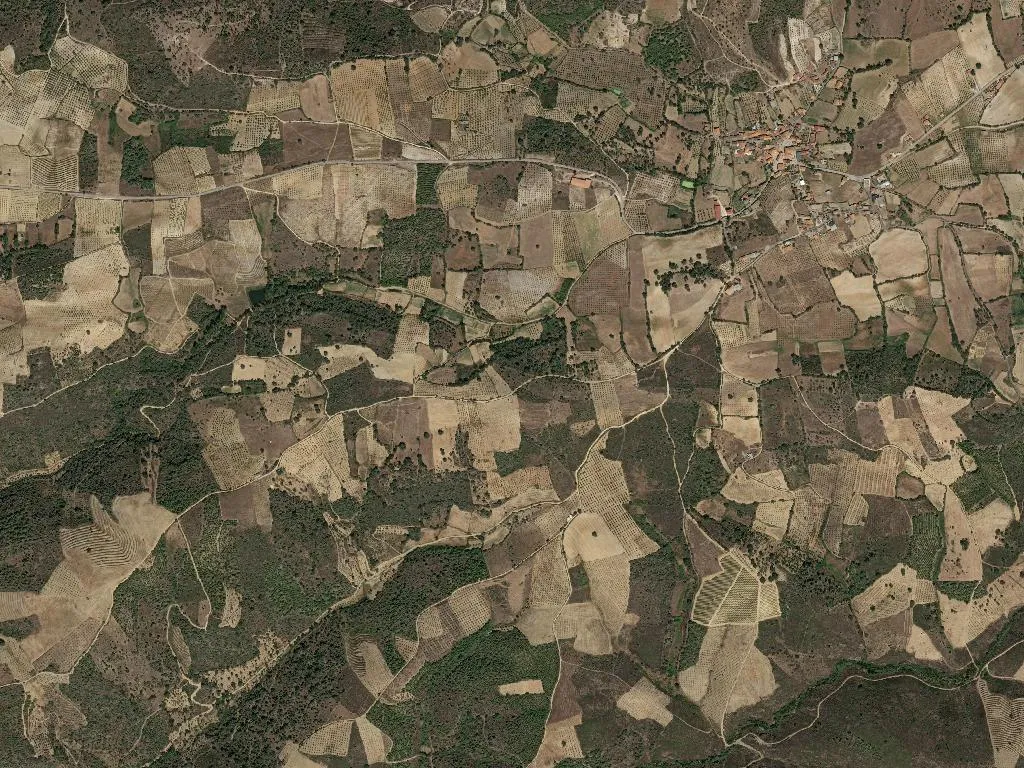
The valley inhales silence. Wind carries the scent of sun-baked schist and the thin ribbon of woodsmoke from a chimney. At 657 m above sea-level, Paradela’s stone walls are the exact colour of the surrounding outcrop; only the terracotta roof ridges betray where mountain ends and village begins. One hundred and twenty-seven residents remain—fifty of them old enough to remember when the primary school still echoed with voices. The calendar, not the clock, still governs time.
In the core of Terra Quente
The parish sprawls across 20 km²—fewer than seven inhabitants per square. Ancient olive terraces alternate with almond terraces; both shimmer silver in late spring. Between them, dew-laced pastures feed Borrego Terrincho DOP ewes and Mirandesa calves, watched by Castro Laboreiro mastiffs whose bark ricochets off the gorge walls. Fifteen kilometres north, the Douro becomes the international border, its cliffs shared with Spain’s Arribes del Duero Natural Park.
A calendar of return
Two dates redraw the map. On the last weekend of July the faithful circle the tiny chapel of Santa Ana; in mid-September they process to the hilltop shrine of Nossa Senhora do Caminho. Emigrants fly back from Lyon, Geneva, Newark. The church square, empty since August, suddenly needs extra benches. The rest of the year devotion is quieter: fresh dahlias on the altar, the murmur of a Wednesday rosary drifting through an open door.
What you’ll eat—if you’re invited
No menus, no bill. Wood-roasted Transmontano kid, potatoes smashed in their skins and slick with local olive oil, carafes of house red pressed from vines that survive minus-five winters. Platters appear only after the fire dies: Carne Mirandesa steak, Terrincho sheep’s-milk cheese, Vinhais cured ham sliced so thin you can read the sky through it. Dessert is honey from Terra Quente heather, spooned from a jar kept for guests who, by definition, had nowhere else to stay.
Logistics of elsewhere
From Mogadouro, the N221 winds 19 km east to the turn-off; another 8 km of single-lane tarmac climbs to the village. No café, no shop, no petrol—fill up in Azinhoso, 12 km back. The mobile signal dies at the second junction after the stone bridge over Ribeiro de Paradela. Every Wednesday the bread van, fish van and fruit van toot their arrival; otherwise, bring supplies and a full spare. By dusk, smoke rises vertically from one chimney, a hen scratches beneath a chestnut planted in 1890, and the granite, finally, lets the day go.