Full article about Remondes & Soutelo: Where Water Murmurs Before Stone
Granite spouts, Távora bridge and lamb-scented air in Mogadouro’s hidden plateau
Hide article Read full article
The water arrives before the stone. Two copper-coloured spouts chatter in the village square of Remondes, their splash audible from the lane. Locals still call the granite cross a cruzeiro, but its real job is social: women fill plastic jerry-cans, men lean against the worn plinth to finish a conversation, children chase bubbles across the slab polished by centuries of boots. No one photographs it, everyone uses it.
Where faith built a bridge
Five perfect arches fling themselves across the valley like a stone cat-stretch. The Távoras—an aristocratic house once powerful enough to defy the Crown—ordered the bridge in the eighteenth century so their sheep could reach winter pasture without wetting their bellies. Today the same arches carry Massey-Fergusons, German hikers and the occasional shepherd on a moped. Below, the River Sabor braids itself into miniature beaches of blond sand; in August towels appear and, for twenty minutes, the place masquerades as a shrunken Algarve cove.
Opposite, the white bulk of Nossa Senhora do Alívio watches from a knoll. The sanctuary went up in 1798 after a local priest survived an illness that had stumped Bragança’s physician; the walls still glitter with ex-votos—tiny silver hearts, crutches, a toy tractor—left by farmers who kept their side of the bargain. Early September brings the romaria: mass under the chestnut trees, lamb spitting on iron stakes, wine drawn from white enamel jugs. Everyone leaves promising to return next year—se Deus quiser, of course.
Taste of the plateau
The cooking needs no footnotes. Alheiras—smoked garlic-loaf sausages invented by crypto-Jews to look like pork—hang in bunches above the hearth. Paprika-stained bulho (dried kale) rehydrates in clay pots, while linguiças age gently in the cool larder. At lunch the table is colonised by Terrincho lamb and kid from the neighbouring monte, potatoes roasted underneath so they drink every last drop of fat. A careless waterfall of olive oil pools in the bread; the plate is finished with Terrincho DOP cheese, its tang sharp enough to make the jaw ache. Between courses Maria from the bakery brings olives she has cured in brine since she was twelve, tasting faintly of bay and smoke.
Between olives and almonds
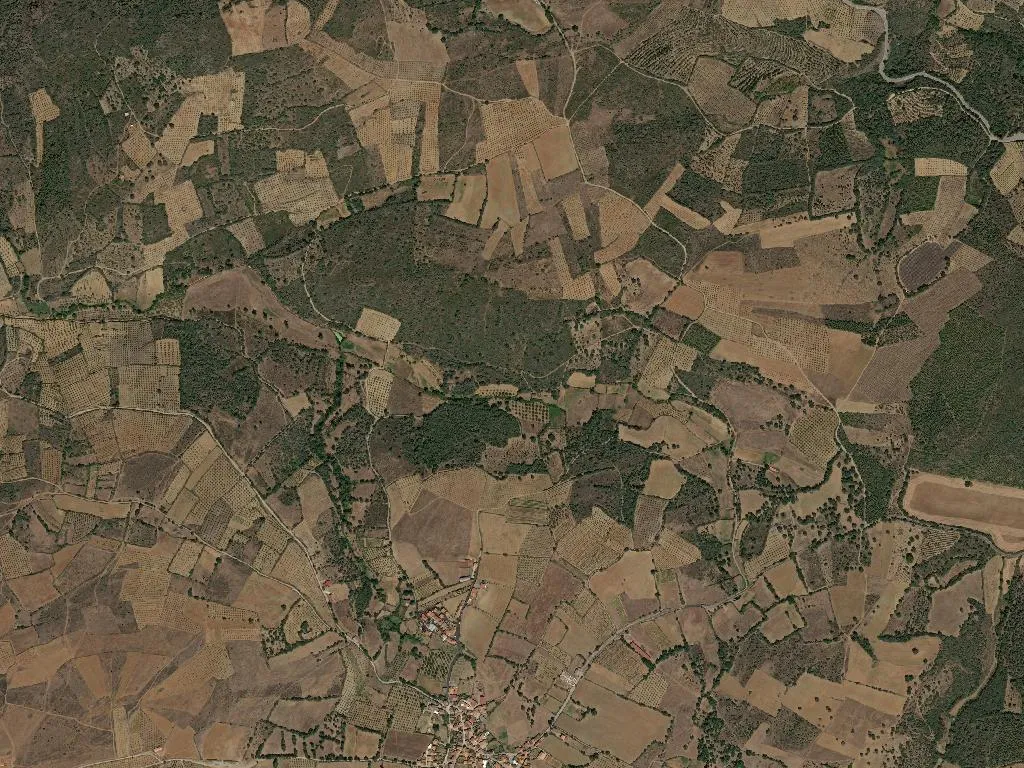
The land is a patchwork quilt of schist and chlorophyll: olives older than the republic, almond trees that in March resemble scattered meringues. Tiny chapels—Santa Sinforosa, Santo Antão, São Bartolomeu—open only on their saint’s day; the bell rings, a lamb is slaughtered, red wine sloshes into tin cups, then the door is locked for another year. The Douro International bluffs lie just east, so griffon vultures wheel overhead and silence is cut only by wind combing through maquis.
Below Soutelo the communal wash-house still spills 18 °C water into a rectangular tank. Women arrive at dawn with yellow plastic basins, tractor drivers stop to refill glass bottles for the fields, grandsons splash their foreheads after a morning on the slope. The murmur is the same in both villages: water that works, never asks for a day off, and stitches Remondes and Soutelo together more surely than any bridge.