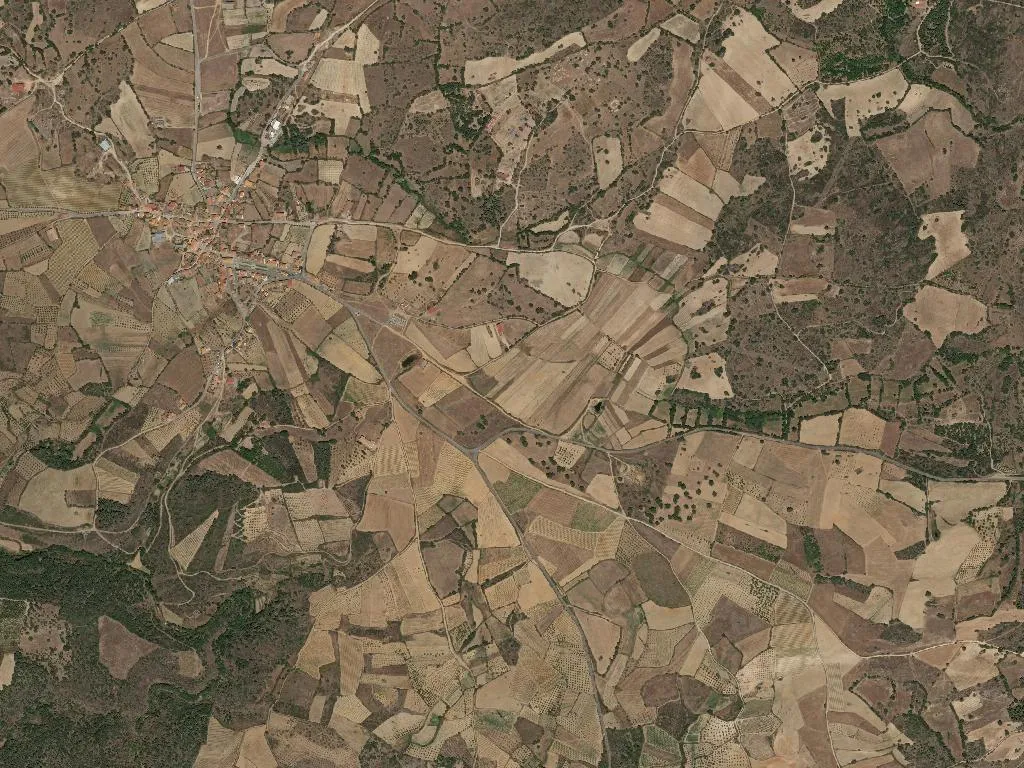
Full article about Tó: where the chapel bell coats schist roofs in sound
Meet the 136 souls, tree-bark cheese and eagle-punched silence of Mogadouro’s high hamlet
Hide article Read full article
The chapel bell tolls three times
The chapel bell tolls three times – uncounted, yet felt by everyone. The note doesn’t rise; it slides, coating the schist roofs like old rain. At 731 m the wind doesn’t whistle, it scrapes. Winter arrives with flints in its mouth; summer peels stored heat from the walls, a slow oven baking bread that was never made.
Officially, 136 souls occupy 2,400 hectares the world forgot. Numbers, though, can’t record Joaquim still hoeing Dona Amélia’s vegetable plot – she is 92, he 78, and she still gives the orders. Five children, three of them cousins, share one brake-less bicycle. The rest are pensioners who refuse to die because no one grants them permission. When one goes missing, the silence swells – and it was already large.
What is eaten (and what is not)
Terrincho DOP arrives at table nameless: it is simply “the cheese”. The rind feels like tree bark, the interior melts before it reaches the tongue. Lamb is never festival fare; it appears on ordinary Sundays, when herb-speckled juices still fill the dish and red wine is poured into a plastic beaker that was once white. Zé’s ham hangs in the cellar, sliced only when a grandchild visits – “so the house smells like home again”. Olive oil bites as it should; honey, thick as bar gossip, stands the spoon upright.
The Douro – not here, but here
They say the International Douro Natural Park is “over there”, but you reach it on foot – two kilometres of dirt the map refuses to acknowledge. Griffons are black commas overhead; no one asks where they spent the night. The golden eagle screams once daily, always on schedule, like a time-card punch. Silence is dense enough to scythe: at noon you can hear a bar door slam in the emptiness where no bar exists.
Days when the village swells
Nossa Senhora do Caminho, 8 September. The previous afternoon Maria da Luz drives to Mogadouro for flour to fry the filhós. The communal oven is lit at four a.m.; by seven the scent of bread has reached every house – which is to say, the parish boundary. Santa Ana, 26 July – or the 27th if it rains. Emigrants arrive with French number plates, children who speak in euros and grandchildren who barely speak at all. The village band launches into “A Portuguesa” slightly flat; nobody minds because Fernando’s accordion is the same one he played in 1978. The procession climbs the gradient; bedridden grandmothers follow from upstairs windows, wrapped in chenille throws, completing the route with their eyes.
When night falls the air smells of oak logs – green wood that crackles and tickles the chimneys. The scent settles on clothes, skin, the tongue of anyone who stays. It is that smell, not longing, that persuades the departed to come home.