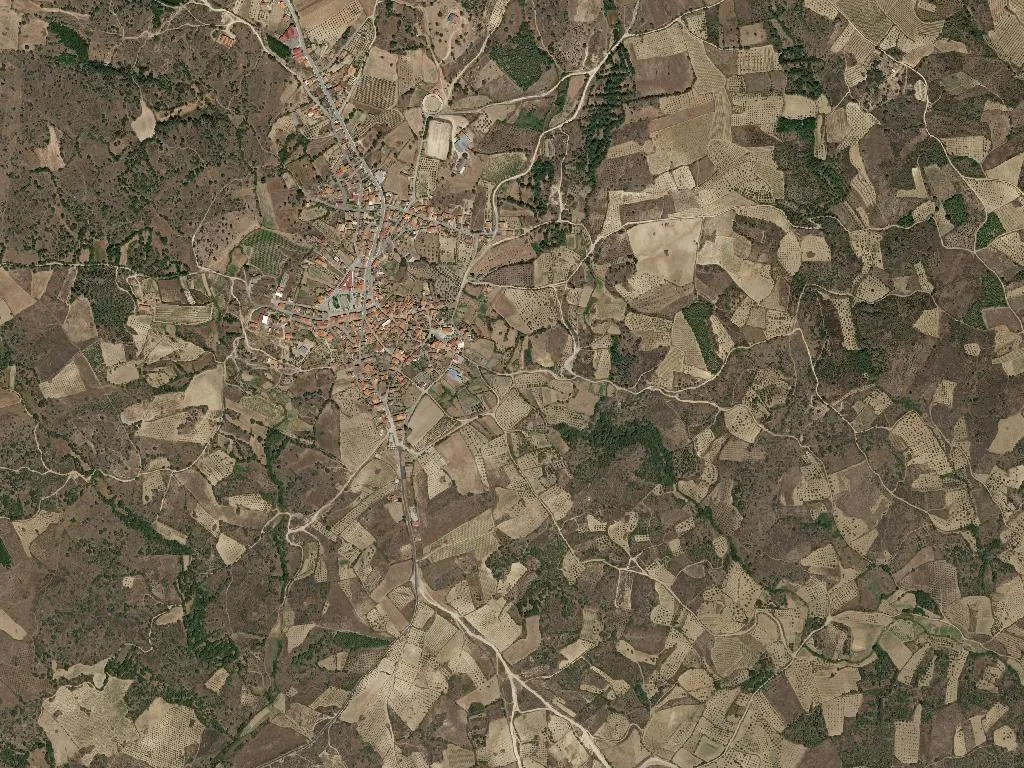
Full article about Urrós: Where Smoke-Kissed Hams Guard Portugal’s Sky-Edge
Granite cottages, chestnut-smoke and Douro silence cling to Mogadouro’s 676 m ridge.
Hide article Read full article
Granite and smoke
Granite ribs push through the hillside, the stone blotched with sulphur-yellow lichen like the blistered top of a baked egg. At 676 m, January air slices your cheeks and carries the acrid perfume of António’s smokehouse – half a century of hams hanging from the same chestnut pole, timber lacquered with fat and resin. The village grips the ridge: schist cottages, cobalt doors shuddering each time the north wind drops from the Bornes escarpment. Far below, the Douro cuts a Palaeolithic slash through the plateau.
What remains
Three thousand hectares, 250 inhabitants. The statistic that matters is smaller: on Saturdays the bakery shutters at 4 p.m. because Srª Ilda drives to Mogadouro for her granddaughter. Of the 250, more than half have outlived their teeth; of the fifteen children, two belong to Cátia, back from Lisbon for the school holidays. The rest is audible silence – and Albino’s dog exchanging insults with the owls.
Down to the river
The unpaved road to the Douro drops eight kilometres in tight switchbacks that demand third gear and a steady nerve. At the bottom José tends the Olival de S. João, pouring 2022 oil from green glass demijohns. “Good year,” he says, letting a thread of Terrincho DOP gold stripe the bread pulled from his jacket pocket. His grandfather planted these trees in 1923; the olives have outlived two republics and a dictatorship.
The table
The tavern has two tables. Srª Lurdes fires the wood oven at seven; the lamb inside will emerge six hours later. She fetches kindling from the barn where her late husband’s tobacco still ghosts the rafters. The kid carries the Mirandesa DOP seal, but what matters is the slosh of white wine she adds before clamping the lid – “to keep it sweet”. Cheese sits in the same clay bowl her granddaughter uses for bread-roll dough. The honey comes from Tonecas, whose hives hug the cemetery wall; he claims the bees prefer the company of the quiet departed.
August respiration
German-registered hatchbacks reappear with the harvest moon. Inside the 17th-century church of Santa Ana, D. Albertina melts candle stubs in a copper pan to pour new ones for the festa. In the square, returnees argue over who paid for the fire brigade’s new hose. After dark, Paris-born children play hide-and-seek along the lanes where their parents once did, and no adult tells them to lower their voices. Barbecue smoke climbs into the night, mixing with the yeasty steam of bagaço someone hauled back from Vinhais.
The only guest room has an iron bed that announces every turn. But the window faces east, and when the sun shoulders over the Bornes it strikes first the 1892 stone cross, then the communal granary roof, finally the balcony where Srª Ilda pegs out her sheets – white flags of truce in a village that, for now, keeps negotiating with time.