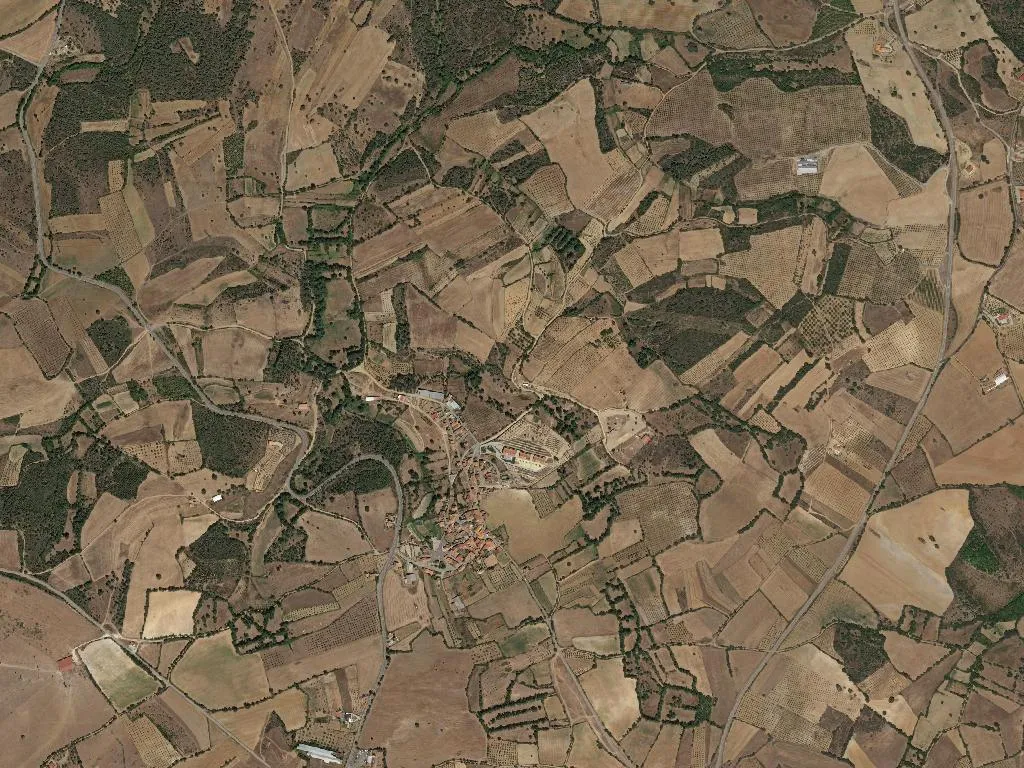
Full article about Vale da Madre: where wind steals words from 165 souls
Echoing church bells, thyme-scented honey and DOP lamb in Mogadouro’s high border ghost-village
Hide article Read full article
The silence you can hear
In Vale da Madre the silence is audible, the kind that rings in your ears after the last customer leaves the café and the espresso cups sit cooling in their own brown tide-marks. Officially, 165 people live here; after nine on a Friday you’d swear it was closer to fifteen. At 705 m the wind barrels across the Spanish border without showing a passport, snatching half-finished sentences out of mouths and scattering them among the almond groves.
Hot land, slow time
They brand the region Terra Quente, but someone was being optimistic. True, August scorches the schist until you feel it through your shoe soles, yet the rest of the year time drips as slowly as the smoke that cures hams in the stone sheds. Fourteen inhabitants per km² means everyone could mark out a football pitch for themselves; they’d simply have no one to play against.
The church bell coughs at nine for Mass, a smoker’s baritone that sets every dog in the parish howling like a backwoods gospel choir. Afterwards the streets feel emptier than Mogadouro’s cake shop on a Sunday afternoon.
What you’ll eat (and drink)
Borrego Terrincho DOP lambs are born celebrities here, grazing the scrubby slopes with the dedication of German hikers in the Gerês. The meat tastes of broom, wind and long horizons. Carne Mirandesa, the protected beef, is not week-night fare: it hangs until it decides it’s ready, and you wait.
Pour the local olive oil and the surface remembers your fingerprint the way a passport remembers a border-crossing. As for the honey—dark as the stout António used to drink in the now-silent bar—it catches in the molars with a thyme-scented warning: this is still Trás-os-Montes, not some pastel Minho bridal-shower country.
Festas and other days
August re-inflates the village. Cousins materialise like racing tips at a Sunday taula game, claiming childhood nicknames no one recalls. Festa de Nossa Senhora do Caminho is homecoming distilled: three days when silence clocks out for a cigarette and the night air thrums with concertinas.
There is, apparently, a listed monument—just a granite house with a plaque no one reads, its stone as impassive as Zé behind the counter since 1973, witness to a lifetime of “I’ll be back soon” promises.
When the sun slips behind the Serra de Mogadouro the sky gleams as if someone slicked it with new olive oil. Chimneys release vertical chalk-lines of smoke: Maria lighting the dinner stove, Manuel burning prunings, no distinction necessary. It is all Vale da Madre, where time does not pass—we pass through it, faster than we wish, slower than we need.