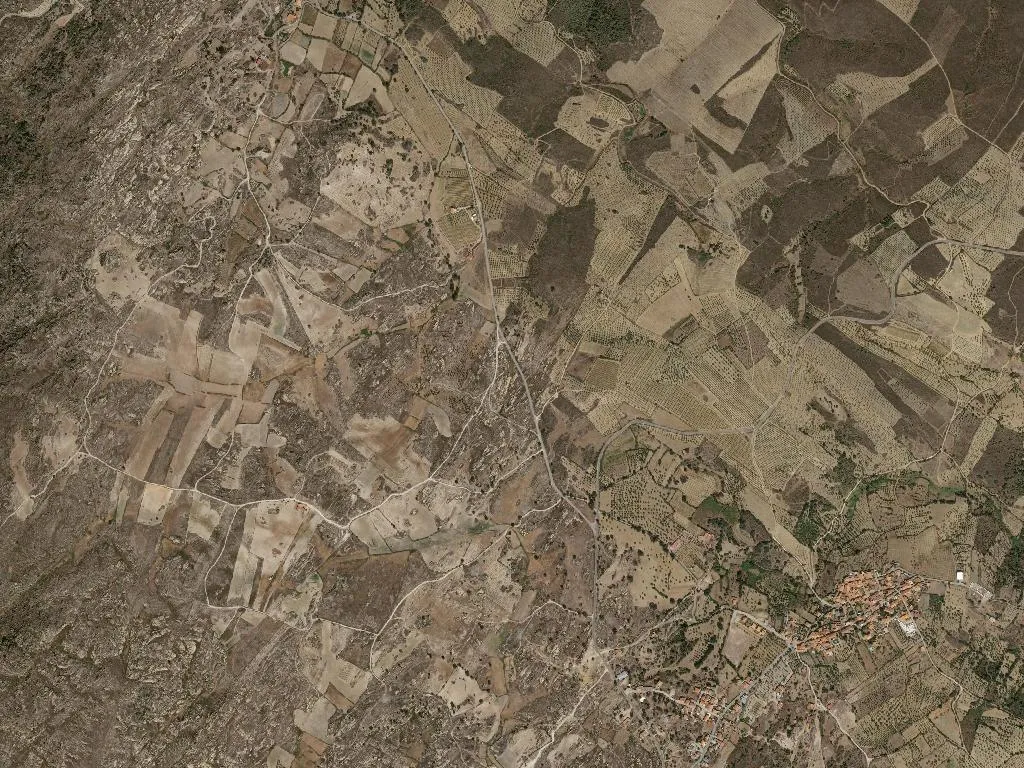
Full article about Dawn Almonds & Wood-Oven Goat in Adeganha-Cardanha
Morning fog lifts over stone wine-cellars while almond shakers hum and Zé Mário’s kid goat crackles.
Hide article Read full article
The Dawn Wakes the Stones
Morning light slips down the Terra Quente valleys and warms the schist roofs still holding yesterday’s bonfire heat. Below the village, white almond blossom threads through olive terraces whose trunks twist like lightning frozen mid-strike. Sound behaves differently here: a cock crows as if from the far side of a thick wool blanket, afraid of breaking something.
Adeganha and Cardanha were merged on a municipal map in 2013, but locals insist they were always one place. The same faces appear in Taberna do Cura in Cardanha and in Dona Albertina’s grocery in Adeganha; 437 people remain, and most are cousins across the same ridge. Children who attend Adeganha’s primary school sit on Cardhanha’s granite steps to finish homework while they wait for the minibus home.
Where vines once paid the rent
Adeganha takes its name from the Portuguese word for “wine cellar” – and stone lagares still sit under several houses, their wooden staves black with decades of tannins. No one crushes grapes here any more; the fruit is trucked to the co-operative in Almendra. Instead, the almond orchards now underwrite the mortgage. At first light, before the valley fog lifts, you hear the mechanical shakers of Frusantos and Moncorvo Almonds crawling across the red earth. The Protected Geographical Indication “Amêndoa Coberta” means nothing in the village square – it’s simply “the almond”, and the women who hand-shell it work on doorsteps, plastic buckets spinning between their knees.
A Transmontana larder
Zé Mário lights his wood-fired oven at seven; kid goat goes in belly-skin down so the crackling stays proud. By mid-morning the scent reaches the parish church. His olive oil comes from Lagar do Cardoso, just before the bridge into Adeganha – so peppery it catches the throat, exactly how people here like it. In Celestino’s smoke-house, salpicão is still made only with black pork shoulder and home-smoked paprika; nothing else is allowed. The ewe’s-milk cheese sold as Terrincho DOP is driven down from the high pastures – shepherds are paid 60 cents a litre, when the collection lorry remembers to come.
August, departure lounge of the Assumption
On the weekend of the Assunção the single road clogs with French and Luxembourg plates. Emigrants arrive with suitcases full of items “you can’t get here” – mostly biscuits and washing powder – but what they really want is sardines grilled in the churchyard and the same stories retold in Café Central. Sunday night ends in the sports hall: after the accordion-driven bailarico, grandparents watch grandchildren who can no longer roll their R’s, and at six the next morning someone always weeps quietly as the coach for Lyon pulls away.
Dusk cools the schist; dogs stretch and the smell of Zé Mário’s dying oven drifts across the square. A black cat waits on the school wall for someone – anyone – to recount the day.