Full article about Almond blossoms blaze above Carviçais schist
In Torre de Moncorvo’s hill village, smoke-cured ham, DOP almonds and emigrants return each August
Hide article Read full article
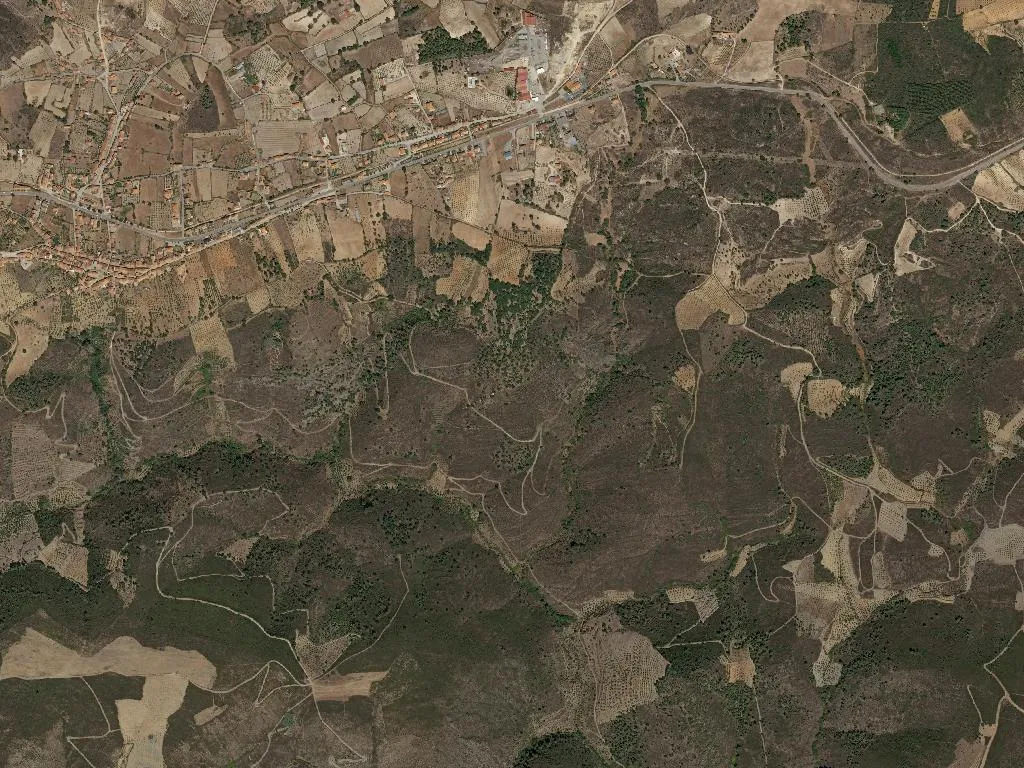
The schist underfoot sounds different in Carviçais. It is not the dry crunch of the Bragança highlands; here, twenty kilometres north of the Douro, the stone gives back a damp, almost muffled scrape, as though river mist has climbed the 593 m contour and settled inside the rock. Almond trees answer back, drilling their roots into the skeletal soil and, between late February and mid-March, detonating into blossom so white it needles the eyes at noon.
Hot Country, Cool Designations
Carviçais lies in the Terra Quente Transmontana, the “Hot Land” corridor where Mediterranean air sneaks inland and lets farmers grow crops impossible elsewhere in Trás-os-Montes. The almond is not ornamental; it is the parish payroll. Moncorvo Covered Almond (IGP) and Douro Almond (DOP) are shaken from the same brittle schist, hand-picked in September when the green husks split and spill their freight. Behind the houses, olive veterans—trunks corkscrewed, bark mapped with fissures—yield Trás-os-Montes olive oil (DOP), cold-pressed in stone mills that have outlived five republics.
The village balances on a demographic blade: 510 inhabitants, 271 of them over sixty-five, only twenty-seven under fourteen. Numbers announce the drift, but not the defiance. Inside Sr. Joaquim’s grocery—open at the owner’s pleasure—cheese is still weighed on brass scales and tabs kept in pencil. From the smoky lofts of stone cottages hang sausages that carry European protected status: Vinhais blood-red chouriça, Vinhais salpicão, Bísaro ham. The smokehouse is no museum piece; it is the pantry, and the scent of smouldering oak braids with the yeasty waft from the communal bread oven still fired every Friday.
Feasts, Bands and Homecoming Smoke
August compresses a year of sociability into ten days. The double-barrelled Festa da Vila e do Concelho honours Nossa Senhora da Assunção, hauling home emigrants from France and Luxembourg. Squares that echo to nothing in March suddenly strain under folding tables loaded with Terrincho lamb chops—short-fibred, thyme-scented meat from ewes that grazed the impoverished slopes—and wedges of Terrincho DOP cheese, its rind the colour of burnt cream, its centre yielding and faintly sharp. At nine, when the heat loosens its grip, the village brass band strikes up and returning sons straighten their berets, silk neckerchiefs knotted just so.
Three kilometres away, Felgar stages its own pilgrimage to Nossa Senhora do Amparo the following weekend. Two parishes, two processions, two rival bands: loyalties measured in hymns and fireworks, not in followers on Instagram.
Peripheral Vines
Carviçais occupies the eastern fringe of the Alto Douro Wine Region, yet UNESCO’s terraced theatregoers rarely reach this far. Vines survive as small, mixed plots stitched between almond and olive rather than postcard amphitheatres. The wine qualifies for Port and Douro DOP, but the audience is local. Sr. Américo still foot-treads his grapes in a granite trough built by his father and serves the result after Sunday mass in water glasses—tannic, purple-mouthed, free.
Only one official guesthouse registers on the tourism spreadsheets. There are no viewpoint signs, no coach bays, no filter-friendly infinity pools. Roads narrow to single-track veins that follow goat logic, not SatNav. At Aldeia Nova crossroads, Guida’s cow dozes on the tarmac at midday; no one honks.
September Concentrate
By mid-September the air is thick with must and turned earth. Almonds dry on zinc trays; hams, hung the previous November, begin to sweat resinous pearls; cheese wheels, salted in June, are unbandaged to reveal butter-yellow paste. Silence here is not absence but reduction—flavour tightened, colour deepened, time suspended. Carviçais is not a detour; it is a slow chew, a lesson in the patience required to draw sweetness from stone.