Full article about Larinho: pruning shears ring through vine-wrapped schist
Dry-stone terraces climb above the stream where woodsmoke drifts and medieval vines still fruit
Hide article Read full article
Woodsmoke and pruning shears at dawn
The scent of woodsmoke drifts from chimneys while mist still clings to the schist terraces that step down towards the stream. Larinho wakes to the metallic click of pruning shears and the distant toll of a single bell. Morning light ignites the ochre of whitewashed walls and the deep green of olive groves, while the cold of Portugal’s so-called ‘Hot Land’ nips at the fingers of anyone heading out to the fields before breakfast.
Schist vineyards with a medieval memory
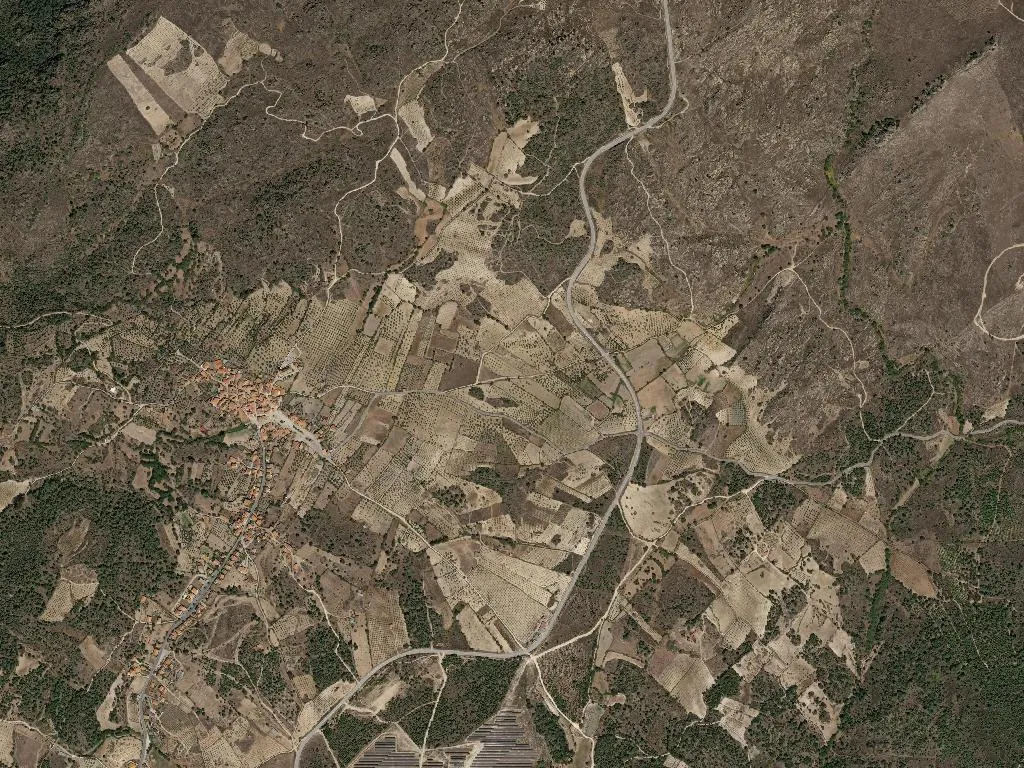
This parish of 327 souls sits above a landscape that has been coaxed into productivity for centuries: dry-stone terraces built boulder by boulder, vines hand-grafted, grapes picked under the high-summer sun. Here the vineyard is not scenery—it is functional architecture, inheritance from a medieval presence recorded between the 13th and 15th centuries, when the area formed part of the Trás-os-Montes county under the military orders. The name Larinho itself, from the Latin larinum, simply means ‘dwelling’ or ‘hearth’—a place people refused to leave. The 19th-century phylloxera blight and the subsequent waves of migration to America thinned the population but never erased the gesture of foot-treading the grapes or tasting the new wine around the São Martinho bonfires in November.
Carved stone and August pilgrimages
The parish church stands at the village centre—single-nave, plain-faced, its high altar dressed in gilded baroque woodwork. Higher up, among pines and rock-rose, the chapel of São Sebastião keeps watch over the fields. There are no officially listed monuments; the heritage is in the dry-stone walls, the pack-horse bridges over the stream, the footpaths that once linked Moncorvo to the now-vanished Sabor gold mines. On 15 August the Romaria de Nossa Senhora da Assunção hauls emigrants back from France and Switzerland: open-air mass, a procession, almond tarts and walnut cookies sold from trestle tables, dancing until the thermometers give up, and wine poured from enamel jugs. During the joint town-and-county fair, traditional games—marbles, three-legged races, a greased pole—take over the square while cantigas ao desafio, improvised singing duels, revive old rivalries between farming families.
A Transmontana table
Locals lunch on posta mirandesa, a thick slice of oak-grilled beef, or kid goat roasted with garlic and wine, served alongside ‘punched’ potatoes—cracked open in the pan to soak up the fat. Winter evenings demand ensopado de borrego, a clay-pot lamb stew, or cabbage and bean migas thickened with cornbread. At festa time, Douro-DOP almond tarts share the linen cloth with Larinho’s own sponge cake and pumpkin jam sweetened with Terra Quente honey. Trás-os-Montes-DOP olive oil, green and viscous, is dribbled over bread still warm from wood ovens; Vinhais smoked chorizo hangs in the kitchen fireplace while Terrincho ewes’-milk cheese matures on rough-sawn shelves. In November the communal press at nearby Moncorvo opens its doors so visitors can taste the first, cloudy, peppery oil.
Schist paths and cliff-nesting birds
No way-marked trails, yet the old mule tracks are easy to follow if you walk slowly between vines and olives. A four-kilometre loop climbs to the Sabor gorge viewpoint, where the setting sun paints the crags violet and the short-toed eagle’s whistle ricochets off the rock. Griffon vultures circle higher still. Down at stream level, Larinho’s brook chatters past ruined watermills, cold springs and moss-covered boulders.
When dusk lengthens the terrace shadows and hearth-smoke rises again, the metallic rhythm of pruning shears still echoes—precise, repeated, rebuilding this landscape one vine at a time.