Full article about Mós: granite hush above the Douro gorge
Charter-stone lanes, almond breeze & August smoke—Torre de Moncorvo’s high village
Hide article Read full article
Sun-warmed granite and the sound of closing doors
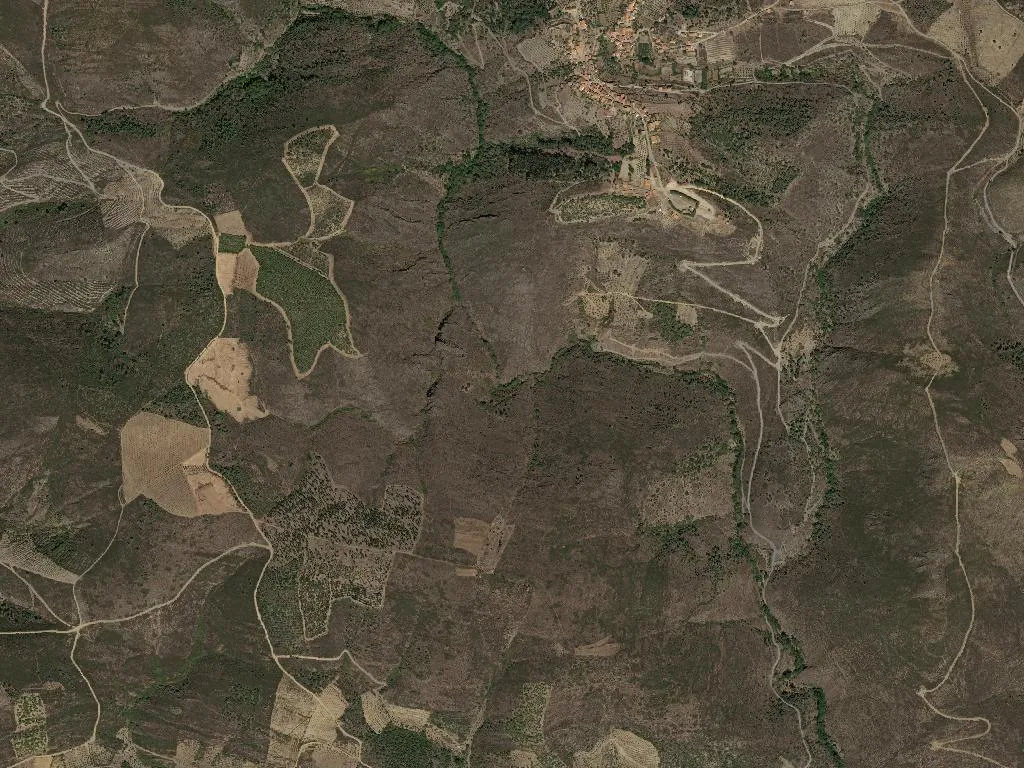
Granite stores the day's heat and gives it back slowly, like a receipt. In Mós the only things that disturb the afternoon are the soft slam of a distant door and the wind combing through almond orchards below the village. Low light stretches shadows across walls built from schist and granite the colour of weathered tweed. At 394 m the Douro is quieter here than at the terraced vineyards downstream, but the plateau still carries the river's mineral scent.
A charter from 1285 still matters
The name Mós remembers the vanished forests—mata in Latin—that once cloaked these slopes. King Dinis granted the settlement its charter in 1285, licensing it as a waypoint between Bragança and the Douro quays. The parish church, Nossa Senhora da Assunção, is textbook Transmontano: granite blockwork, a single nave, and—inside—two gilded side-altars that flash suddenly baroque against the stone. The churchyard tilts over the Sabor valley; from the low wall you can pick out holm-oak and cork-oak until the gorge swallows the horizon.
August nights that smell of wood smoke and lamb
Every August the village doubles in population. The Festa da Vila honours the Assumption with processions that pause at each street corner so the brass band can catch its breath. In the marquee next to the football pitch, teams of avós rotate spits of kid goat overnight; the smoke drifts uphill and sticks to your jumper. At long Formica tables you eat Terrincho lamb, Vinhais meat chouriça still warm from the smokehouse, almonds glazed with local honey, and black olives from Freixo. The wine is house-label Douro Superior—dark enough to stain the glass—and the music only stops when the generator runs out of petrol.
A pantry shaped by altitude
The plateau's continental climate—40 °C in July, frost in October—condenses flavour. Terra Quente honey is almost ambergris: thyme, rosemary, wild lavender. Terrincho DOP cheese, made from Churra da Terra Quente ewe's milk, is firm enough to shave; the taste is lanolin and pepper. Trás-os-Montes DOP olive oil lands on the tongue with artichoke and green apple. Slice salpicão from Vinhais and you get smoke, garlic and the sweet lactic note of a three-month cure; the presunto bísaro from the same Alentejo-cross pigs is prosciutto-level silk.
Walking where the only traffic is a shepherd's dog
From the church a cobbled lane becomes a dirt track that follows centuries-old property walls. Within ten minutes you are among rye stubble and holm-oak montado. Head north-east and the path drops to the Vilariça fault, a kilometre-wide trench of vineyards, olive terraces and, in season, poppies violent enough to hurt the eyes. Across the valley the Sabor river scribbles a silver line; griffon vultures wheel on thermals rising from the gorge. You can walk for two hours and meet no one except a shepherd on a Honda moped relaying whistles to his dogs.
What 189 people do on a Tuesday
The primary school closed in 2003; the building now opens three days a week as a day centre where lunch is delivered in metal trays from Torre de Moncorvo. António's café sells espresso for 60 cents and keeps cigarettes behind the counter like museum pieces. On Tuesday mornings the municipal van brings fresh bread and UHT milk—without it 87-year-old Dona Amélia would breakfast on black coffee. Her husband's rye fields have reverted to bramble and dog-rose, but she still prunes the three almond trees that overhang the threshing floor. During the festa the pattern reverses: returning grandchildren overrun the lanes, rental cars from Porto squeeze past the church, and WhatsApp messages ping off the granite. By the third day the village smells of diesel and calamine lotion; by the fifth it is quiet again.
Dusk settles. Wood smoke threads upwards, the granite walls hold the last light for a full ten minutes after the sun has slipped behind the Sabor gorge. Mós stays where it is, between valley and mountain, waiting without impatience for someone to remember the way back.