Full article about Bells, schist and wood-smoke in Assares e Lodões
Walk from baroque Assares to medieval Lodões across Tua’s mirrored arches
Hide article Read full article
Three bells over the Tua valley
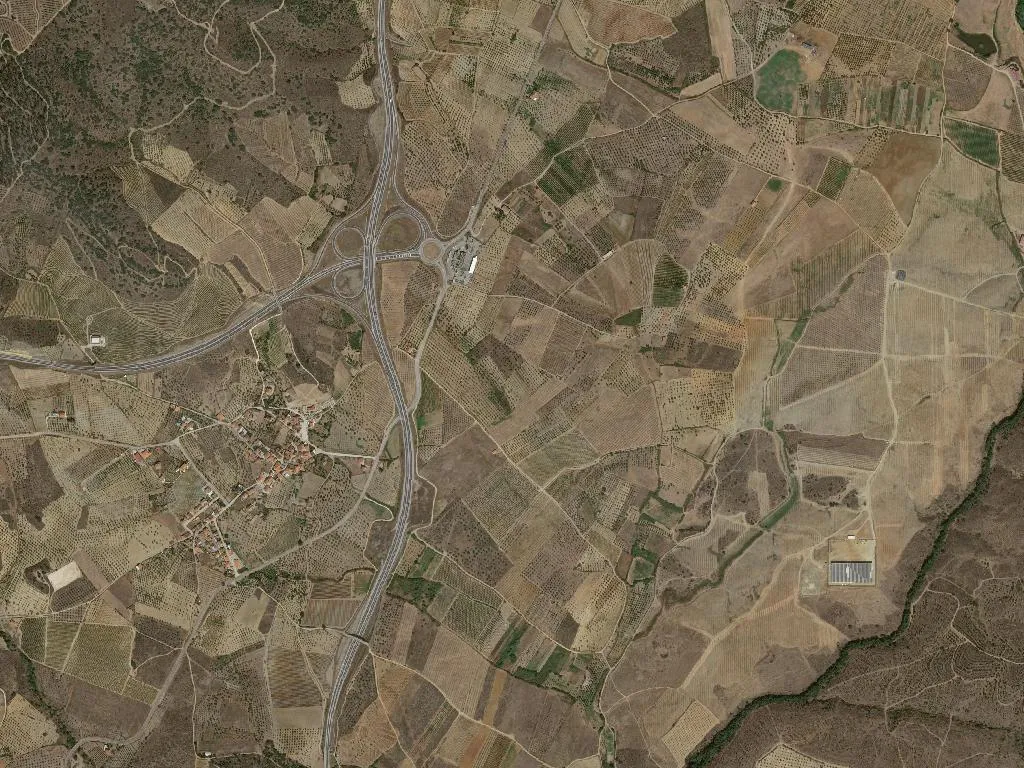
The bell in the tower of Assares’ mother church tolls three times, letting the note drift across the parched August air. It ricochets off almond terraces, slips between olive trunks, crosses the stone bridge that shoulders the river Tua and finally dies against the schist flanks of Lodões. Two hundred and fourteen souls share almost fifteen hundred hectares here; distance is counted in minutes of walking, not metres.
When stone keeps the centuries
São Bartolomeu stands square in the middle of Assares, an 18C Baroque box whitewashed to glare. Generations of palms have polished the basalt door-jambs to a dull sheen. Two kilometres east, São Miguel de Lodões does the job with thicker walls and slit windows—Transmontano pragmatism designed to keep July heat outside and December warmth in. Between them, the medieval bridge—rebuilt after the 1870 flood but faithful to its original ribs—still carries foot traffic over water the colour of black tea. When the river is low the perfect arches double themselves, held briefly in the slow mirror below.
Romarias and processions
On 15 August the valley smells of candle wax and charcoal. The Romaria de Nossa Senhora da Assunção turns the lane beneath São Bartolomeu into a slow-moving tapestry of gold-threaded banners and barefoot penitents. Three weeks later the focus shifts to the hilltop Capela de Nossa Senhora do Castanheiro: dark head-scarves, men shouldering the image in concentrated silence, and at night a concertina-driven circle that scuffs the dust of the village square into low clouds.
Schist-born flavours
Terrincho lamb—DOP-protected, milk-fed on the region’s rye pastures—spends four hours in a wood oven until the skin fractures like thin toffee. Kid goat is treated to the same fire-and-rosemary ritual. Inside the smoke-blackened kitchens, Vinhais meat chouriços hang like edible bats, curing to the tempo of the seasons. Almonds from the Douro valley are ground for toucinho-do-céu, a monastic yolk-heavy cake whose centre gleams like edible bullion. Green-gold Trás-os-Montes olive oil slumps from clay pitchers, chased by tiny black “negrinha” olives—pit large, flesh obstinately firm.
Between river and mother-trees
At 203 m the land is stepped with dry-stone walls that predate the 1755 earthquake. Some almond trees—locally christened “amendoeiras-mãe”—have twisted themselves into impossible calligraphy yet still fruit prodigiously. In late February their blossom turns the terraces into a negative snowfall. Below, the Tua breathes enough humidity uphill for olives to climb where vines would sulk. In the high pinewoods the silence is so complete you can hear your own pulse drumming in your ears.
Dusk reaches Lodões; low sun fires the olive trunks copper. The air carries the iron smell of heated schist, drifting pine resin and, somewhere, a first oak log being coaxed into evening flames. The valley fills with shadow until the final ray catches São Miguel’s belfry, holds it for a second, then lets it go.