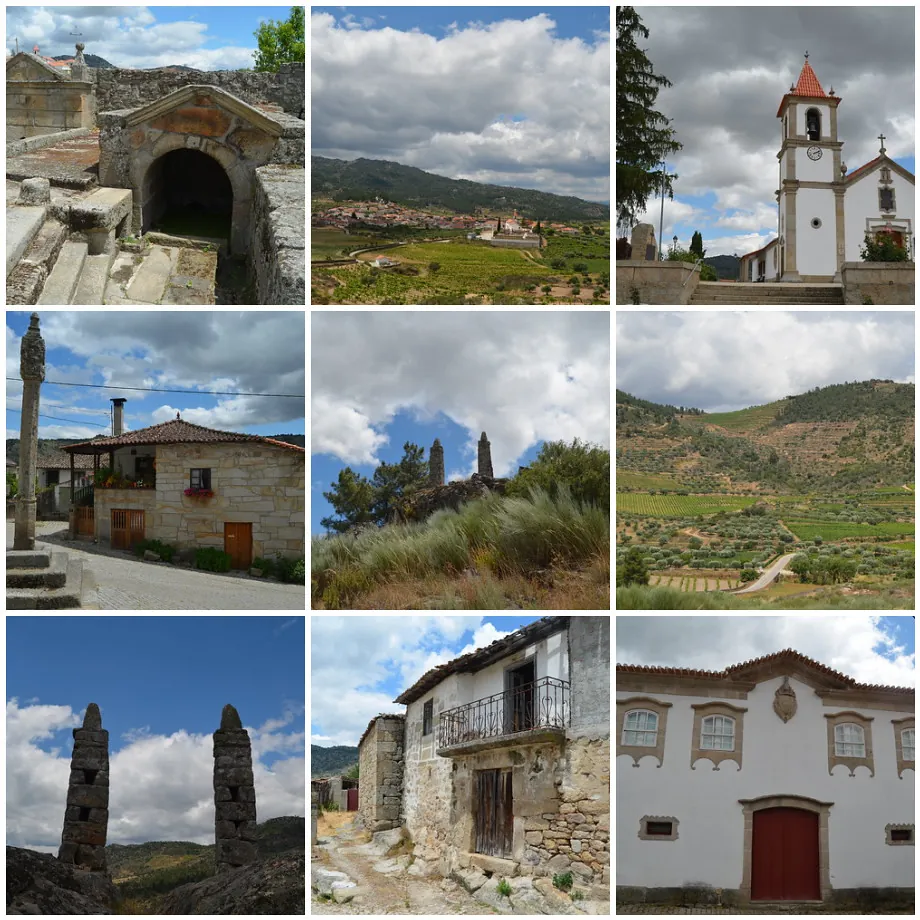
Full article about Freixiel: the bell tolls thrice above Trás-os-Montes
Explore Freixiel in Vila Flor, Bragança: hear its triple chime, taste bifanas at Assumption, trace Knights Hospitaller stone.
Hide article Read full article
Three measured chimes—never a fourth—leave the belfry first. Mr Joaquim, keeper of the key and of small certainties, counts them out like a man dealing cards. The sound ricochets through the chestnut groves above Freixiel, 409 m up in the terra fria of north-eastern Trás-os-Montes. By the time you reach the village the granite pillory is already warming in the sun, a solitary reminder that Freixiel once had town status, a charter, even a council chamber. Lisbon revoked the privilege in 1836, kept the oversized square, and left 527 souls to fill the silence.
A town stripped of its charter, memory intact
History here is not in leaflets but in lintels. Over the door of the former town hall the date 1867 is picked out in iron nails; in Chico’s back garden the retaining wall is pure local marble—an extravagance paid for during the short-lived chestnut boom. Scholars trace the name to the Latin fraxinus (“ash tree”); old villagers shrug and point to the freixo still shading the fountain. The Knights Hospitaller rode through in the 13th century, collected tithes, rode on. Their carved cross survives on a farmhouse gable, now used as a perch for pigeons and gossip. The manor house where a Noronha supposedly plotted against Dom João IV—legend says his head rolled in the square—today shelters unemployment forms instead of conspirators, yet parish councillors swear they hear boots on the stairs at dusk.
Festival calendar
August is a string of explosions. On the 15th the Assumption procession leaves the church, crosses the threshing floor and halts beneath diesel-soaked torches—olive oil became too dear. After mass, trays of D. Lurdes’ bifanas (paprika-spiced pork in soft rolls) appear; she has been at the stove since 4 a.m. The following weekend belongs to São Bartolomeu: roast kid in the sports-club kitchen, a dance to the veteran brothers Anjos and their accordion, then Zé Mário’s fireworks that each year almost ignite the eucalyptus across the valley. September climbs to the Castanheiro plateau for the cake auction: clay-jar wine, donations dropped into a painted pitcher that never quite covers the churchyard mowing bill. Mid-winter, cardboard-crowned Kings parade through the lanes, belt out off-key ballads and collect €1.50 per household—“for next year’s masks,” they insist, flour paste already flaking.
The Transmontana larder
Kitchens behave as if winter were an invading army. A cast-iron pot burbles with feijoada; breadcrumbs fry with dawn-picked wild asparagus—the tougher the stalk, the deeper the taste. Only lambs that graze the broom-scented slopes between here and Rabilhó earn the DOP stamp Terrincho. Up in the loft, chouriça de carne swings beside salpicão posted from Vinhais; both will be traded for a spring cockerel when the time comes. Cheese is broken off in fist-sized chunks—no one bothers with thin slices. D. Isaura’s sponge cake, still warm, is washed down with a thimble of bagaço grape spirit; if you demur, you get sachet coffee instead, the espresso machine having surrendered in 2019 and no technician yet spotted in the district.
Walking the territory
Set out from the square, pass the fountain locals insist tastes “lighter” than the mains, then climb the mule track where Rui repacks collapsed stone walls with river boulders—“cement looks untidy.” Four kilometres on, a granite bench faces the Tua gorge: griffon vultures if the thermals are right, otherwise just the growl of your own stomach. Bring provisions—no café, no vending machine—then leave sandwich crusts and eggshells; wild boar will hoover them after dark.
Back in the tasca-come-grocery-come-betting-shop, the day ends when Aníbal declares, “Closing, gentlemen.” Conversation shrinks to the price of ewes, the potholed road the council never resurfaces, and the boy who earns well in Paris “but eats rubbish.” Outside, Joaquim’s bell counts to three once more. The square reclaims its true size, ready for tomorrow when the same sun will warm the same stone and the stories no bureaucracy ever managed to erase.