Full article about Santa Comba de Vilariça: citrus, castro & chanfana
Where oranges ripen above Trás-os-Montes and a cracked bell still rolls down the Vilariça valley.
Hide article Read full article
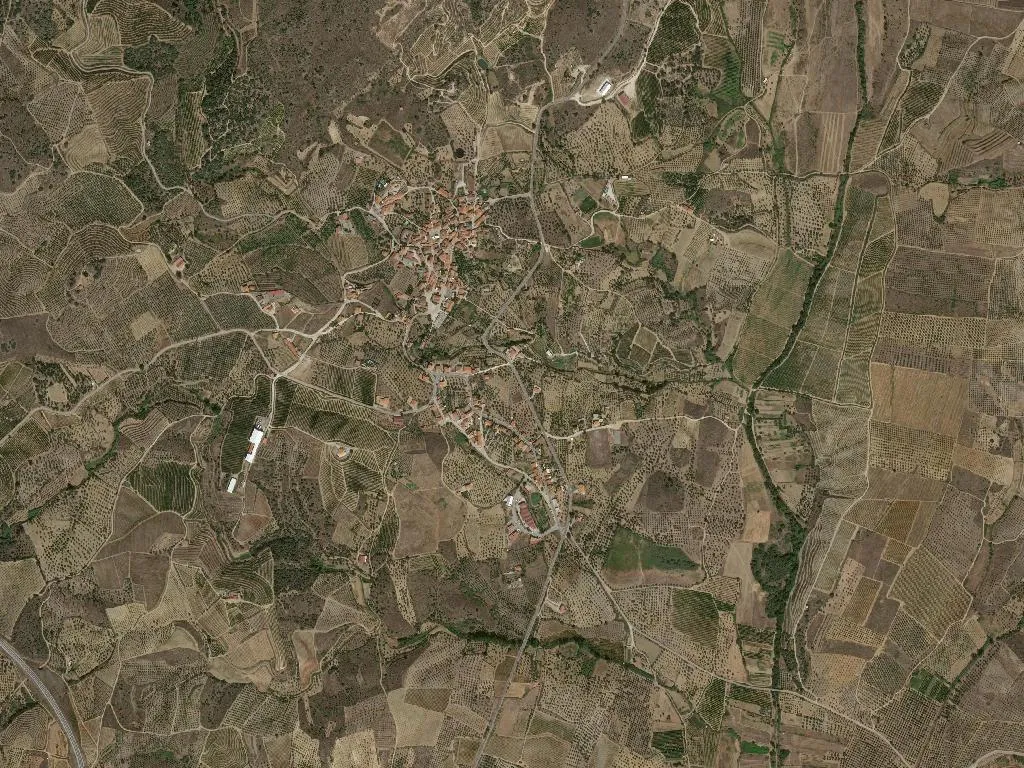
At nine sharp the sun slants through the orange canopy and the church bell – recast in 1952 by Ferrinho the gravedigger after the old one cracked at Easter – sends a single bronze note down the terraced valley. The sound rattles the fruit, then dissolves in the Vilariça stream, leaving only the scent of warm schist and the sugary drift of blossom. Sr Agostinho insists the micro-climate at the valley floor is devilishly good for citrus: he planted forty trees in the 1970s when agronomists laughed at the idea of oranges in Trás-os-Montes. The trees stayed; the experts left.
Between watchtower and wayside cross
The Iron-Age castro above the hamlet is officially a National Monument, but it doubles as June’s blackberry supermarket. Half a wall of rough masonry survives; teenagers perch there for surreptitious cigarettes while Ermelinda, who polishes the church brass, pretends not to notice. Below, the 1782 granite cross lost a chunk of its plinth in 1983 when the milk lorry misjudged the bend. Inside the chapel the gilded retable carries a wingless angel – locals swear Santo António snapped the wings himself after the crayfish fishermen forgot his annual offering of crustaceans.
Chestnut-less oak and citrus in the back-country
The September pilgrimage to Nossa Senhora do Castanheiro assembles under a mighty oak that has never produced a chestnut in living memory. The name is a plague-era relic: all true chestnuts died, only the oak remained stubbornly alive. D Rosa arrives balancing a tray of bolos de leite, whisked in the same red-clay bowl her mother used, the meringue secret passed lip-to-ear. After the third glass of bagaçeiro, the men strike up the moda Saudade da Aldeia, led by Zé Mário’s concertina – a tune his father taught him when the olive groves still paid the rent.
At table: chanfana, Terrincho and wine that talks back
Celeste’s chanfana is famous for one reason: the black clay pot is reserved exclusively for goat stew, locked away between feasts and never polluted by soup. The cheese is Terrincho DOP, trucked across the bridge from Fundo da Vila, and the honey comes from Zé da Tina’s hives on a former maize terrace. Dona Odete’s pão de ló is the antithesis of airy sponge – dense, yolk-rich, best dunked in espresso so strong it rasps the throat. In the cellar, Zé Manel still treads grapes barefoot: “I need to feel if the fruit is melancholy or joyful,” he explains, purple to the ankle.
Trails through olive and abandoned presses
The PR3 footpath starts beside the spring where women filled copper jugs until 1974, the year indoor plumbing arrived. It passes Sr Jaime’s stone lagar, abandoned when the EU quotas made small-batch olive oil an act of charity rather than commerce. Griffon vultures circle overhead – descendants, villagers claim, of the 1978 rebel that refused to leave the school roof for three days. The annual volunteer harvest is exactly that: unpaid, followed by Celeste’s chanfana and Zé dos Óculos’ concertina until the sky pales.
When the sun slips behind the castro and the bell tolls the Ave-Maria, Sr Agostinho gives his oranges a final sprinkle. Wood-smoke rises in straight columns – night air here is windless – and the stream repeats its metallic hush, a lullaby that Lisbon grandchildren download as a phone app to fall asleep. Somewhere up-valley Ferrinho’s dog barks once, twice, the echo bouncing like an old valve radio tuning itself to darkness.