Full article about Vale Frechoso: Stone, Smoke & Almond Snow
Slate roofs, 400-year olive trunks and slow-cured ham in Portugal’s emptiest parish.
Hide article Read full article
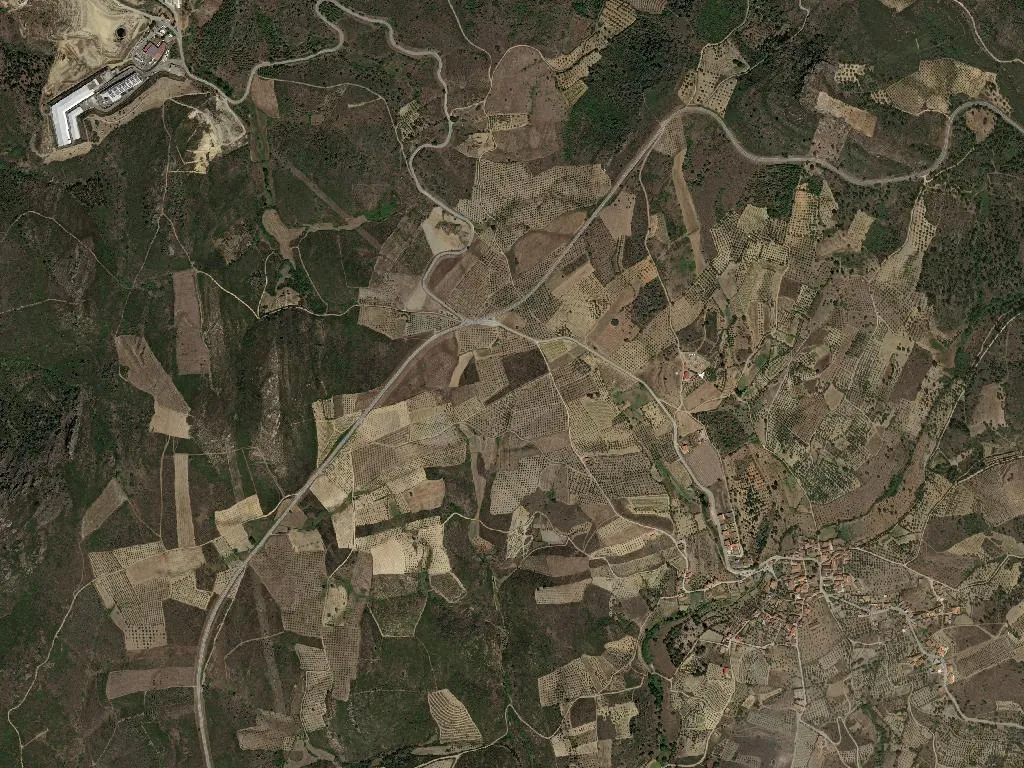
Morning arrives late in the folds of Trás-os-Montes. Mist pools in the valley seams until the sun shears it open, revealing Vale Frechoso at 576 m, a slate-roofed scatter of stone under an almost empty sky. With 154 souls across nineteen square kilometres, population density here is lower than the Outer Hebrides; silence has acreage.
Almonds, olives and what the ground yields
Come late February the terraces flare white: 19th-century almond grafts respond to every fraction of warmth. By October the same trees have hardened into green husks, their Douro-DOP kernels dried on cloth and rattling like loose change. Among them, olive trunks the width of pub tables twist out of schist, still giving annual oil stamped Trás-os-Montes DOP after 400 winters. The arithmetic of survival is learned early—nine pupils in the primary roll, 63 pensioners in the café. Yet the ham-smokehouses still season Presunto Bísaro IGP for eighteen months, ewe’s milk is still hand-ladled into Terrincho DOP wheels, and black Negrinha de Freixo olives ferment in clay talhas just as they did when the road was still dirt.
A calendar that still pulls
Three weekends interrupt the hush:
- 24 Aug – São Bartolomeu: makeshift fairground on the football pitch, dancing until the generator coughs.
- First weekend of Sept – Our Lady of the Assumption procession, ribbons on the ox cart, white linen over trestles.
- Third weekend of Oct – Our Lady of the Chestnut pilgrimage, when emigrants fly in from Lyon or Neuchâtel and the communal oven works through the night to roast kid and chestnut loaves.
For forty-eight hours the parish regains a quorum; then the cars nose back towards the airport and the plateau reverts to echo.
Where to eat and stock up
Café Central on Rua da Vila is open year-round; order chanfana (goat stewed in red wine) or a posta mirandesa, a dorsal steak thick as a hardback. Bread appears at 08:00 from the Minipreço three doors down; shutters slam at 19:00 sharp. Book the stone community oven beside Santo António chapel through the parish council if you want to bake your own.
Walking it off
The Windmills Trail is a five-kilometre loop that starts at the mother church, climbs through abandoned wheat mills and tops out on a ridge overlooking the Tua valley—allow two and a half hours and take water; there is no kiosk. In March ask at the parish house for the key to the gate linking Vale Frechoso to Vilarinho da Azenha; the path tunnels through flowering almond and ends at Sr Joaquim’s stone press where you can fill a plastic bottle with oil still warm from the decanter.
Getting here—and away
From Vila Flor follow the EN316 for 15 km of switchback. The final three kilometres tilt at 12% and meet oncoming tractors with the confidence of a country lane in Northumberland. No bus has entered the valley since 2018; arrange a taxi from Vila Flor station or collect a rental at Porto airport, 180 km west. Mobile signal drops to a single bar somewhere after Santa Comba—download offline maps before you leave the uplands.
Dusk smokes the schist copper-red, a door hinge creaks, a dog barks two hamlets away. Nothing else is required; that is the whole programme.