Full article about Vila Flor’s oak-smoked kid and olive-oil mornings
Granite arch, river-swing silence, almond snowfields—this is Vila Flor e Nabo
Hide article Read full article
Stone, Olive Oil and Saturday Swings
King Dinis’s granite arch is less a monument, more a morning checkpoint. Duck through its shadow on the way to Sandra’s grocery and you inherit six centuries of pedestrian law: glance down—those cobbles are treacherous—or risk colliding with the neighbour mid-gossip. Courtly chronicles credit the king with both the gateway and the town’s floral rebrand; locals reply that names, like olive trunks, rarely re-graft.
Where the air tastes of oil
Vila Flor sits only 278 m above sea level, yet altitude is irrelevant when the morning thermometer drifts past 35 °C. Between nine and ten the Central café exhales toast and new-crop olive oil. Producers pour thimble-sized samples into plastic shot glasses—normally reserved for firewater—and one sip reveals whether the harvest escaped the fruit fly. Weekends see Sr António ferry a five-litre demijohn to his Lisbon-dwelling daughter; it rides in the boot like contraband because capital prices triple the quinta rate. Behind the café the white bulk of the Igreja Matriz throws glare onto a Roman fountain still commandeered by hot-footed children.
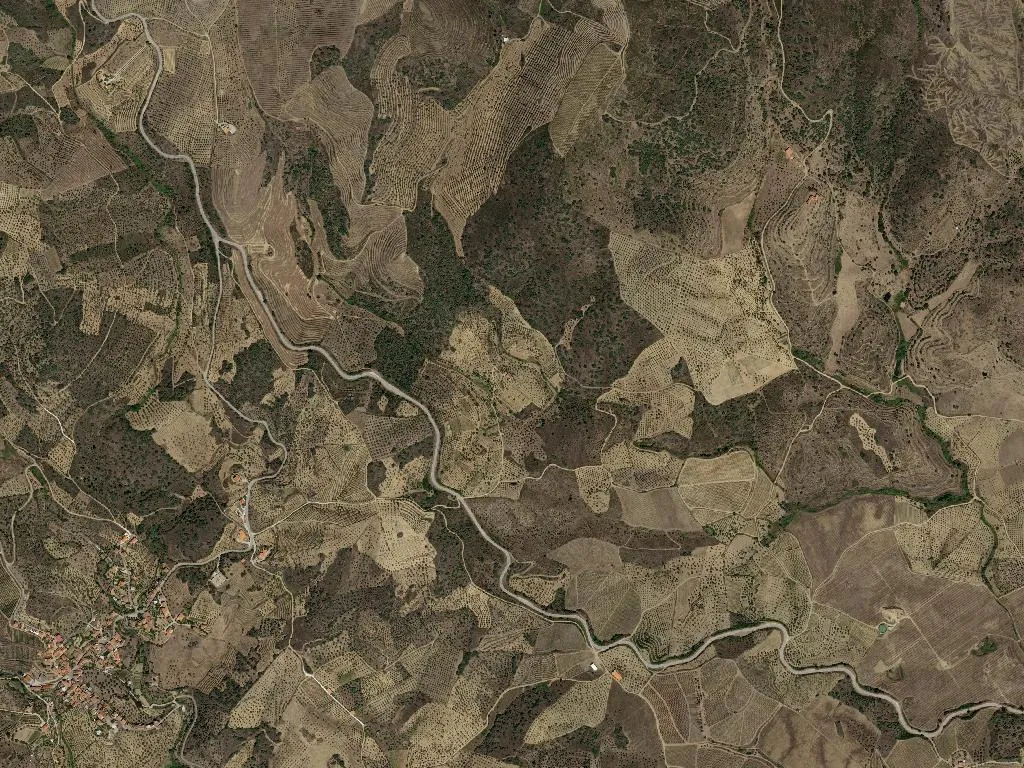
If calves allow, follow the dirt lane west to the Lapa lookout. The council has bolted on a fresh swing, but the view needs no upgrade: the Tua River scribbling loops below, almond blossom sudsing the hills in March, a few schist-wedged vines. Take the photograph if proof is required; what lingers is the silence that arrives when the signal bars vanish.
Recipes that refuse to leave
Oak-fired kid is manoeuvred into the oven at six; by one it is on the checked cloth at O Albertino, crackling outside, floss-tender within, bathed in its own lemon-thyme juices. Prefer butelo—the Trás-os-Montes blood-and-garlic sausage? Wait for the first frost when Celestino slaughters his pig and the kale is sugar-sweet from the cold. Olive-oil cake fries in a heavy skillet, not bakes; grandmothers guard the ratios, but the Central bakery sells palm-sized slices for the ungodly. Buy Terrincho DOP—raw-milk sheep cheese aged in chestnut leaves—wrap it in foil, and let it slump slightly in a hot car: the melt tells you it is ready.
Festivals timed for home-comers
August belongs to São Bartolomeu. The roundabout surrenders to doughnut stalls; the brass band rehearses for a month on the school’s dusty pitch; expats book annual leave months ahead. No glossy programme exists—bottles of iced white appear, rockets clear the sky at 1 a.m., and everyone knows which march went wrong. After Sunday’s procession the churchyard distributes fish stew; bring your own bowl or burn your fingers.
Paths that introduce neighbours
The Tua riverside trail is flat enough for spaniels and grandchildren. Start behind the picnic park, follow willow scent and, occasionally, the charcoal whisper of a covert barbecue. The Pilgrims’ Route is steeper: you may meet lace-veiled women reciting rosaries who still address the valley’s houses by the families who built them. Finish with an espresso at the Lapa café—machine new, milk boiled in a saucepan, view old.
A legend to carry home
On moonless nights the Fonte das Bestas is black as tannin. Moorish maidens are said to have wept here for vanished lovers; modern ears register only reeds and wind. Drink enough vintage Port and you might translate the rustle differently. Legends, like olive oil, keep for the moment you need a final drop of hope.
When the sun drops behind Dinis’s arch the granite hoards heat for ten more minutes—time to perch on the step and watch homeward shadows lengthen. Then mountain air drains into the streets, the town exhales, and Vila Flor closes its doors until tomorrow’s bread run.