Full article about Matela, Vimioso: Where Wind Cures Ham & Almonds Bloom
Follow the scent of oak smoke to five moss-soft mills amid almond snow on the Serra de Bornes platea
Hide article Read full article
The Wind That Knows the Way
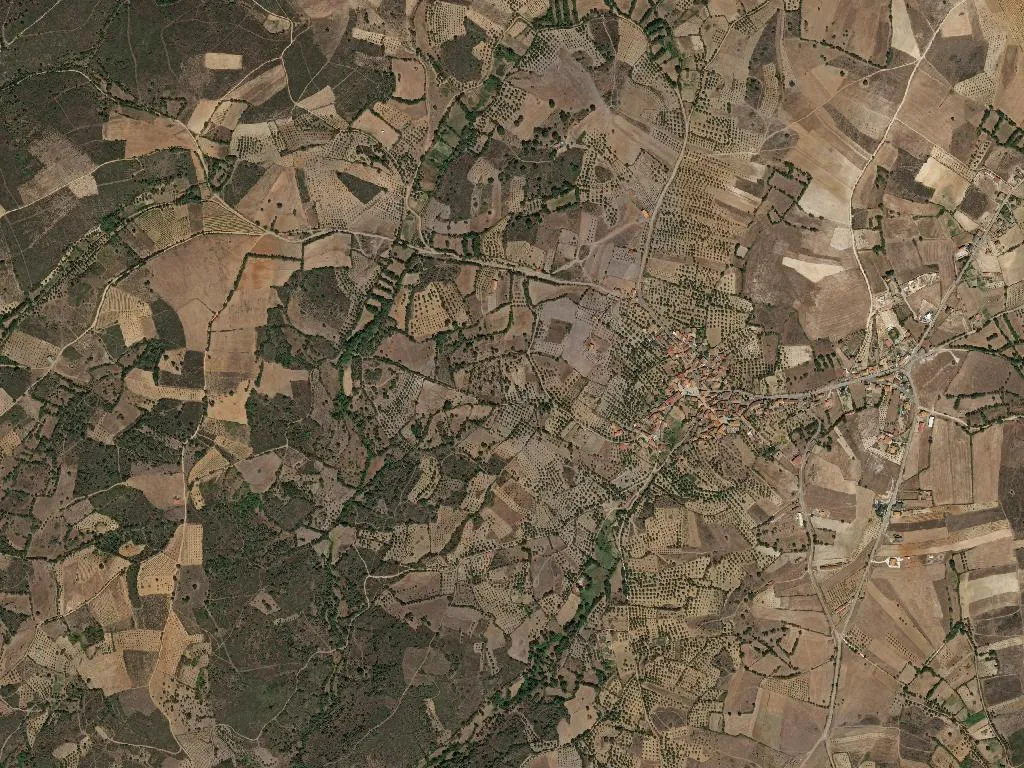
The wind always arrives from the same compass point, the elders insist. It slides down the north-west flank of the Serra de Bornes, steady as a metronome, carrying the resinous snap of rosemary and the sour-sweet tang of oak smoke that drifts from every chimney. At 543 m above sea-level, Matela’s air moves in slow currents through stands of holm and cork oak, rattles the rye heads in the open fields, and sets the almond branches trembling so that, each March, the plateau appears to levitate under a low white cloud of blossom. That same wind cures the smokehouse hams that hang from the eaves – carne mirandesa DOP sausages and alheira coils slung on cork poles – leaving a saline, acrid haze that settles on damp earth after rain.
The village of five mills
The Ribeira de Matela threads its way between dry-stone walls and medieval levadas once used to irrigate vegetable plots and power watermills. Only husks remain: grinding chambers open to the sky, granite water-wheels padded with moss. In the nineteenth century five mills worked here, turning rye and wheat for the whole Vimioso municipality. A seven-kilometre waymarked trail now links the ruins, yellow dashes departing from the eighteenth-century parish church – single-nave, triangular pediment – and ending at the last mill where water still whispers between stones and redwings descend in autumn flocks.
Inside the church, a neoclassical altarpiece frames baroque images of Nossa Senhora das Graças and São Bartolomeu. Light slips through narrow windows, painting oblique shadows on lime-washed walls. Outside, the communal threshing floor is oriented exactly 30° north-east, an ancestral device for catching the sun’s full force when maize is spread to dry. Lower down the slope, the granite chapel of São Brás keeps a modest bell-turret against the open sky.
Fire, lamb and clay bowls
Matela’s table is governed by the agricultural calendar. In autumn, chestnut soup with smoked bacon warms long nights; a dense stew of dried beans and pork rind is eaten slowly, almost ceremonially. Kid goat from the Transmontano DOP herd is roasted in a wood-fired oven with white wine, garlic and bay; the skin blisters gold, the meat loosens at the touch of a fork. Roast potatoes, cracked and anointed with Trás-os-Montes DOP olive oil, share the plate; red wine from the Planalto Mirandês, served in clay malgas, leaves a dark, fruity imprint on the palate.
On 24 August the entire village processes to São Brás. Hymns rise up the hillside and the communal lunch serves canhono – milk-fed lamb slow-baked overnight. In May, the procession of Nossa Senhora das Graças winds through lanes lined with wool shawls and lace; afterwards, warm bolo doce – oil, flour and cinnamon – is handed out straight from the oven.
Where rye meets sky
From the Cruzeiro viewpoint the eye travels across rolling fields where rye ripens to the colour of pale brass. Horizon and land dissolve into one another; late-afternoon light turns the olive groves silver. There are no crowds, only the blackbird’s phrase and the wind that never quite ceases. At Quinta Casa do Azinho you can join the September grape harvest, tread the fruit in the stone lagar and taste the must while fermentation drifts through the granite walls.
Matela keeps no spectacular secrets – if you need adrenaline, stay in the city. But if you want to understand how time is measured by sowing and reaping, this is the lesson. Leave the car at the entrance and walk. Gradually the silence becomes more articulate than any engine.