Full article about Vale de Frades & Avelanoso: where hams smoke above 661 m
União das freguesias de Vale de Frades e Avelanoso: taste slow-smoked ham, join the São Bartolomeu feast, walk 27 silent miles of Bragança heather.
Hide article Read full article
A Smoke Rises from the Slate Roofs
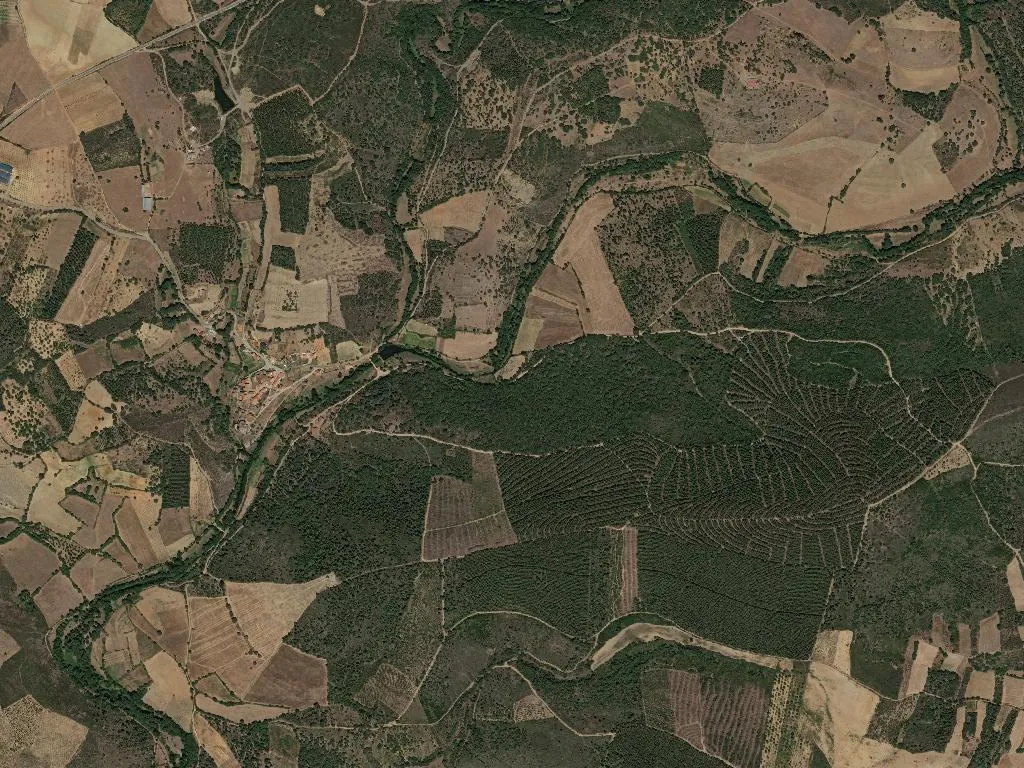
The first plume lifts at dawn, curling from the stone chimneys of Vale de Frades before the sun has even cleared the Spanish frontier. Inside the smokehouses, hams hang like burgundy-coloured lanterns, absorbing six months of oak and heather smoke. At 661 m above sea level, the air is already sharp enough to sting the lungs; by nightfall it will carry the iodine scent of distant heathland and the lowing of Mirandesa cattle drifting across 70 km² of empty hills.
This is the joint parish created in 2013 when two medieval hamlets were stitched together by an administrative pen-stroke. Geography had already done the work: a valley once tended by Benedictines from twelfth-century Castro de Avelãs and a slope thick with hazel that gave Avelanoso its name. The numbers are brutal—293 souls spread across 27 square miles—so silence is measured in footsteps: twenty minutes to the next house, half an hour to the bread van, a whole morning without a passing engine.
When the Villages Refill
For ten months of the year granite alleys echo only with swallows and the clink of a distant sheep bell. Then August arrives on a convoy of French-plated hatchbacks and Swiss estate cars. The emigrants park beside the chapel of Nossa Senhora das Graças, haul tin trunks from boots and unfold costumes kept in camphor: scarlet wool skirts frogged with gold, black silk shawls heavy as chainmail. On the first Sunday of September the procession forms—men in felt top hats carrying the painted cedar Madonna, women balancing baskets of gilded bread. Three days later the smell of kid goat, slow-roasted in a wood-fired oven, drifts through Avelanoso for the Romaria de São Bartolomeu. Tables stretch across the lanes under linen cloths, loaded with cozido transmontano, corn broa still steaming, and DOP Terra Fria chestnuts that were gathered at dawn from orchards first planted before the Discoveries.
The Taste of Height
Up here, cuisine is not theatre; it is the difference between surviving winter and not. Olive groves that should have frozen decades ago still produce Trás-os-Montes DOP oil, crushed in a stone press Mr António refuses to electrify. Mirandesa lambs graze the wetland margins of the Sabor tributaries; on the plate their flesh carries the resin of wild rosemary that grows between schist slabs. In smokehouses built into bedroom walls, chouriço, alheira and salpicão swing beside the hams, each sausage ring coded by the family’s own ratio of wine, paprika and garlic. Dona Fernanda, born when her mother was 90, still calculates curing time by the thickness of moonlight on the granite—eighteen months minimum before a ham is ready to slice paper-thin in Zé Manel’s tavern.
Between Chestnut Corridors and Cliffs
Walk east and the land tips into sudden ravines. Sweet-chestnut avenues—soutos in the local tongue—turn bronze each October, their fruit once taxed by the abbots of Castro de Avelãs. Dry-stone walls divide meadows no tractor has touched since Joaquim’s last Fordson seized in 2014; adders bask where rye should be. Beyond the abandoned smallholdings the Sabor gorge drops 500 m, its cliffs still pitted from the 1956 Saucelle dam blasts. No nature reserve signposts the spot, yet griffons ride the thermals, red-billed choughs ricochet between ledges, and in spring the midwife toads chorus so loudly they drown the river itself. Follow the Frades stream downhill and you’ll pass willow coppice once cropped for basket-making, now left to grow wild because there are no hands left to weave.
At dusk the final smokehouse fire is damped. Wood tar perfumes the stone, cold sinks like a physical weight, and the only sound is the soft percussion of your own pulse. Take-home souvenirs don’t exist here; instead you leave with textures—the rasp of granite under fingertips, the silk-fat marbling of a ham sliced by pocket-knife, the pressure of absolute silence among chestnut trunks when even the wind forgets to blow.