Full article about Chestnut Smoke & Dawn Silence in Curopos e Vale de Janeiro
Oak-smoked hams, wolf-printed trails and August homecomings in Vinhais’ quietest folds
Hide article Read full article
Dawn over schist
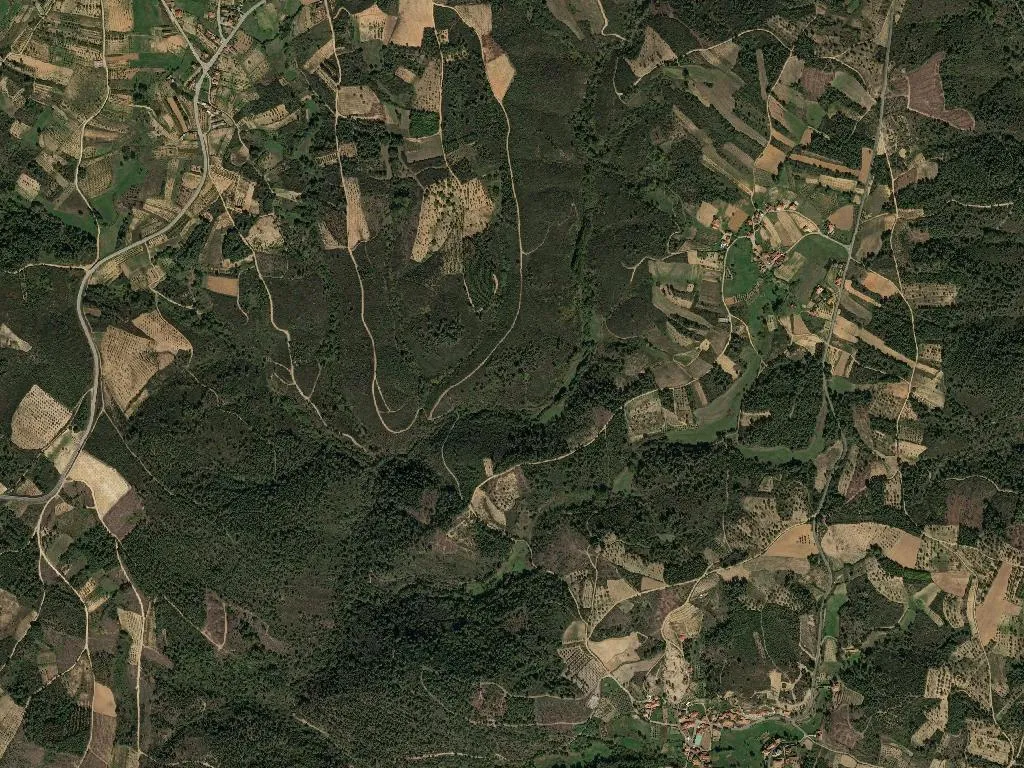
The first light slips into the folds of the Serra de Montesinho, gilding the chestnut canopies above Curopos and Vale de Janeiro. Wood-smoke rises in a dead-straight plume; someone has lit the morning fire for coffee. At 609 m the silence is acoustic, not empty – wind shuffling through the oak, a griffon’s distant whistle, the soft crash of a wild boar in last year’s leaves.
Two hamlets, one parish
An administrative tweak in 2013 fused the settlements, yet Curopos (probably from the Latin cuperus) and Vale de Janeiro, named for the little river that stitches them together, have always shared ox-tracks, bread ovens and emigrants. Today 245 people are on the parish roll; 113 are over sixty-five. Only twelve children sprint past the granite corn-stores, and the density – 6.77 inhabitants per km² – means a farmhouse may have a whole hillside for a neighbour.
Smokehouse and chestnut
The fumeiro is secular religion here. Hams and salpicões spend months suspended in oak-scented darkness, losing moisture until the outer air is cool enough to receive them. Mirandesa beef and Bragançano lamb are braised with the knobbly, yellow-fleshed potatoes that fatten at this altitude, while every October the Protected Designation chestnuts of Terra Fria are hoarded for flour, stuffing or the densest doces de castanha. Nothing is wasted; nothing is hurried.
Stone and Santiago
The nascent Caminho Nascente to Santiago cuts across the parish, way-marking a route between slate walls and stone granaries. Walk it at dusk and you may see roe deer silhouetted on the ridge; Iberian wolves leave prints in the high scrub but keep their distance. Red kites ride the thermals, scanning the terraces of subsistence maize and vines for careless voles.
August procession
On 15 August the Feast of Our Lady of the Assumption turns Vale de Janeiro inside-out. Emigrants fly home from France and Switzerland, shuttered houses breathe again, and long tables appear laden with rojões and roast veal. A brass band leads the statue through lanes barely two arm-spans wide, halting at every wayside cross. After the open-air mass the wine from neighbouring vineyards flows until the stars sag over Spain. For twenty-four hours the parish feels almost crowded.
Night settles; the river keeps its steady monologue, indifferent to calendars. In the smokehouses the sausages darken, acquiring the scent only altitude and patience can give.