Full article about Edral: Where Silence Weighs 836 m Above the World
Granite, woodsmoke & August fireworks—Edral wakes only for its patroness, then sinks back into moss-
Hide article Read full article
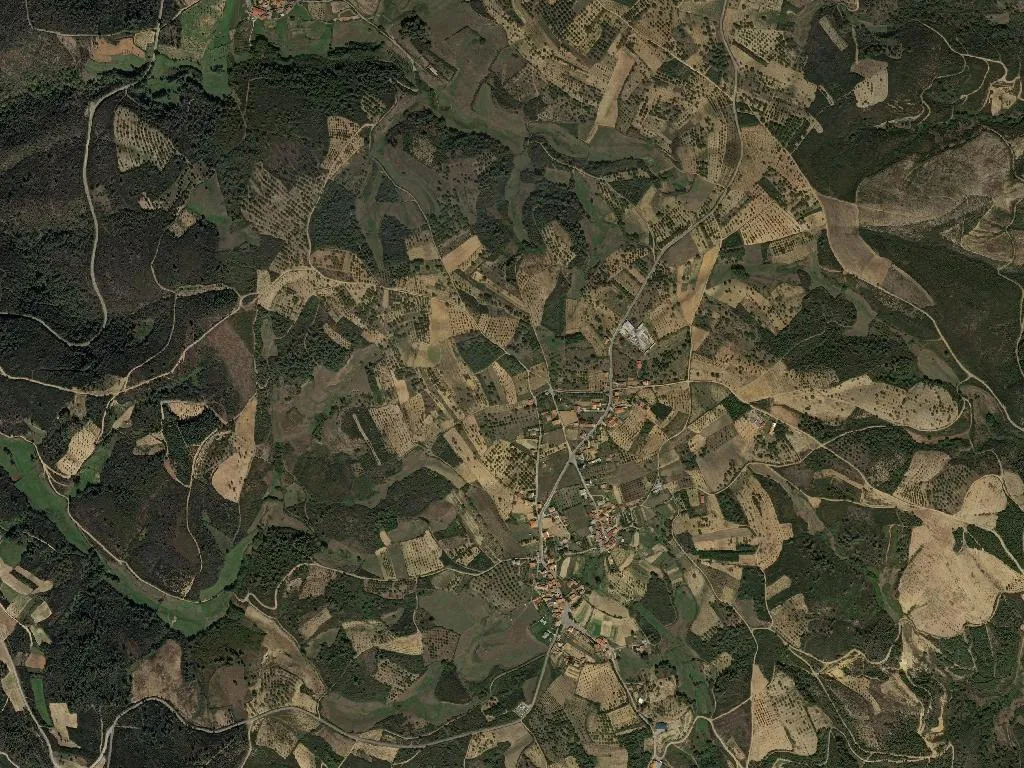
The granite doorstep is still beaded with last night’s dew. At 836 m, Edral’s silence has mass – not the absence of sound, but the presence of mountain. A gate slams somewhere down the lane, wood on wood, then nothing except the wind that funnels up the valleys of the Parque Natural de Montesinho. One-hundred-and-sevento souls live here, scattered across 2,616 hectares of oak and pasture where dark schist walls wear collars of emerald moss.
Stone & procession
Our Lady of the Assumption stands chalk-white against the pewter sky that so often caps Portugal’s north-eastern corner. Every August her feast detonates the calendar: emigrants fly back from Paris and Geneva, wood-fired ovens glow, trestle tables buckle under smoked-alheira sausage and clay pots of kid stew. For forty-eight hours the population quadruples, voices ricochet off schist, and the parish recovers a pulse last felt in the 1950s. Then the weekend ends, the cars nose down the mountain, and silence settles again – thick as the fog that pools in the chestnut groves.
Edral is an overnight stop on the little-walked Caminho Nascente to Santiago. Pilgrims appear at dusk, poles clicking, boots powdered with granite dust. They refill bottles at the stone spout where water runs straight off the Serra de Bornes, prise off footwear on the church bench, then hobble on towards Braga and the Atlantic. Their footprints sketch an invisible contour that links this hamlet to the rest of Europe – a thread older than any passport.
The mountain larder
Inside smoke-blackened barns, Vinhais hams and salpicão sausages dangle from chestnut beams, slow-smoked over oak for weeks until the fat glows amber. Chouriça de Carne de Vinhais – a dense, paprika-stained coil – cures to the rhythm of the seasons; at this altitude frost is the only clock that matters. Come October the cobbled lanes are carpeted with split chestnut husks from the soutos that girdle the village; the DOP-certified Castanha da Terra Fria is roasted on every hearth.
Beyond the last house Miranda oxen graze the marshy meadows; their meat carries the Protected Designation of Origin that chefs in Porto now fight over. Trás-os-Montes potatoes, planted by hand on terraces hacked from granite, stay waxy in the pot and marry instinctively with spring lamb fed on the same high pastures. These flavours are not marketing slogans; they are the residue of knowledge passed down through a dwindling chain of grandparents.
Montesinho at the threshold
Hiking trails begin at the parish boundary. Pull on boots, push through the wicket gate, and you are immediately inside 70,000 ha of protected oak, birch and rowan. In February the hills mute to monochrome; by May gorse ignites in sulphur-yellow shocks against the grey. Wildlife counts are not tourist trivia here – they decide whether the rye will be mown early or the village will hear wolves again.
Evening slants light across the stubble fields, a single plume of wood-smoke unravels skywards. Six children, ninety-one elders: the demographics tell their own story, yet Edral endures, stubborn as the granite that props it up, gripping the mountain with the same tenacity as the moss that clings to every north-facing wall.