Full article about Edrosa: granite stronghold above the snow line
Where chestnut smoke drifts through metre-thick walls and the cruzeiro points the way home
Hide article Read full article
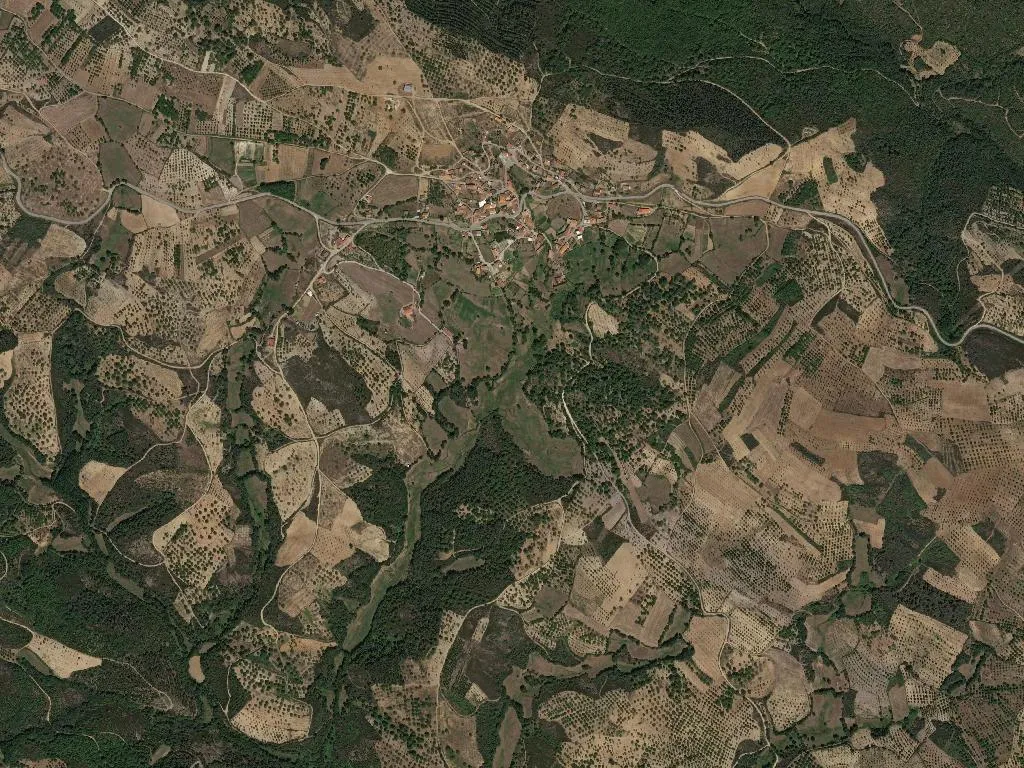
A shard of oak spits in the schist chimney and the smoke drifts up, lacing the kitchen with the sweet-acrid perfume of chouriça that has been turning over the flames since the last of the chestnuts were gathered. Outside, the cold does not nip—it slices. Wind slides off the Serra de Montesinho, rolling fog across the 2,181 hectares like someone shaking out woollen blankets. Edrosa, population 139, wakes reluctantly at 827 m above sea level. Between December and March the snow gate at the head of the valley is shut more often than it is open; the village becomes a white-blotted manuscript you cannot read until the plough arrives. The metre-thick granite is not rustic charm—it is thermal mass, the difference between waking up and freezing to death.
Stone, silence and a granite cross
The church stands exactly where cartographers of faith always plant it: dead centre, its shoulders against the square where pensioners perch on the bench even when the seat is drifted with snow. Inside, the gilded baroque retable glints with 1753 gold leaf, yet the real votive currency is the weekly flutter of candle flames. Beside the porch the granite cruzeiro does double duty—wayside shrine and GPS landmark: “Drive to the cross, then hang a left.”
On parchment the place is “Edroso,” donated by King Afonso III in 1258 for thirty libras. In oral memory it is the font where four successive grandfathers answered to the same baptismal name. Tiny chapels dedicated to St Sebastian and St Anthony are unlocked only on feast days—the former petitioned for rain, the latter thanked when it finally arrives. The raised granaries still stand, though maize has been replaced by spades and grandchildren’s hide-and-seek.
Fires, chestnuts and masked kings
On 15 August the village performs its annual magic trick: 600 extra bodies materialise for the Feast of the Assumption. Processioners snip branches from communal oaks and beeches as they descend from the church, foliage still dripping sap. The following Sunday is Chestnut Day at Zé Manel’s house—he owns the widest grill and an unopened five-litre jar of 2021 jeropiga, a fortified wine sweet enough to make dentists wince. The nuts themselves arrive from abandoned groves near Vilarinho, a hamlet now audible only to dogs and tawny owls.
Midsummer’s eve is marked by the fogueira de Sant’Ana—an old hay-wagon torch-fed with pine cones and the merest soupçon of petrol “to encourage direction.” In January the Caretos dos Reis wind through the lanes, faces hidden by fringed wool hoods; fail to identify your neighbour beneath the disguise and you owe the troupe a glass of aguardente. Mirandese, the region’s recognised minority language, is spoken only when no outsider lingers—house-tongue, not show-tongue.
Bisaro pork, chestnut flour and fireside moonshine
The pig is the black, flop-eared Bisaro breed, PDO-protected and reared on acorns and chestnuts. It is killed in December, smoked in January, eaten until the following Advent. First come the rojões—cubes of shoulder seared in lard—then salpicão sausage, which must be pressed inside a warm water-bread roll so its fat liquefies and runs down your wrist. The chouriça de carne snaps audibly: coarse mince, sun-dried summer garlic, local sweet paprika.
On high Sundays a leg of lamb still goes into the wood-fired bread oven—what remains of the transhumant flock that descends from the Bragança plateau each May. Potatoes, planted in April, last the calendar year: boiled with winter greens, fried with streaky bacon, mashed with red beans. Chestnut flour reappears in soup, in rice, in Adelaide’s improvised tea-time cake. Formigos—“ants”—a pudding of breadcrumbs, walnuts and wild honey, is served only on feast days. The clear brandy is distilled from medronho berries that Jerónimo foraged down by the Sabor; 45 % ABV, best approached with a dried fig between your teeth to blunt the edge.
Wolves, griffon vultures and a river that tastes of iron
The signed walking trail starts at the twisted village cross—though someone has swung the pointer the wrong way. Five kilometres climb through abandoned small-holdings to Vilarinho, where fig trees grow through living-room floors. Griffon vultures circle above the sweet-chestnut canopy; sit on the cistern wall long enough and you will clock their seven-foot wingspan. Iberian wolves are heard rather than seen—dusk howls ricochet off the quartzite.
Below, the River Sabor glints like a dropped knife; a ten-minute drive, two hours on foot. Under the single-arch bridge at Vilar de Rei local anglers tease out barbel that taste faintly of iron-ore. In late October the surrounding Montesinho Natural Park becomes a colour-chart of browns—oak, chestnut, strawberry tree, gorse. Mushroom pickers follow the gospel according to D. Odete: nísclo, cantarelo, foelho—cep, chanterelle, parasol. Night arrives without preamble; when the generator flicks off the Milky Way is switched on instead.
When the church bell strikes six the last flock clatters into its byre and house lights are extinguished in sequence. What remains is the scent of green oak on hearths, the metallic chink of grazing bells receding up the slope, and a silence manufactured only by altitude—inaudible the first evening, but by the third it has slipped inside your bones and decided to stay.