Full article about Penhas Juntas: chestnut smoke & granite dawn
At 677 m, a Visigothic hamlet guards schist shelves above Vinhais
Hide article Read full article
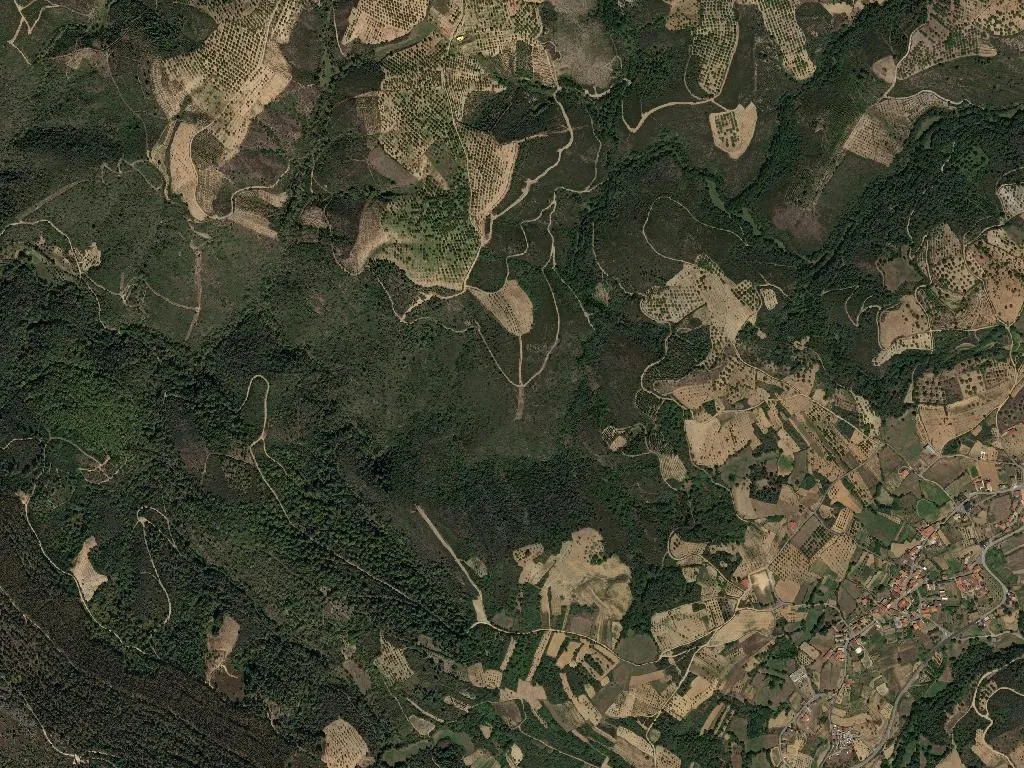
The scent of chestnuts scorching on a shale-fired brazier drifts uphill, braiding with the thin blue smoke that unravels in the dawn chill. At 677 m the granite hamlet of Penhas Juntas wakes slowly, the single church bell tolling seven times and ricocheting between the boulders that huddle above the rooftops like bodyguards. These clustered “penhas” have guarded the same fold of the Parque Natural de Montesinho since a handful of Visigothic shepherds decided the schist shelves looked hospitable sometime in the thirteenth century.
Stone talks here, if you listen. In the forecourt of the seventeenth-century Capela de São Sebastião a swathe of 1698 fresco—Virgin, lamb, fading gilt—has survived every Atlantic storm that the Trás-os-Montes sky can throw at it. Up the lane, the parish church shelters a gilded Assumption attributed to José de Santo António, Bragança’s answer to Grinling Gibbons. Beside the cemetery a weather-beaten granite cross confirms you’re still on the Caminho Nascente de Santiago; hikers stamp their credentials in Café O Penhas before crossing the Roman-style slab bridge and starting the 12 km downhill dash to Vinhais.
Where the smokehouse is altar
Between November and February the matança still governs the calendar. Whole clans gather round a table the length of a living-room, grinding IGP garlic-and-wine sausage mix, massaging shoulders of Bisaro pork, threading alheira coils like edible rosaries. Blood is caught in red-clay bowls, the same vessels that will later serve papas de sarrabulho. Months later, in the bistro O Cimo, those hams surface as translucent sheets draped over fire-blackened posta mirandesa, the 1 kg DOP rib-eye that arrives sizzling in olive oil hot enough to make the fat sing. alongside come IGP Trás-os-Montes potatoes, yellow-fleshed and almost sweet, plus a side of sautéed grelos whose bitterness lingers like a good Amaro.
The village watermill, its nineteenth-century pinions lovingly re-fettled, still grinds corn and rye on request—book at the former primary school, now Casa do Povo. Below the mill the Ribeiro do Pego drops into a granite pool deep enough for a bracing plunge even in August. From here the PR5 way-marked loop climbs through 35 ancient chestnuts documented at over 300 years old; the star turn, the “seven-branch tree”, measures 11 m around its trunk and was listed for public protection in 2009.
Night falls without competition: zero light pollution, the Milky Way flung across the sky like salt on slate. Once a month Bragança’s astronomy club hauls telescopes to the 873 m Serra da Coroa lookout; silence is broken only by wind scraping the heather and the collective gasp when Saturn’s rings snap into focus.
On New Year’s Day dawn, roving bands sing the Janeiras, trading verses for chestnut biscuits. Mid-week, someone is always firing the communal bread oven, honouring the age-old rota. Oak smoke mingles with the warm smell of broa de milho; by evening the scent has settled into your fingerprints—resin, flour, centuries rising slowly, as everything does in Penhas Juntas, where granite and schist measure time in the imperceptible wearing away of stone.