Full article about Chouriço smoke over Quirás & Pinheiro Novo
Granite bridges, chestnut huts and rifle-fire feasts in Vinhais’ quietest parish
Hide article Read full article
The Smoke Rises Like a Man Who Knows the Way Home
The chimney issues a single, confident plume, as though it has done so since the beginning of time. Beneath it, loops of Vinhais IGP chouriço hang from a chestnut beam, drip-drying in no hurry at all. The River Maçãs mutters past the village, a low neighbourly gossip that never quite ends.
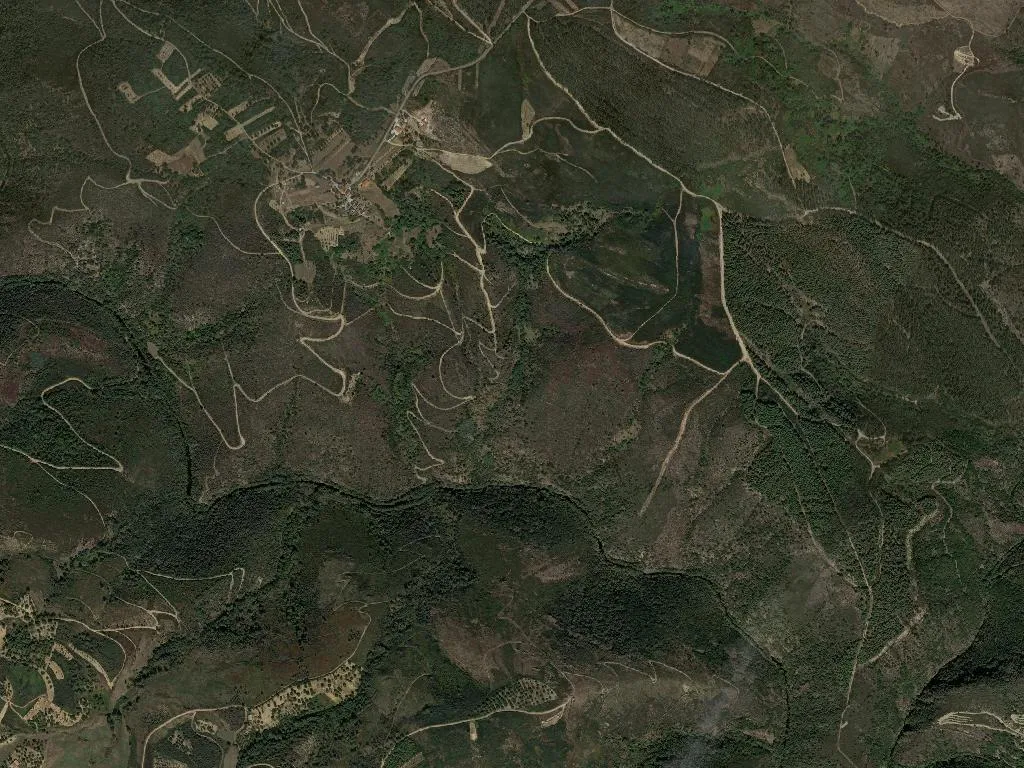
In 2013 someone in Lisbon drew a line on a map and married Quirás to Pinheiro Novo. The combined parish spreads 203 residents across 6,000 hectares—roughly one body every fifteen football pitches. Silence here is not absence; it is simply the correct ratio of people to land.
What Remains
Quirás’ church arrived before parish records began. Inside, a Mannerist altarpiece gives the angels improbably long shins, as if they might step straight off the gilt wood and stride over the sierra. Half a valley away, Pinheiro Novo keeps its chapel of St Sebastian locked except on 20 January, when the village fires rifles at the memory of plague. Between them, a granite bridge—built for donkeys, survived by Fiat Unos, now politely inspected by German SUVs in search of wolves.
Chestnut-drying huts, slate-dark and tarred, still stand because no one can be bothered to pull them down; their roofs sag like old cardigans. One water-mill has been coaxed back to life and will grind maize again, provided the heavens remember how to rain.
Days That Still Turn Up
On 15 August the population quadruples. Emigrants fly in from Paris and Geneva,占领 the single café, and argue over who last painted their grandmother’s door. Mass, procession, then a marquee where elders dance the schottische to an accordion and children endure Europop until the generator coughs out.
January belongs to the Caretos: teenage boys in fringed woollen masks, clanging cowbells as they sprint through the lanes—an exorcism of winter borrowed from the ancient Transmontano calendar. At Easter the priest hikes house-to-house with holy water and a swinging censer; no one mentions the Nestlé thermostat in the sitting room.
What You’ll Eat (and Drink)
Chanfana, lamb stewed overnight in red wine and a clay pot once used for cheese, arrives the colour of bishop’s socks. Feijoada is eaten slowly, like gossip. Kid goat is grilled with nothing more than salt, time and the certainty that everything tastes better when the air smells of cold smoke.
Chestnuts carry DOP status—buy them raw in October and you’ll never again tolerate the vacuum-packed sort. Rye bread is dense enough to anchor a tent. And the clear firewater distilled from arbutus berries? One thimble erases knowledge of daughters who never phone.
Paths for People with Watches but No Appointments
The Azenhas footpath follows five kilometres of dry-stone wall and abandoned water channels; allow two hours, or six if you bump into the shepherd who once spent a summer in Walthamstow. The Santiago pilgrimage route passes through, but the backpack fraternity march heads-down, counting kilometres to Santiago rather than wild boar prints.
During the October Chestnut Festival the forest becomes a currency exchange: paper bags of glossy nuts, the largest crowned by a man whose trees were seedlings when Wellington fought Napoleon.
Dusk, and Other Closings
Evening fog slips down the ridge uninvited. The smell of roasting chestnuts braids with apple-wood smoke. The café owner stacks chairs—closing time is nine, because the dog needs walking and the generator prefers to sleep. Quirás e Pinheiro Novo offers no spectacle, only the rarer gift of hearing your own thoughts echo back across 2,000 metres of altitude and absolutely nothing in the way.