Full article about Santalha’s Dawn: Smoke, Chestnut & Footfall
Mist lifts over schist roofs where pilgrims pass, hams cure and 188 souls share 2,903 hectares.
Hide article Read full article
First Light Over Santalha
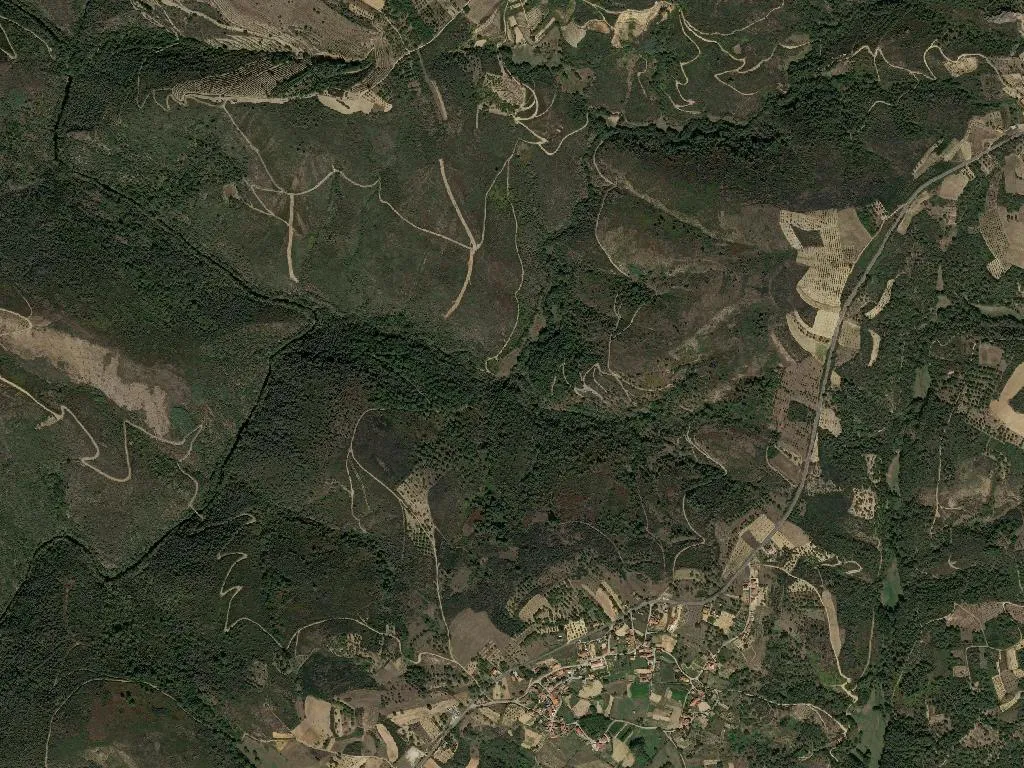
Dawn is reluctant in the valleys of Santalha. Mist pools between the folds of the Serra da Coroa long after the sun has breached the Spanish ridge, and when it finally lifts it touches the schist roofs first, then trickles down to the ochre lanes that stitch together 2,903 hectares of heather and sweet-chestertree. Silence here has texture — quilted, almost — broken only by the single bell in the eighteenth-century campanile that still measures the day for 188 people spread across a parish larger than Jersey.
Passing Through, Staying On
The hamlet lives at two speeds. One belongs to the ten children and 103 pensioners who remain; the other to the boots that now beat a new pilgrim path. Since 2017 the Caminho Nascente — the eastern arm of the Portuguese St James route — has routed walkers through Santalha before the stiff climb to the medieval bridge over the Rabaçal. Boot-prints, goat-hoof crescents and the occasional tyre track mingle in the dried mud, a palimpsest of travellers and transhumance.
Density is 6.47 neighbours per square kilometre, a statistic you feel in the lungs: there are no fences, only shin-high walls of unmortared stone that pause and resume as if the builders simply wandered off. Between the scattered settlements small terraces grow the terracotta-coloured Batata de Trás-os-Montes, while sweet-chestnut orchards twist skyward, their leaves already rusting by late August.
Smokehouses & Pedigree
Inside the oldest cottages, the fogão de fumeiro is a blackened cathedral of beams. From its rafters hang Presunto Bísaro de Vinhais — the region’s DOP-cured ham, dark as mahogany — alongside salpicão sausages lacquered with oak smoke. Fat, paprika and garlic have seeped into the granite; you taste the walls simply by breathing. The same air cures chouriça de carne and linguiça, recipes passed by gesture rather than cookbook. On feast days the IGP-labelled Bragançano lamb appears, reared on the high bogs where heather and gorse perfume the milk; occasionally a joint of Carne Mirandesa, the celebrated ox meat from the southern plateau, makes the journey north.
August in the Churchyard
The Festa de Nossa Senhora da Assunção folds the diaspora back into the valley. On 15 August the churchyard becomes an open-air refectory: trestles under centuries-old oaks, skewers of lamb hissing over vine-prunings, red wine drawn from plastic garrafões. For a few hours the population quadruples. Emigrants fly in from Paris, Lyon and Geneva; pilgrims stall their walking schedules; the bell tolls in double time. After Mass the procession inches from the baroque portal to the stone cross carved 137 years ago, its base still scarred with the date: 1887.
Inside Montesinho
Beyond the last wall the Parque Natural de Montesinho begins, 70,000 hectares of Iberian wolf, genet and wild boar. Way-marked trails climb through gorse and dwarf oak; the air cools one degree every hundred metres. Wildlife watching here is an exercise in stillness: stand long enough and a boar melts out of the bracken, or a goshawk cuts the thermals above the ridge. The nearest ranger post is 3 km away in Moimentas where António — badge 012 since 1983 — doles out topographic maps and the unwritten rule: no fires, no drones, no hurry.
When dusk pools again in the valleys, the houses light up like slow beads on a rosary — small yellow squares cut into the greying air. Wood-smoke rises straight, dissolving into the cold mountain dusk, and the bell counts the day one final time.