Full article about Wood-smoke & granite silence in Travanca e Santa Cruz
Wander chestnut ridges, taste oak-cured Vinhais charcuterie, hear wind comb Montesinho
Hide article Read full article
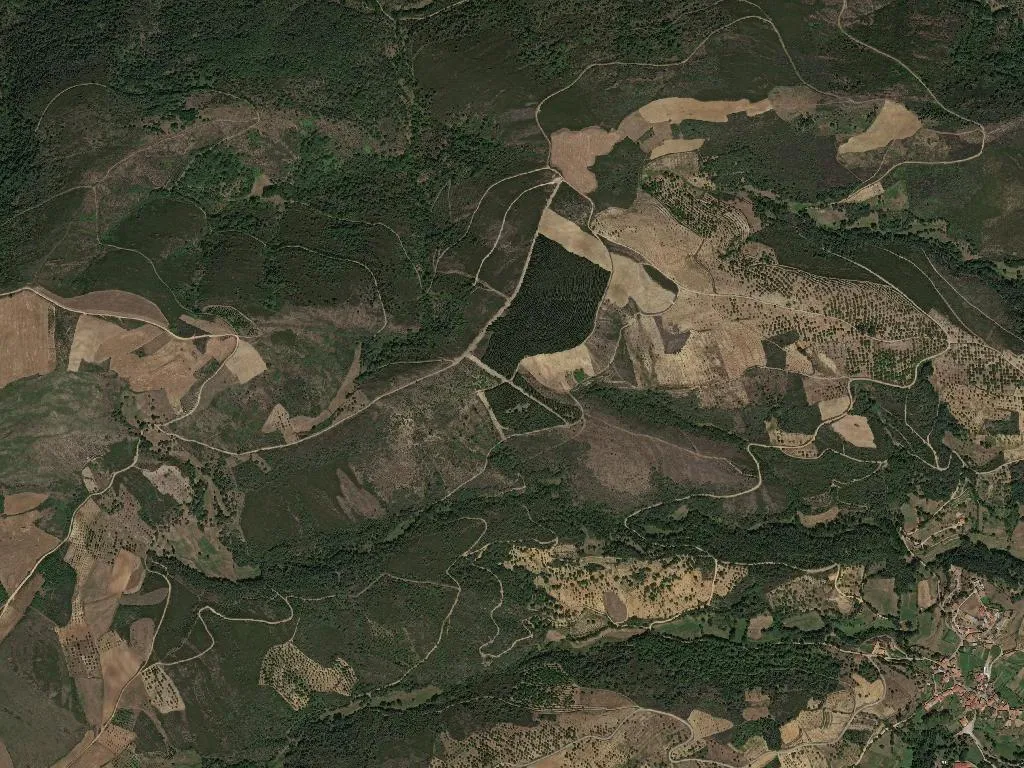
Wood-smoke rises needle-straight into the cold morning air. At 970 m the wind reaches Travanca e Santa Cruz only after it has been combed through chestnut groves and oak thickets of the Parque Natural de Montesinho. Between the two hamlets, ochre footpaths score the green of the meadows. One hundred and forty-six souls share twenty-three square kilometres—six people per kilometre, a hush so complete you can still catch a phrase carried on the breeze.
Granite that remembers
The land rolls between 700 m and the summit ridge, soft swells interrupted by stone calvaries and 16th-century wayside chapels. Down the valley the Ribeiro de Travanca irrigates small plots of Trás-os-Montes IGP potatoes, their flesh butter-yellow and intensified by frost. On the slopes, dark-coated, lyre-horned Bísara cattle graze the gorse and heather at their own pace, following drovers’ tracks once used for the two-day walk to Vinhais market. Those same tracks are now stitched into the Caminho Nascente, the eastern arm of the Portuguese pilgrimage to Santiago.
Smoke, ember, silence
Inside granite cottages, Vinhais charcuterie cures above smouldering oak. Chouriça de carne, linguiça, salpicão—each link darkens to mahogany, its flavour deepening with every week of mountain air. Paper-thin presunto bísaro tastes of salt and elapsed seasons. On the hearth, Carne Mirandesa DOP is seared until the outside caramelises and the centre stays garnet, served with roast chestnuts and a throat-coating red from the upper Douro. January evenings call for turnip-and-potato soup, ladled out while neighbours gather for the annual pig slaughter, the kitchen fuggy with wood-smoke and gossip.
Walking between villages
The ridge path from Travanca to Santa Cruz gives out onto serrated valleys and chestnut summits centuries old. Somewhere above, a short-toed eagle whistles. Granite walls hold the morning’s damp until midday, when the sun unlocks scents of moss and warmed stone. On 15 August the Festa de Nossa Senhora da Assunção draws the scattered home: open-air mass, procession through passages barely two metres wide, then an arraial that spins pimba music into the small hours. Santa Cruz keeps its own date on 24 August for São Bartolomeu, when households still practise the “seven chestnuts” custom—each passer-by offered seven perfectly scored and roasted nuts.
A ten-minute climb ends at the Alto de São Bento lookout. From the stone bench you survey kilometre after kilometre of uninterrupted scrub and forest, interrupted only by the occasional terracotta smudge of a ploughed field. As the afternoon cools, the chimneys once again send their smoke straight upwards—proof that the wind has stilled and night is approaching, bringing the dense quiet that only altitude and distance can preserve.