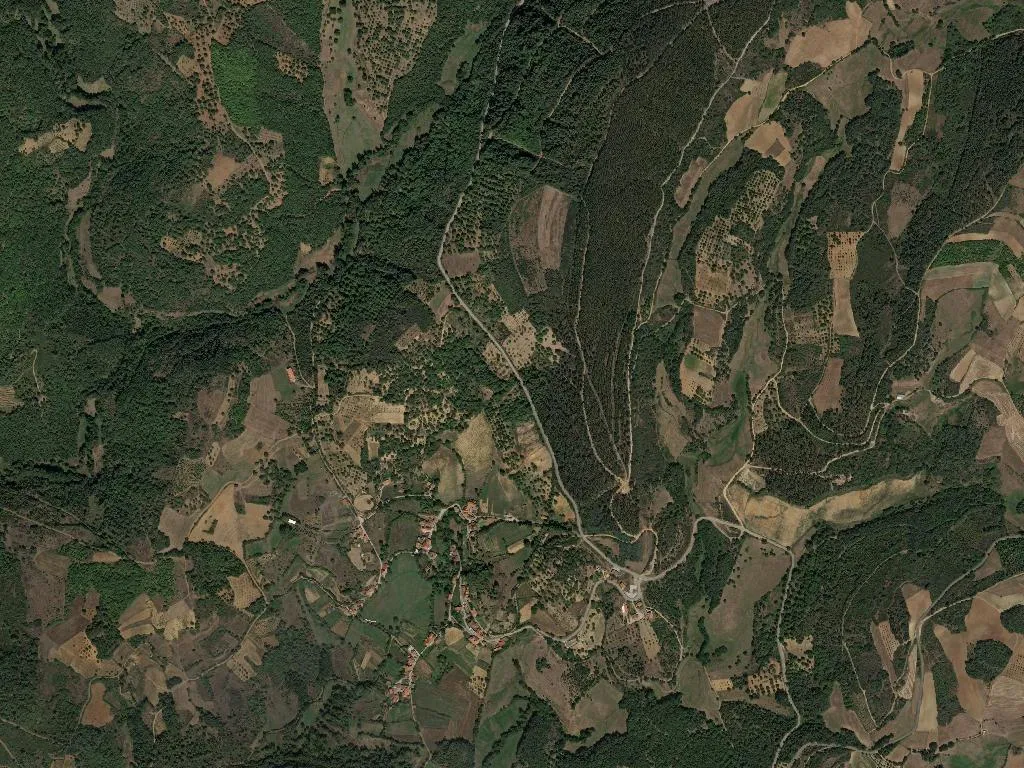
Full article about Vilar de Ossos: smoke-cured ham & schist chimneys
222 souls, oak-wood fumeiros and mountain orchids above Vinhais in Bragança
Hide article Read full article
Wisps of blue-grey smoke rise from schist chimneys, sketching vertical lines against the winter sky. At 853 metres above sea level, Vilar de Ossos wakes to the lowing of cattle dogs and the creak of wooden doors on the fumeiros, where hams and salpicão sausages hang in a geometry we learned before we could count. The mountain air carries oak-wood smoke and curing meat—less a childhood scent than the smell of home itself.
No-one can quite explain the name. Old Zé Mannel insists it comes from the piles of animal bones left after winter slaughters; Dona Aurora swears it derives from the Latin "osos". In the heart of the Montesinho Natural Park, the 222 souls who remain keep their smokehouses as full as their grandparents did. Vinhais hams mature to the rhythm of moons, not markets—protected by a DOP, yes, but protected above all by people who know you cannot hurry a ham any more than you can hurry a child.
What the mountain feeds us
In my grandmother’s kitchen, Carne Mirandesa beef smells of rosemary and oak embers. A shoulder of lamb roasts in the wood-fired oven with potatoes that look like river stones—heritage varieties, stubborn as the people, releasing a plume of steam that snaps me back to being ten. Yet it is the charcuterie that sets us apart: salpicão mixed while the meat is still warm, fat trimmed with a boning knife handed down from mother to daughter; the Christmas ham hidden behind strings of chouriço so the grandchildren won’t pinch it; a red-chilli chouriça that stains fingers ochre and anaesthetises the lips—not hot, just homesick.
Footpaths through meadows and oak scrub
These tracks were never designed for hikers. They are centuries-old cow paths, the same my father climbed to check on the livestock. Summer meadows explode with purple orchids—Dactylorhiza elata—that make your eyes ache at dusk. The Portuguese Coastal Camino passes within three kilometres, but most pilgrims march too briskly to notice the resinous perfume of rockrose baked in the sun or the low hum of the chestnut-tree carpenter bee.
August, when the village inhales
August is the village’s single deep breath. The 16th-century Igreja da Assunção flings open its doors and the bell fractures months of silence. That’s when Tó “de França” wheels in his Paris-born children who chatter in French yet still ask for “um bocado de broa” as though they had never left. Schist tables groan under people who recognise one another by gait even when hair has turned glacier-white. Iron pans hiss with filhós fritters, throat-tickling red wine sloshes into glasses, and conversations outlast the dawn cold that finally shoos everyone indoors.
When night settles over Vilar de Ossos, the silence is so dense you can hear the earth’s pulse. Hams still hang, counting months the way we once counted days until the school holidays. In the hearth, oak crackles, releasing sparks like stray stars. And so, between wood-smoke and curing meat, the village stays too small for those who leave, yet too large for those who return.