Full article about Colmeal da Torre: Roman tower lost in olive terraces
Walk granite trails, taste throat-stinging olive oil and wood-roasted kid beneath Centum Cellas
Hide article Read full article
Rise of the Roman stones
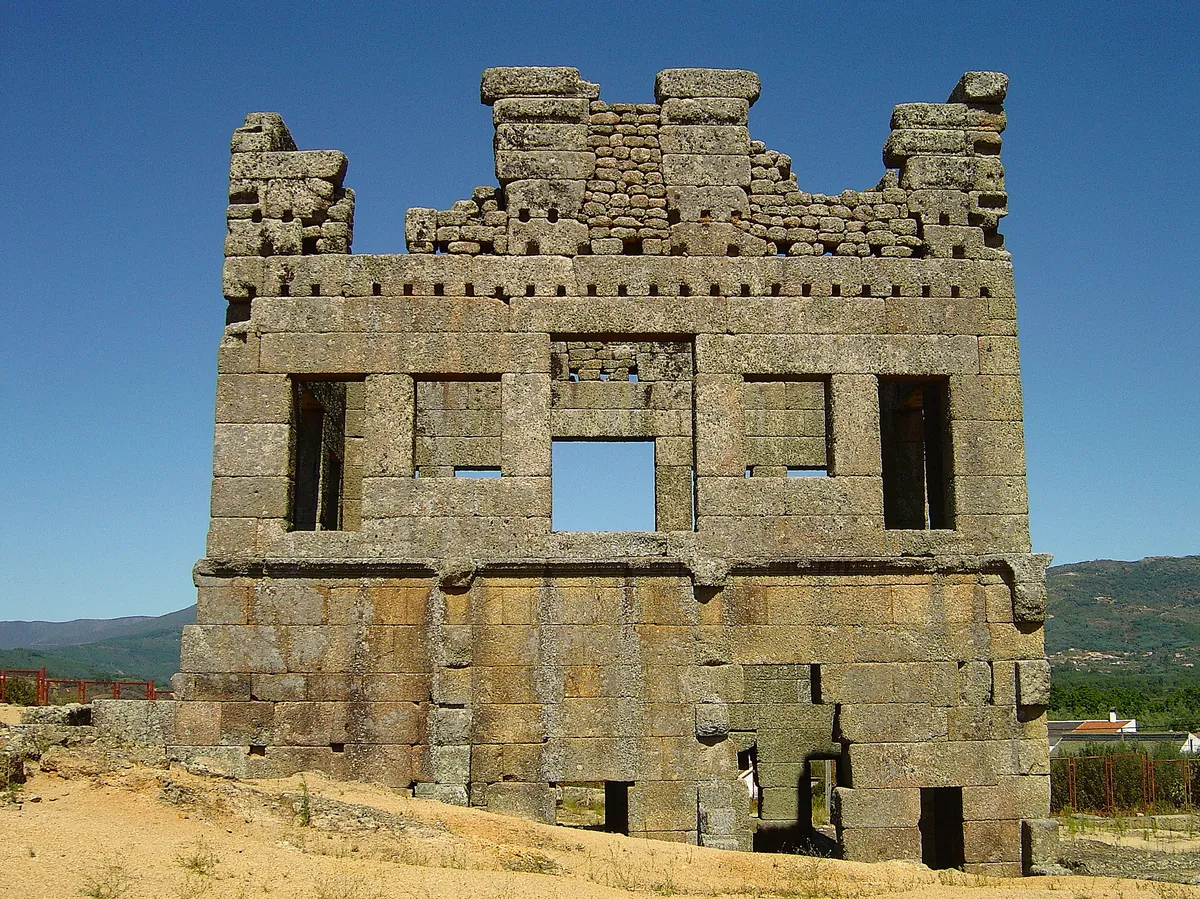
Granite rises through the olive grove like a three-dimensional crossword. Twelve cells, roofless now, their staircases worn glass-smooth by two millennia of feet. Around them, olive trunks corkscrew out of rust-red soil; leaves hiss when the Atlantic wind climbs the eastern slope. A blackbird balances on the highest block, tail flicking against the sky.
The puzzle is the Torre de Centum Cellas, first-century AD. Nobody agrees whether it was a villa, toll station or warehouse; what remains is a perfectly proportioned cube that locals still call the Tower of Treasures, convinced Roman gold lies beneath. A small interpretation centre alongside displays broken amphorae and a scale model; English captions explain the mason’s marks you can still run a finger along. It is Portugal’s only National Monument of its kind.
Parish reborn
Colmeal da Torre became a civil parish only in 1949, was abolished in the 2013 austerity shake-up, then voted itself back into existence in January 2025. Its silver-tower-on-green coat of arms now hangs outside the rebuilt parish council office. Inside São Bartolomeu, whitewash flakes like icing sugar; the single bell, cast in 1892, carries two valleys away on still evenings.
Between olives and orchards
At 504 m the plateau alternates silver and pink: ancient olive terraces give way to cherry and apple plots protected by law under the Cova da Beira PGI. Dry-stone schist walls unravel into granite outcrops; waymarked trails of the Estrela Geopark explain how glacial erosion shaved off the Serra’s edge. Buy a 500 ml bottle of Beira Interior DOP olive oil in the village taberna and it will still sting the throat with chlorophyll.
What you’ll eat
Wood-roasted kid, potatoes smashed open in their skins, liver-and-rice scented with mint. Smoke-blackened chouriço hangs in schist sheds; corn bread rises in the communal oven every Saturday morning. Order the local Branco de altitude to cut the fat: high-acid white wines grown at 700 m. If you time your visit for the village festa, queue with locals for custard-and-puff Santa Clara pastries still warm from the fryer.
What to do
Walk inside Centum Cellas at dusk – it’s open 24 hours and free. Pick up the olive-grove circuit (3 km) or the longer granite-boulder loop (8 km) that finishes at Quinta da Eira’s cherry brandy distillery. Short-toed snake eagles circle overhead; nightingales rehearse from March onwards. Belmonte’s Jewish quarter and Jewish Museum are five kilometres west; stay in one of the schist cottages the tourist office emails you a list of. When the sun drops, the tower throws a ruler-straight shadow across the grove and the only treasure you hear is the echo of your own footfall on Roman stone.