Full article about Inguias: schist hamlet where olives outnumber folk
Dawn terraces, stone lagares, 606 souls trading hoes for UNESCO schist in Belmonte’s hills
Hide article Read full article
Dawn over schist and olives
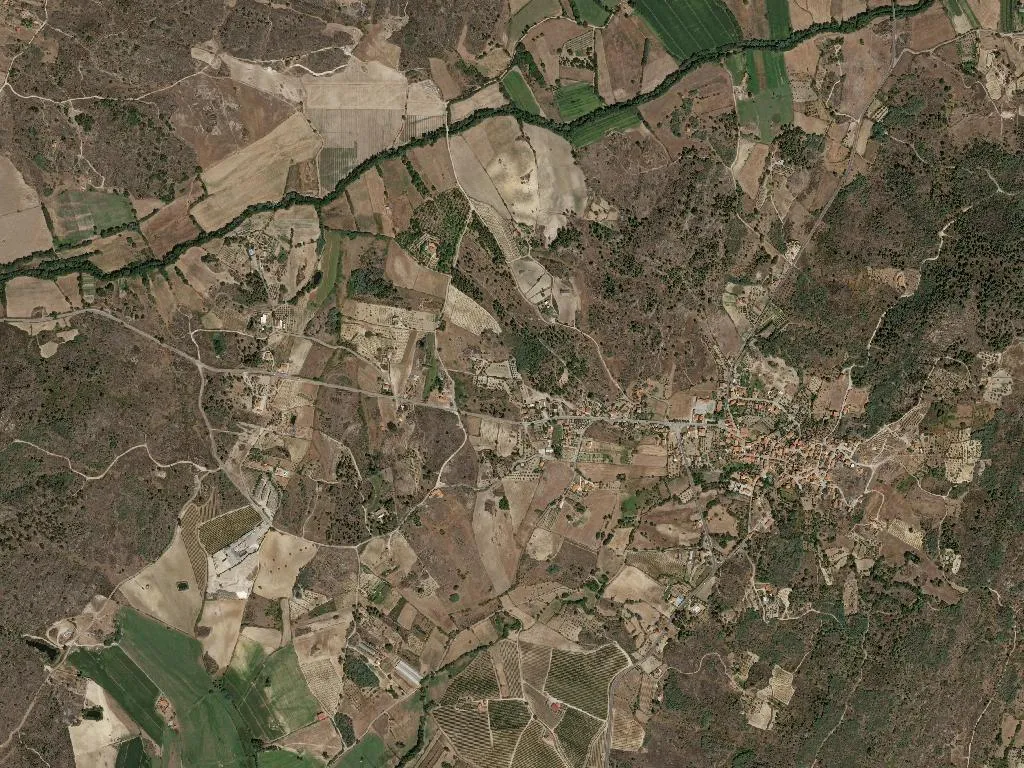
The first blade of sun slips between the ridges at 474 m, catching the olive terraces that buckle down the slope like grey-green serpents. Inguias wakes to the smell of soil just turned by hoe and of bruised olive leaf — a tannic, metallic tang that stains the skin until nightfall. By the threshing floors beside the cottages, the last sheaves of rye and wheat lie in September sun, their weight still measured in the ache between shoulder-blades. Six hundred and six people live here, and every schedule is still set by what happens underground.
The parish larder
Twenty-three square kilometres of valley and hillside are parcelled out among vines, olives and orchards whose names appear on London deli counters: Azeite da Beira Alta DOP, Azeitona Galega da Beira Baixa. From November to January the stone lagares cough back into life; cold air and crushed drakes give the valley the peppery scent of a new harvest. Cherry, apple and peach from the Cova da Beira follow in rapid succession — the thermal swing of scorching days and mountain-cool nights persuades the fruit to swell and sharpen at once. Before six o’clock the growers are already unloading wooden crates at the weekly market in Belmonte, ten minutes down the CM1137. Cabrito da Beira kids graze the scrubby meadows; come Easter their haunches rotate slowly in the bakery oven while diced potatoes drink the dripping.
Stone, water and deep time
Inguias sits inside the UNESCO-rated Geopark Estrela, where 600-million-year-old schist cleaves into blades sharp enough to slice a fingertip. Terraces, field walls and cottage roofs are all cut from the same slate-blue stock; tilted strata in the stream gullies let children prise out Ordovician brachiopods after heavy rain. Those streams feed walled vegetable plots — cabbage, turnip, dwarf beans — watered at dusk by women who haul galvanised buckets until their palms burn. Population density is 26 per km²; 221 residents are over 65, only 54 are under 14. The school bus collects the young at eight sharp, yet four carefully restored casas de campo now welcome outsiders who want to pick olives or tread grapes instead of answering emails.
What the valley tastes like
Smokehouses dangle chouriço above embers; communal wood ovens are fired every Saturday for rye loaves so dense they can chip a careless tooth. In clay canteens the colour of burnt umber, chanfana — kid stewed with entire heads of garlic and a bottle of rough red — simmers until the meat slides at the touch of a fork. Carolo, a coarse-ground maize porridge, underpins bean-and-spare-rib stew eaten with hand-carved wooden spoons. Goat’s cheese, cured in olive oil and oregano, keeps company with the almost-black rye; dessert is cherry compote thick enough to hold a spoon upright, or roasted apples scented with cinnamon bark, or peach halves preserved in aguardiente that see out the winter in rows of mason jars. Walnuts and hazelnuts dried on attic racks wait for the Christmas nutcrackers.
Evening wind lifts dust from the threshing floor where a lone woman still slaps dough into shape. Six o’clock strikes from the parish tower; the bell note ricochets off schist, returning a half-second later as an echo older than the dictatorship. Down in the gardens a hose gargles river water over kale; the sudden chill makes pebbles crack like ice. Wood-smoke mingles with evaporating soil, thickening into valley mist as daylight drains. Inguias offers no postcard moments — only the metronome of seasons, the tug of an olive-laden basket against your hip, the exact flavour of a place that keeps its time in saved seed and doorstep stories.