Full article about Aldeia de São Francisco de Assis
Walk schist lanes, unlock the mine-turned-museum and taste cinnamon cake where 489 souls guard Panasqueira stories.
Hide article Read full article
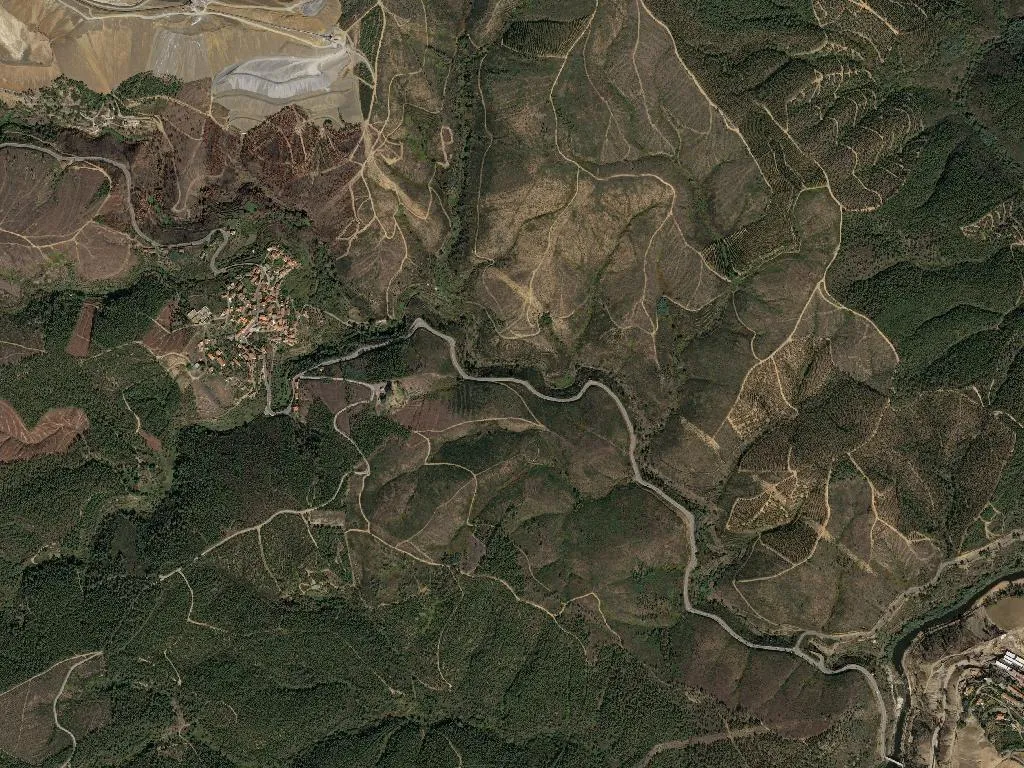
A metallic echo ricochets up the valley before you see the rust-red gasometer: sixteen metres of riveted iron that groan whenever the northerly blows, a relic from the years engineers drilled the mountain for tungsten. Aldeia de São Francisco de Assis—locals over sixty still say “Bodelhão”—perches at 700 m, granite walls capped with slabs of charcoal schist. Four hundred and eighty-nine residents cleave to the slope, convinced the ground beneath their feet once mattered more than the sky above.
The name that arrived late
Until 1901 the village answered to Ourondo; only in 1928 did a parish decree borrow the name of the Umbrian friar. The 1942 mother-church smells of beeswax and sun-warmed pine; the same surnames—Ribeiros, Matias, Sousas—occupy the same pews each Sunday. The Feast of Our Lady of the Conception dispenses with brass bands and fireworks: an 11 o’clock Mass, cinnamon cake served on the granite steps, and the priest intoning baptismal names he has already spoken over three generations.
Iron that raised us
The gasometer is now a micro-museum; ring the parish council on a Monday morning and D. Lurdes will fetch the key. Inside, schist boot-prints are fossilised on the engine-room floor—black dust that never quite washes out of sneaker soles. Five kilometres north, the Panasqueira mine still thumps with controlled blasts; in Barroca Grande the terraced dormitories stand empty, their window-ledges white with the silica that once filled miners’ lungs.
Tracks the mountain gave us
The Zêzere glints 400 m below, visible only at the trail’s end. The path to Barroca tunnels through olive groves older than the Second Republic; pruning hooks hang from the same knots your grandfather tied. The Portuguese Central Way of St James cuts across the ridge, but wayfarers are scarce. Better to follow the eucalyptus resin downhill to the swimming hole where village children graduate from dog-paddle to crawl.
What the earth hands us
Dona Alice’s chanfana has been muttering in the hearth since dawn—kid goat braised with red wine, peppercorns and the mountain’s wild marjoram. Joaquim walks to Curral do Gato for milk lamb, returning with the carcass slung across his shoulders. The cheese is Serra da Estrela DOP, so ripe it spreads like cultured butter. In May the cherry orchards of Cova da Beira detonate; the local olive oil bites the throat with artichoke bitterness, a flavour that separates residents from passing tourists.
When the sun drops behind the gasometer the schist roofs glow copper. Dogs convene on the praça; someone tunes a gaita transmontana. The mountain quietens, but it does not hush—there is always a John Deere grumbling home, or a miner’s boots striking sparks from the dark slate street.