Full article about Barco: Woodsmoke, Starlight & Serra Silence
Covilhã’s hill-top hamlet feeds pilgrims wood-fired kid, runny Serra cheese and night skies unpierce
Hide article Read full article
The first thing you smell is woodsmoke
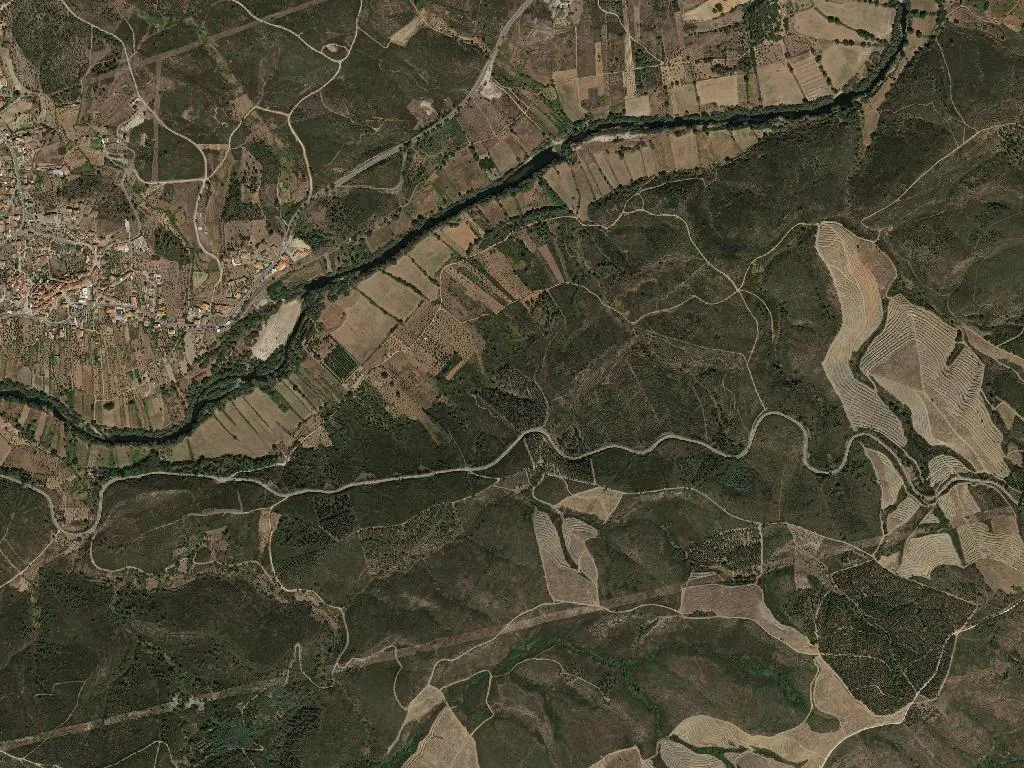
Before a single roofline appears, a ribbon of blue woodsmoke threads through the cold dawn at 426 m, announcing Barco on the lip of the Cova da Beira. Three-hundred-and-sixty-two people live here, enough to remember which paving stone turns treacherous after rain and which ancient fig tree marks whose gate.
A waypoint, not a stopover
The inland branch of the Camino – the Via Lusitana – cuts across the parish on its climb to the Serra da Estrela. Pilgrims find no albergue, no scallop-shell waymarks, only two discreet rentals (a cottage and a first-floor flat) where the night is unplugged and star-drilled. The Natural Park begins just beyond the last house; by late afternoon Atlantic clouds spill over the ridge, the temperature drops five degrees in five minutes and you remember why wool still matters.
What the day tastes like
There is no menu. Meals surface according to the moon and the markets. Breakfast might be a slab of DOP Queijo Serra da Estrela, still runny at the centre, and yesterday’s bread revived in a splash of Beira Alta olive oil. Lunch is kid or spring lamb slid into a wood-fired oven at dawn, emerging twelve hours later with rosemary stuck to the crust and potatoes that taste of smoke. Ask for coffee and you’ll be pointed to someone’s kitchen; the espresso comes with a view of the hen run.
The arithmetic of staying
Officially 159 residents are over 65; only 22 are under 14. Those are the numbers. The lived truth is that pruning shears are wielded at the exact angle required, cherries are declared ripe by scent alone, and the recipe for autumn pumpkin jam is stored nowhere but in someone’s head. Granite walls stand far enough apart that every household still keeps a vegetable plot; silence is measured in hectares, not minutes.
Bedrock and afterglow
The village lies within the Estrela Geopark, and the footpaths read like a geology primer: russet Triassic clay underfoot, Ordovician shale forming the terraces, granite tors left by Jurassic intrusions. At sunset the stone walls turn the colour of Madeira cake, the thermometer on the church door drops to six, and a cherry just plucked from the municipal orchard weighs precisely nine grams. Barco offers no spectacle – only the specific gravity of a place that has not bothered to reinvent itself.